In the high-stakes world of HBO's financial drama 'Industry', wealth, ambition, and betrayal are ever-present themes, yet it's the subtle language of costume that often speaks loudest. Laura K. Smith, the series' skilled costume designer, masterfully employs sartorial choices to underscore character development and socio-economic distinctions. Through meticulous attention to detail, Smith illustrates how attire functions as a critical narrative tool, distinguishing established old money from aspiring new wealth, and reflecting personal transformations within the cutthroat London financial scene. From the choice of bespoke Savile Row suits to vintage timepieces, every garment and accessory is a deliberate stroke in crafting the complex identities of the show's protagonists.
This deep dive into the wardrobe reveals how clothing not only defines individual characters but also highlights the unspoken codes and power structures prevalent in the elite financial circles. Smith's innovative approach, drawing inspiration from art history and fashion legends, ensures that the costumes are far more than mere embellishments; they are integral to the storytelling, offering viewers profound insights into the characters' inner lives and their external projections of success and belonging. The interplay of fabric, cut, and brand becomes a nuanced dialogue, showcasing the aspirations, insecurities, and calculated moves of those navigating the treacherous landscape of global finance.
The Nuances of Elite Attire: Old Money vs. New Wealth
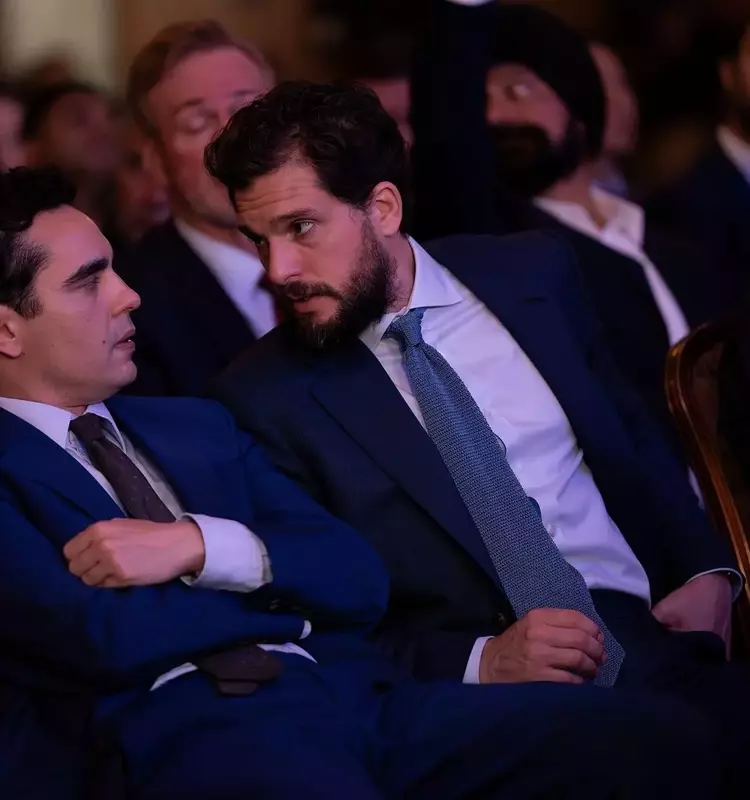
Laura K. Smith's costume design for 'Industry' intricately portrays the distinction between inherited wealth and newly acquired fortunes through the characters' wardrobes. She meticulously crafts an aesthetic that differentiates figures like Henry Muck, who embodies old money, from the more aspirational Whitney Halberstram. For Henry, clothing choices emphasize timelessness and a worn-in elegance, suggesting items that have been cherished and maintained over generations. This includes classic Church's Oxfords, often resoled rather than replaced, and a vintage Rolex Datejust, signaling a history and a quiet confidence that doesn't need to flaunt its status. The subtle details, such as a name-tagged school sock holding a vial, further illustrate Henry's deep roots and unpretentious connection to his heritage. His avoidance of overtly formal wear unless absolutely necessary highlights a comfort in his own skin that stems from an assured social standing, contrasting sharply with the overt displays of status often seen in the financial world.
In contrast, Whitney Halberstram's wardrobe is characterized by a blend of established luxury brands and an evident newness. His Savile Row suits from Richard James and American brands like Todd Snyder, paired with Prada and Crockett & Jones shoes, are chosen to project trustworthiness and authority within political and corporate spheres. The emphasis on specific colors, particularly blues, and subtle two-tone fabrics in his single-breasted suits, aims to create an image of understated power while allowing him to seamlessly integrate into various elite environments. Unlike Henry, Whitney's items often appear freshly acquired, symbolizing his ambition and rapid ascent in the tech and finance worlds. His collection of multiple luxury watches—Hublot, Longines, Tag Heuer, Omega—further underscores a desire to demonstrate his success and an exploration of status symbols, a sharp contrast to Henry's singular, inherited timepiece. This careful curation of newness versus heritage highlights the ongoing struggle for acceptance and validation within London's upper echelons.
Fashioning Female Power: Harper Stern's Sartorial Evolution
Harper Stern's journey in 'Industry' is powerfully reflected in her evolving wardrobe, which transforms from a somewhat uniform and adaptable style in earlier seasons to a commanding, self-possessed aesthetic in the latest installment. Initially, Harper's clothing choices leaned towards functional, less distinctive pieces, symbolizing her nascent career and her efforts to assimilate into the male-dominated financial environment. However, as she gains experience and asserts her independence, her style shifts dramatically. By season four, having observed and internalized the unwritten rules of power dressing from her male counterparts, Harper opts for custom-made suits, a significant departure that signals her arrival as a force to be reckoned with. This strategic move, inspired by Robert's earlier rite of passage into tailored wear and Petra's critiques of male posturing, represents Harper's understanding that optics and presentation are crucial in securing her position and influence.
Her custom silver-grey suit, designed with interchangeability in mind and echoing Donna Karan's "Seven Easy Pieces" concept, showcases a pragmatic yet powerful approach to her professional attire. This suit, often broken up and re-worn in different configurations, symbolizes her adaptability and resourcefulness, while its bespoke nature underscores her newly acquired wealth and understanding of high-end tailoring. Importantly, Harper's power dressing remains distinctly feminine, avoiding masculine emulation. Smith draws inspiration from historical queens like Elizabeth I and Catherine de Medici, incorporating broad-shouldered silhouettes that taper to a tiny waist, creating a strong, triangulated visual impact. This design choice, evident also in her Alaïa dress, amplifies her presence and "takes up space" in a way that is both authoritative and graceful. The deliberate choice to put her in a skirt in the season's opening episode further challenges the conventional association of trousers with power, reinforcing her unique and confident assertion of female leadership within the demanding world of finance.
