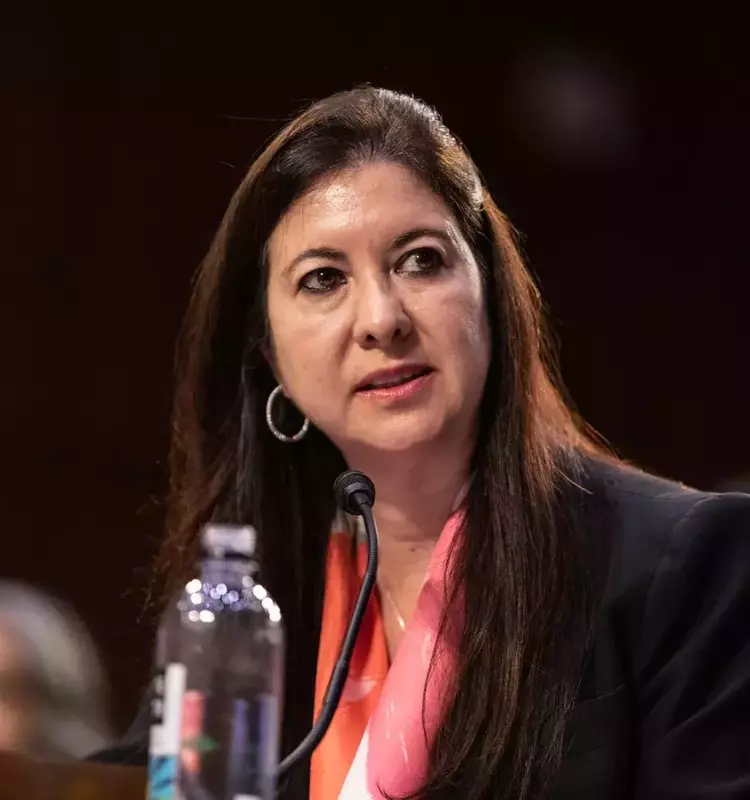
Adriana Kugler, a prominent Colombian-American economist, has navigated an impressive career through the highest echelons of academia and public policy. Her journey culminated in significant appointments at The World Bank and the Federal Reserve, making her a trailblazer for women and minorities in economics, before she ultimately returned to her academic roots at Georgetown University.
A Distinguished Career in Economics and Public Service
Adriana Kugler's remarkable career journey began in the United States, though she spent her formative years in Colombia. There, she witnessed firsthand the societal challenges of poverty, homelessness, and inadequate infrastructure, experiences that profoundly shaped her academic and professional aspirations. This early exposure to economic disparities ignited her passion for economics and political science, leading her to pursue a bachelor's degree at McGill University, where she graduated with top honors in 1991. Subsequently, she earned a doctoral degree in economics from the University of California at Berkeley in 1997, focusing on labor economics, development economics, and applied econometrics under the tutelage of Nobel laureate George Akerlof.
Kugler's academic career spans prestigious institutions globally. She held professorships at Pompeu Fabra University in Spain, the University of Houston, and currently, Georgetown University, where she is a full professor of public policy and economics. Her research consistently centers on labor markets, public policy, and the effects of globalization on the workforce. Beyond her teaching and research, she has served on the editorial boards of numerous academic journals and is affiliated with renowned research organizations like the National Bureau of Economic Research (NBER) and the Centre for Economic Policy Research (CEPR).
Her expertise has also been instrumental in shaping public policy at national and international levels. During the Obama administration, Kugler served as the chief economist of the U.S. Department of Labor. In a testament to her growing influence, President Joe Biden nominated her in August 2021 to be the U.S. executive director of The World Bank, a role she assumed after Senate confirmation in April 2022. This appointment was swiftly followed by another historic nomination in May 2023, when Biden put her forward for a seat on the Federal Reserve’s Board of Governors. Confirmed by the U.S. Senate on September 7, 2023, Kugler became the first Latina member of the board, filling a vacancy left by Lael Brainard. Her tenure on the board was set to conclude in January 2026, but she announced her resignation effective August 8, 2025, to resume her academic duties at Georgetown University.
As a Federal Reserve Board Governor, Kugler brought her extensive knowledge of labor economics and public policy to the forefront of monetary policy decisions and financial regulation. Her contributions extended to the Fed's research initiatives and outreach, particularly on topics concerning labor markets, unemployment, immigration, and economic development. Concurrent with Kugler's appointment, Philip Jefferson was promoted to vice chair of the Federal Reserve’s Board of Governors, marking him as the second Black vice chair in the Fed's history. Kugler’s path-breaking appointments underscored the Biden administration's commitment to diversity and representation within critical policymaking bodies.
Adriana Kugler's career illustrates a profound dedication to understanding and influencing economic landscapes, both domestically and globally. Her contributions in academia and public service have not only advanced economic thought but have also paved the way for greater diversity in leadership roles, leaving a lasting legacy in the institutions she has served.
