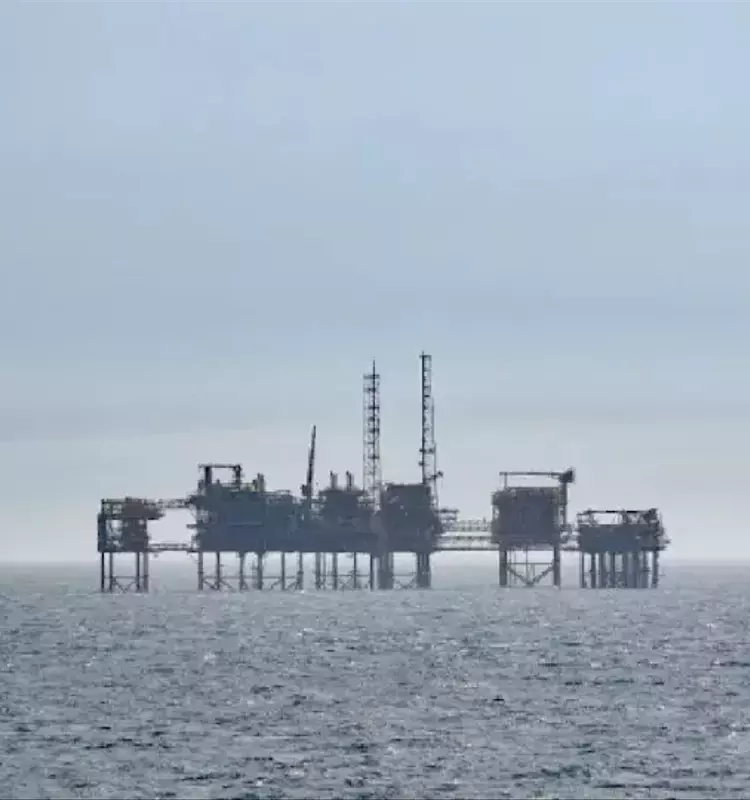
Adura has recently submitted comprehensive new details to the UK Offshore Petroleum Regulator for Environment and Decommissioning (OPRED) concerning its Jackdaw and Rosebank oil and gas initiatives. These projects, situated in the vast expanse of the UK North Sea, are currently awaiting crucial regulatory endorsements to initiate their production phases. This recent submission by Adura is a direct response to OPRED's specific request for more information, aiming to navigate the complexities of environmental and operational compliance.
Adura's North Sea Projects Face Renewed Regulatory Scrutiny Amidst Environmental Concerns
In a significant development for the energy sector, Adura, a prominent player in oil and gas exploration, has furnished the UK Offshore Petroleum Regulator for Environment and Decommissioning (OPRED) with an extensive dossier of updated information regarding its Jackdaw and Rosebank projects. This pivotal submission, made on June 22, 2026, marks a critical juncture for these North Sea ventures, which are poised to play a substantial role in the UK's energy landscape.
The impetus for this renewed regulatory engagement stems from a January 2025 ruling by the Court of Session in Edinburgh. The court decisively invalidated the UK Government's prior approvals for the Jackdaw and Rosebank projects. This decision was a direct outcome of a legal challenge mounted by various environmental organizations, asserting that the initial government endorsements were not in accordance with prevailing legal frameworks. Consequently, both projects are now subject to a thorough re-evaluation by regulatory bodies before any production activities can commence.
Despite these regulatory hurdles, the Jackdaw and Rosebank fields represent a colossal investment, with over £3 billion already poured into their development and construction. Adura projects that these fields will contribute an impressive £28.7 billion in gross value added throughout their operational lifespans. This economic benefit is anticipated to disproportionately favor Scotland, stimulating both direct and supply chain economic activities. Furthermore, the projects are slated to generate substantial tax revenues, with an estimated £1.4 billion expected before the current parliamentary term concludes, and a projected total of £3.8 billion by the end of the next parliament in 2034. Peak annual tax contributions are forecast to exceed £720 million.
Beyond fiscal contributions, Adura's initiatives are also set to create significant employment opportunities. Projections indicate approximately 3,500 jobs during the peak construction phase, followed by a sustained workforce of 880 positions during production, alongside 125 apprenticeships across various UK communities.
From an energy security perspective, Adura emphasizes the strategic importance of these fields. Combined, Jackdaw and Rosebank could potentially account for up to 10% of the UK's natural gas output. Specifically, the Jackdaw field alone is expected to supply over 6% of UK gas by the upcoming winter season, which Adura suggests is sufficient to meet the heating demands of 1.4 million homes. Rosebank is poised to contribute 4% of national gas output and 10% of UK Continental Shelf (UKCS) oil production, bolstering refined product supplies for north-west Europe.
Adura underscores that fossil fuels currently satisfy roughly 75% of the UK's energy requirements. The company argues that without domestic production from these fields, the UK would be compelled to import equivalent volumes from international markets, which often carry a higher carbon intensity. Adura further asserts that the emissions intensity from Jackdaw, Rosebank, and other new developments could be up to half the UKCS average and about eight times lower than that of imported liquefied natural gas (LNG).
Neil McCulloch, CEO of Adura, encapsulated the company's vision, stating, "With timely approval of Jackdaw and Rosebank, Adura can help unlock significant benefits: the energy that Britain needs – at lower associated emissions and within existing carbon budgets – alongside a major economic advantage in the national interest."
Operationally, the Jackdaw platform is already installed in the North Sea and is approaching its final stages before commencement. It is seamlessly integrated with the Shearwater Hub for efficient onshore gas delivery to St Fergus, Aberdeenshire. Concurrently, the retrofitted Petrojarl Rosebank FPSO vessel recently arrived at its designated location west of Shetland.
Adura, a 50:50 joint venture between energy giants Equinor and Shell, was established in late 2025. It emerged as an independent producer in the UK North Sea following the consolidation of the UK offshore operations of its parent companies.
This ongoing process highlights the intricate balance between national energy demands, economic prosperity, and environmental stewardship, as regulatory bodies and energy companies navigate a path towards a sustainable future.
The unfolding developments surrounding Adura's Jackdaw and Rosebank projects serve as a profound illustration of the complex interplay between energy security, economic objectives, and environmental considerations in contemporary society. From a journalistic perspective, this narrative underscores the critical role of robust regulatory oversight in ensuring that large-scale industrial endeavors adhere to legal and environmental standards. The legal challenge initiated by environmental groups highlights the increasing public and organizational scrutiny over fossil fuel projects, reflecting a broader societal shift towards greater accountability for ecological impact. For readers, this story offers a glimpse into the challenges and opportunities inherent in transitioning energy economies, emphasizing that even projects with significant economic benefits must withstand rigorous environmental examination. It also brings to light the multifaceted arguments surrounding domestic energy production versus imports, particularly concerning carbon footprints. Ultimately, this case stimulates thought on how nations can balance their energy needs with their commitments to climate action, prompting reflection on the future trajectory of the global energy landscape.
