The AI Bubble: Mounting Concerns and Investment Strategy
Finance

The AI Bubble: Mounting Concerns and Investment Strategy

authorBy Suze Orman
DateApr 29, 2026
Read time2 min

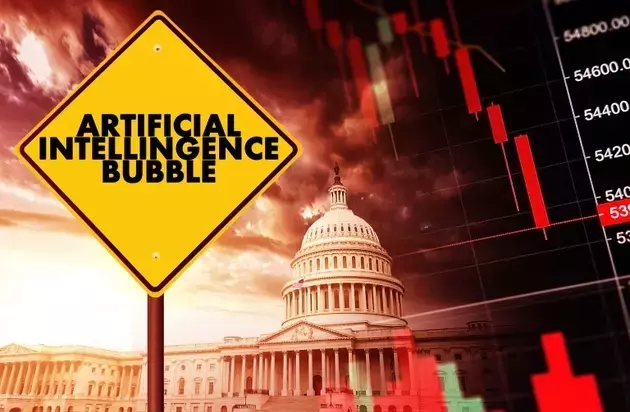
The robust narrative of an AI supercycle, while widely accepted, is beginning to show subtle signs of vulnerability. Recent developments, such as OpenAI's failure to meet its internal revenue projections, coupled with rising credit default swap rates for Oracle and a noticeable decline in AI job advertisements, suggest that the market may have already fully accounted for the anticipated growth. The semiconductor sector, in particular, has seen its stock valuations reach unprecedented levels, reminiscent of the speculative fervor observed in the late 1990s, a period that preceded significant market corrections. These indicators collectively point to a growing disconnect between exuberant market valuations and underlying fundamental realities, prompting a need for investor caution and strategic adjustments.

The AI Market: Emerging Challenges and Investment Adjustments

In a notable shift, OpenAI recently failed to achieve its internal revenue targets, signaling a potential slowdown in the rapid expansion previously attributed to the artificial intelligence sector. This development arrives amidst broader concerns, including an increase in Oracle's credit default swap rates, which reflects growing apprehension regarding the company's financial health and its exposure to the burgeoning AI market. Concurrently, a discernible decrease in AI-related job postings indicates a moderation in demand within the industry, further challenging the prevailing "AI supercycle" narrative.

Historically, semiconductor stocks have demonstrated patterns of reaching peak valuations just before significant market downturns, and their current trajectory evokes comparisons to the tech bubble of the late 1990s. This historical parallel suggests that the extraordinary gains observed in these stocks might already incorporate all foreseeable positive outcomes. Investors are now at a critical juncture, with expert advice leaning towards a cautious approach: selectively realizing profits from high-performing AI assets, maintaining a concentrated focus on genuinely high-conviction positions within the AI landscape, and actively pursuing diversification strategies to mitigate overexposure to indexes heavily skewed towards the technology sector.

These converging signals warrant a reassessment of current investment strategies within the AI space. While the long-term potential of artificial intelligence remains undeniable, the immediate future calls for a more pragmatic and risk-averse stance. Diversification and careful profit-taking are not merely precautionary measures but essential components of a resilient investment plan in an evolving market environment.

More Articles
Finance
Meta's Q1 Performance and Future Outlook
Meta Platforms, Inc. reported strong first-quarter results with a 33% year-over-year revenue increase, driven by robust advertising growth and sustained user engagement. Despite a one-time tax benefit inflating EPS, the underlying business demonstrates solid performance. Increased CapEx guidance for 2026 reflects significant long-term investments in AI and platform development, raising some near-term free cash flow concerns. The company maintains a 'Buy' rating, emphasizing its attractive valuation and strategic AI initiatives.
By Nouriel RoubiniApr 29, 2026
Finance
Understanding the 1986 and 1993 Tax Reform Acts in the US
The Tax Reform Act of 1986, signed by President Ronald Reagan, aimed to simplify the tax code by reducing the top individual income tax rate and taxing capital gains at ordinary income rates. It also closed tax loopholes and adjusted various deductions. The subsequent Tax Reform Act of 1993, enacted under President Bill Clinton, further modified the tax landscape by increasing certain tax rates for high-income individuals and corporations while eliminating some deductions, including the tax cap on Medicare.
By Lisa JingApr 29, 2026
Finance
Adlai Nortye: Pivoting to Early-Stage Oncology with Financial Reinforcement
Adlai Nortye has recalibrated its strategy after a Phase 3 setback, now focusing on promising early-stage RAS-targeting and immuno-oncology assets. Bolstered by recent financings and a payment from ASK Pharm, the company's financial position is robust. While AN9025 is a key strategic candidate, its early phase requires further clinical validation. The most advanced program, Palupiprant, appears to be a secondary focus. Despite a reasonable valuation, more data is needed to justify an upgrade to bullish sentiment.
By Michele FerreroApr 29, 2026
Finance
Meta's Stellar Quarter Overshadowed by Capex Concerns
Meta Platforms, Inc. (META) reported exceptional Q1 financial results, surpassing revenue and EPS estimates. However, the market reacted negatively due to a significant increase in the 2026 capital expenditure forecast, raising concerns about future profitability. Despite this, AI-driven advertising improvements contributed to a 12% year-over-year rise in average ad price, demonstrating strong monetization potential. The author maintains a $975 price target, confident in Meta's ability to sustain margins and capitalize on AI investments.
By Robert KiyosakiApr 29, 2026
Finance
Understanding Financial Intermediaries: Roles, Benefits, and Economic Impact
Financial intermediaries are pivotal entities in the financial system, bridging the gap between savers and borrowers. They facilitate capital allocation, reduce transaction costs through economies of scale, and manage risks through diversification. This article explores their functions, diverse types, advantages, and significant contributions to economic stability, highlighting their essential role in fostering investment and business growth.
By David RubensteinApr 29, 2026