In celebration of its three-decade milestone, the enduring Pokémon franchise is undergoing a thorough re-evaluation, examining each of its distinct eras. This comprehensive analysis extends beyond the primary role-playing games, encompassing the vast universe of spin-offs, remakes, and expansions that have defined each generation. The aim is to illuminate the series' journey, pinpointing the innovations and challenges that have shaped its trajectory, and ultimately, to rank these generations based on their collective impact and quality.
The Enduring Legacy: A Deep Dive into Pokémon's Generational Impact
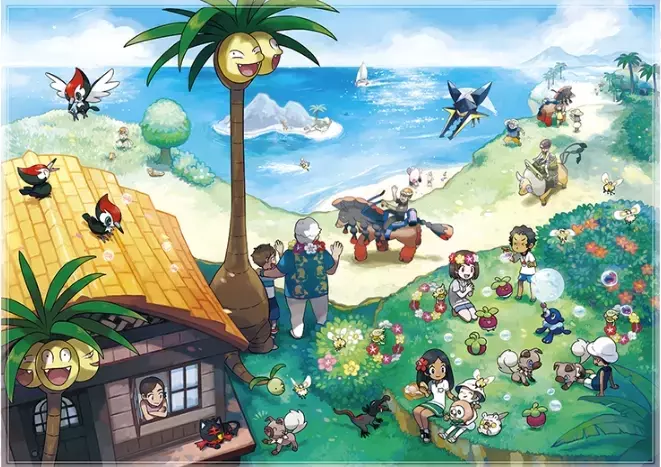
The journey through Pokémon's history begins with Generation 7, marked by the experimental Sun and Moon. Released between the waning days of the Nintendo 3DS and the advent of the Switch, this era saw bold attempts to deviate from traditional gym structures, notably with Hawaii-inspired settings. While Ultra Sun and Ultra Moon refined these concepts, the generation also witnessed a surge in microtransaction-heavy mobile titles like Masters EX and Quest, and the divisive Let's Go! Pikachu and Eevee, which brought Pokémon Go's mechanics to consoles. However, hidden gems like Magikarp Jump offered unique, lighthearted experiences.
Generation 5, featuring Black and White, showcased a daring departure from nostalgia, introducing an entirely new roster of creatures. Despite mixed reception on monster designs, the main games were lauded for their compelling narrative and memorable characters, receiving genuine sequels instead of traditional re-releases. This period was also a hotbed for niche spin-offs, including the surprisingly effective crossover Pokémon Conquest and the critically re-evaluated Mystery Dungeon: Gates to Infinity. Despite some less successful titles, this generation fostered a devoted cult following.
Generation 9, spearheaded by Scarlet and Violet, faced initial scrutiny due to technical issues, yet its open-world design and captivating monster interactions were recognized as significant strides. The expansion DLC, The Hidden Treasure of Area Zero, alongside a growing focus on mobile games such as Pokémon Friends and Pokémon Sleep, underscored the franchise's evolving priorities. Upcoming titles like Pokémon Legends: Z-A and Pokémon Pokopia are anticipated to rectify the generation's earlier stumbles, promising a strong finish for an otherwise uneven period.
Generation 2, with Gold and Silver, remarkably built upon the original's success, delivering an iconic roster and surprising plot twists. While the main games were critically acclaimed, the generation saw fewer spin-offs, focusing on quality over quantity with titles like Pokémon Stadium 2 and Pokémon Puzzle League. This era represents a period of refined sequels rather than extensive experimentation.
Generation 8, introducing Sword and Shield, received criticism for its graphical performance but offered solid RPG experiences, notably with the Wild Area and the U.K.-inspired setting. The true standout was Pokémon Legends: Arceus, which revolutionized monster capture mechanics and laid the groundwork for future open-world titles. Companion games like New Pokémon Snap and Pokémon Unite further enriched the generation, though mobile initiatives and the underwhelming remakes of Brilliant Diamond and Shining Pearl tempered its overall impact.
Generation 6, highlighted by Pokémon X and Y, transitioned the series into a fully 3D environment, with Lumiose City foreshadowing future open-world ambitions. Mega Evolutions emerged as a strategically profound battle mechanic. This period also gave rise to the global phenomenon Pokémon Go, which, despite its grind-heavy nature and influence on microtransactions, undeniably propelled the franchise to unprecedented popularity. Other notable entries included the fighting game Pokkén Tournament and the well-received remakes Omega Ruby and Alpha Sapphire.
Generations 3 and 4, featuring Ruby and Sapphire, and Diamond and Pearl respectively, are often considered pinnacles of the series. Ruby and Sapphire expanded upon core features with vibrant graphics and engaging side activities. Generation 3 excelled in its spin-offs, introducing popular titles like Pokémon Colosseum, Pokémon XD: Gale of Darkness, and the acclaimed Mystery Dungeon series, demonstrating the franchise's versatility across different genres.
Finally, Generation 1, with Red and Blue, remains the foundational and most impactful era. These tightly constructed RPGs, with their iconic monsters and memorable settings, established the core appeal of the franchise. Beyond the main games, the era birthed highly innovative spin-offs such as Pokémon Snap, Pokémon Stadium, and Pokémon Pinball, which creatively applied the Pokémon concept to diverse gameplay formats. Even less successful experiments, like Hey You, Pikachu!, showcased a pioneering spirit. This generation's unparalleled hit rate and inventive approach solidified Pokémon's place as a cultural touchstone.
Reflecting on Pokémon's three-decade journey, it's clear that the franchise has consistently striven for innovation, balancing established traditions with bold new directions. The evolution from tightly structured RPGs to expansive open-world experiences, alongside a varied ecosystem of spin-offs, highlights a continuous effort to engage new audiences and retain loyal fans. While some experiments have been more successful than others, the underlying dedication to a rich, imaginative world remains a testament to its enduring appeal. The most powerful lesson from this retrospective is that success often comes from a willingness to experiment, to break new ground, and to never stop dreaming of what's next for these beloved creatures.
