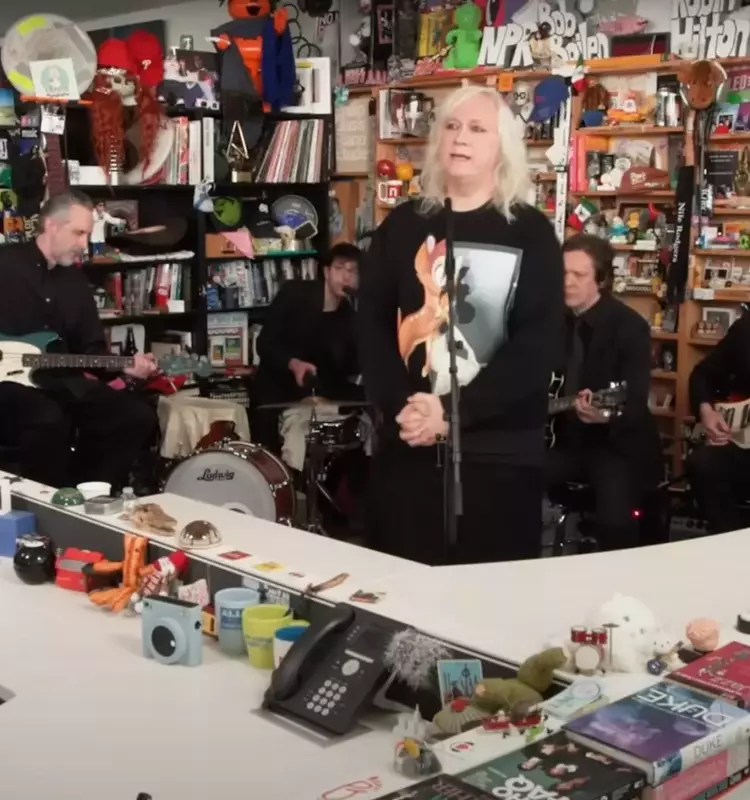
Anohni and the Johnsons recently graced the renowned NPR Tiny Desk series, delivering an emotionally charged performance that explored profound questions about existence and the human condition. Their intimate set captivated audiences with its depth and raw honesty, offering a unique glimpse into the band's artistic vision and Anohni's philosophical reflections on contemporary society.
Anohni and the Johnsons' Captivating NPR Tiny Desk Debut
On a memorable day in July 2025, the critically acclaimed ensemble, Anohni and the Johnsons, featuring the mesmerizing vocals of Anohni, along with the talents of Gael Rakotondrabe, Jimmy Hogarth, Leo Abrahams, Sam Dixon, Doug Wieselman, and Christopher Vatalaro, made their highly anticipated debut on NPR's Tiny Desk Concert series. The performance, recorded in the unique, intimate setting of the Tiny Desk, spanned over 20 minutes and showcased three powerful compositions.
The musical journey commenced with "Why Am I Alive Now?", a poignant track from their fifth studio album, My Back Was a Bridge for You to Cross. This opening piece immediately set a contemplative tone, inviting listeners to ponder fundamental questions of being. Following this, the group delved into "Hopelessness," a deep and resonant selection from Anohni's impactful 2017 solo album of the same name. The choice of this particular track highlighted Anohni's enduring themes of struggle and resilience. To conclude their moving set, they returned to their recent work with "It Must Change," another compelling song from My Back Was a Bridge for You to Cross, reinforcing the album's central messages.
Reflecting on her creative process and the purpose behind her music, Anohni shared insightful comments in 2023. She articulated a desire for her work to serve as a supportive soundtrack for individuals engaged in activism, dreaming, and critical decision-making. She expressed that by articulating the challenging realities of our times, she hopes to foster a sense of shared understanding and alleviate feelings of isolation among those who identify with her frank observations. Anohni emphasized the pervasive nature of impersonal systems that often leave individuals feeling powerless. Yet, she underscored the critical importance of recognizing these systems not as preordained, but as constructs of human creation over centuries. She passionately urged collective action to dismantle destructive systems, acknowledging the deep-seated dependence many have on them, whether driven by fear, malevolence, or survival instincts. Anohni concluded by highlighting the unprecedented and consequential challenge humanity faces, urging a unified effort to influence our collective future.
From a listener's perspective, this performance by Anohni and the Johnsons is more than just a musical showcase; it's a profound call to introspection. It serves as a potent reminder of the power of art to articulate the anxieties and aspirations of an era, urging us to confront difficult truths about our societal structures and our individual roles within them. Anohni’s unwavering commitment to exploring humanity's most challenging questions through her art is both inspiring and necessary, especially in times when critical self-reflection is paramount for societal evolution.