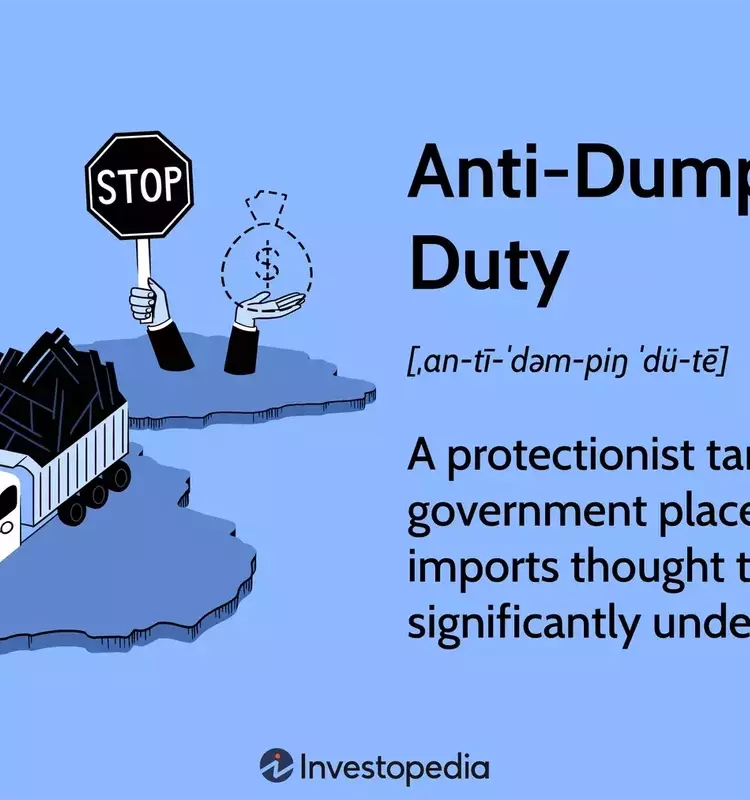
Anti-dumping measures serve as a crucial mechanism for governments to shield their local industries from unfair competition from abroad. By implementing tariffs on imports priced below their true market value, these duties aim to preserve domestic businesses and economies. While their primary goal is to protect jobs, they can inadvertently lead to increased costs for consumers and potentially diminish international competitiveness. Influential organizations like the U.S. International Trade Commission and the World Trade Organization oversee these measures to uphold equitable trade practices. The case of the U.S. steel industry vividly illustrates the complexities and effects of imposing such duties. Understanding these dynamics is vital for both businesses and policymakers navigating the intricate landscape of global trade.
Understanding Anti-Dumping Duties and Their Global Impact
An anti-dumping duty represents a safeguard mechanism employed by governments to shield their domestic markets from foreign goods that are intentionally priced below their genuine production cost or market value. This protectionist tariff aims to prevent overseas companies from flooding the market with excessively cheap products, which can severely undermine local businesses. While these duties are intended to preserve domestic jobs and industries, they can also lead to unintended consequences such as higher consumer prices and reduced international market competition.
In the United States, the International Trade Commission (ITC), an independent governmental body, is responsible for enforcing anti-dumping duties. The ITC’s decisions are guided by recommendations from the U.S. Department of Commerce and thorough investigations conducted by both agencies. These duties are typically enacted when foreign products are sold at prices significantly lower than their actual production costs, often surpassing the value of the goods themselves.
Although the primary objective of anti-dumping duties is job preservation, their implementation can result in increased costs for consumers. Over time, these duties may inadvertently curb international competition, potentially leading to less innovation and higher prices in protected sectors.
Internationally, the World Trade Organization (WTO) establishes the framework for anti-dumping regulations. The WTO does not directly intervene in individual cases of dumping but rather focuses on regulating how member governments respond to such practices. It permits governments to impose measures against dumping if it causes demonstrable harm to a domestic industry or impedes the establishment of a new one. However, this intervention must be justified to uphold the WTO's commitment to free-market principles, as anti-dumping duties can inherently distort market dynamics by allowing governments to influence pricing.
A compelling real-world illustration of anti-dumping duties occurred in June 2015, when prominent American steel manufacturers, including United States Steel Corp., Nucor Corp., Steel Dynamics Inc., ArcelorMittal USA, AK Steel Corp., and California Steel Industries, Inc., lodged a complaint with the U.S. Department of Commerce and the ITC. They alleged that several countries, notably China, were engaging in unfair trade practices by dumping steel into the U.S. market at artificially low prices. Following a year-long review, the U.S. responded in 2016 by imposing a substantial combined anti-dumping and countervailing import duty of 522% on certain steel products from China. This action sparked a challenge from China at the WTO in 2018, leading to ongoing trade disputes under the Trump administration, which continued to use WTO mechanisms to contest what it perceived as unfair trading practices by various partners.
The implementation of anti-dumping duties underscores a complex interplay between protecting domestic industries and maintaining fair international trade. While these duties offer a shield for local producers, their broader economic implications on consumers and global competition require careful consideration and continuous monitoring by international bodies like the WTO.
