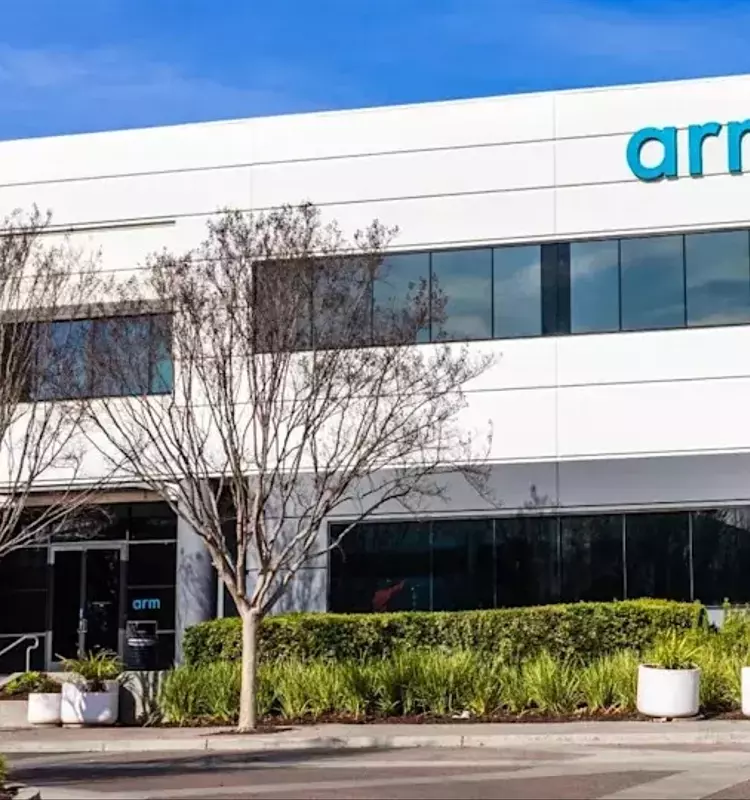
Arm Holdings (NASDAQ:ARM) has navigated a period of intense market fluctuation, witnessing a dramatic ascent followed by a considerable retreat from its highest valuation. Despite this recent pullback, which has seen its share price fall significantly from its peak, a compelling investment case remains. The company's strategic positioning within the burgeoning artificial intelligence (AI) data center market, coupled with substantial customer commitments from leading technology firms, underpins a positive outlook. However, potential investors must also consider factors such as its elevated valuation multiples and ongoing legal challenges, which present notable risks.
The current market landscape positions Arm as a key player in the evolution of AI infrastructure. Its proprietary architecture is becoming increasingly integral to the development of next-generation AI processors, attracting significant investment and collaboration from industry titans. This strategic advantage, combined with a strong financial performance in its recent fiscal year, suggests that the underlying business fundamentals are robust. While the path ahead may not replicate the rapid gains seen in previous periods, the long-term trajectory for Arm appears promising, especially given its foundational role in emerging technological paradigms.
Understanding Arm's Market Position and Investment Potential
Arm Holdings has demonstrated remarkable growth, with its stock price soaring from approximately $105 to a high of $452.70 in 2026, showcasing its potential as a high-growth technology investment. This significant appreciation reflects the market's enthusiasm for Arm's critical role in the evolving AI landscape. However, the subsequent 35% decline from its peak, bringing the shares to around $315, has prompted questions about the sustainability of its growth trajectory and whether the optimal investment window has passed. Despite this volatility, a comprehensive model projects a target price of $344.98 for Arm, indicating a confidence level of 90% for a "buy" recommendation.
This optimistic outlook is primarily driven by Arm's strategic importance in the development of agentic AI data centers. The company's technology is becoming the standard CPU architecture for these advanced computing environments, a trend supported by commitments from major tech companies like Meta, Google, NVIDIA, and Microsoft, all actively developing Arm-based silicon. Management forecasts over $2 billion in customer demand for Arm's AGI CPU in fiscal years 2027-2028, with the data center CPU market expected to exceed $100 billion by 2030. Such projections underscore the immense market opportunity and Arm's pivotal position to capitalize on it, with some Wall Street analysts setting even higher price targets, such as $500, based on anticipated significant revenue from agentic AI CPUs.
Navigating Risks and Future Prospects
While the growth prospects for Arm Holdings are substantial, potential investors must also weigh the considerable risks. A primary concern is the company's valuation, which currently stands at a trailing Price/Earnings (P/E) ratio of 402 and a forward P/E of 154. These figures suggest a premium valuation, indicating that much of the future growth is already priced into the stock. Additionally, non-GAAP operating margins have seen a compression from 52.8% to 49.1%, primarily due to a 43% increase in research and development (R&D) expenses, totaling $1.911 billion. This investment, while strategic for long-term growth in AI, impacts short-term profitability.
Further complicating the outlook are external factors such as the upcoming Qualcomm/Nuvia trial in Q4 CY2026, which could have implications for Arm's licensing agreements and market position. The broader geopolitical and regulatory environment also presents challenges, including potential 25% U.S. semiconductor tariffs and an ongoing FTC antitrust investigation reported in May. These elements collectively contribute to a "bear case" scenario, projecting a floor price of $268.49. Despite these risks, the long-term thesis remains compelling, particularly if Arm continues to execute on its AGI CPU roadmap, expand Armv9 royalty rates, and solidify its hyperscaler design wins, thereby strengthening its market dominance in AI infrastructure.
