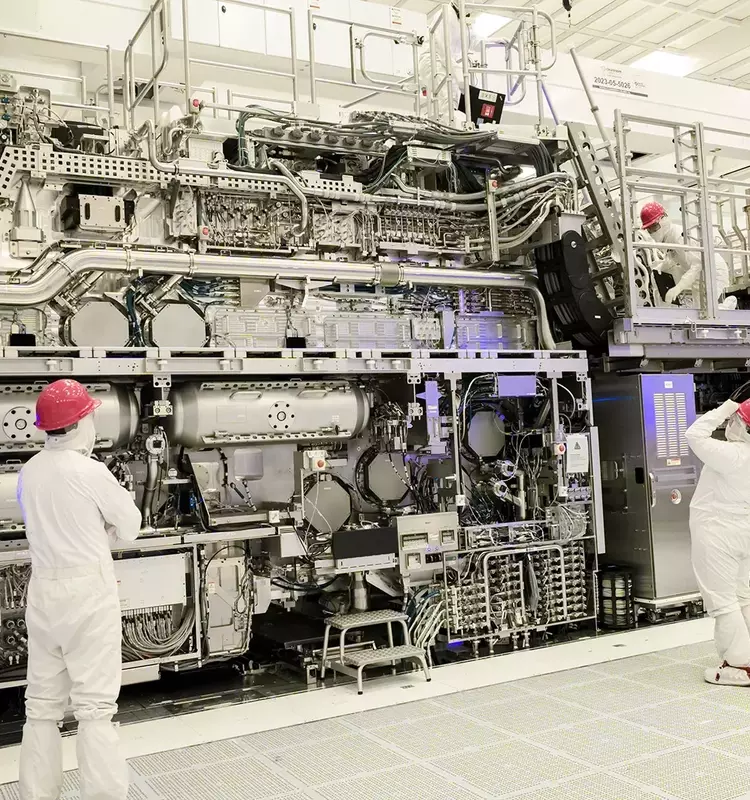
ASML, a pivotal entity in modern computing, has recently unveiled a substantial advancement in its extreme ultra-violet (EUV) lithography technology. This development promises to significantly enhance global chip manufacturing capabilities, projecting a 50% increase in production capacity by the year 2030.
The process of creating computer chips relies heavily on lithography, where intricate patterns are etched onto silicon wafers using light. The precision of these etchings, and thus the density of features like transistors on a chip, is directly linked to the wavelength of the light employed. Shorter wavelengths allow for finer details and more powerful chips. ASML currently holds a near-monopoly in the EUV lithography market, supplying the critical machinery used by leading chip manufacturers such as TSMC and Intel.
A primary challenge in this sophisticated process is generating and precisely directing adequate quantities of EUV light. Unlike visible light, EUV light is difficult to produce in volume and suffers significant losses when reflected. This necessitates an exceptionally powerful initial light source. ASML's existing systems utilize a complex method involving molten tin droplets that are repeatedly targeted by high-energy lasers to create the required EUV light. This intricate engineering underscores why few competitors can rival ASML in this specialized field.
According to reports, ASML’s latest innovation has successfully elevated EUV output from 600 watts in current machines to an impressive 1,000 watts. This substantial increase in light power translates directly into faster wafer processing. While the yield—the number of functional chips per wafer—remains consistent, the enhanced power allows for a higher throughput of wafers. ASML anticipates that this new, more potent EUV source will enable its machines to process 330 wafers per hour, a considerable jump from the current 220.
This technological leap is particularly vital given the ongoing capacity constraints within the computing sector. However, the benefits of this breakthrough are not immediate. ASML projects that the target of 330 wafers per hour will be achievable by 2030, indicating a waiting period before the industry can fully leverage this improved efficiency. Much like the anticipated growth in memory production, several years will pass before these advancements materialize into tangible impacts on the market.
The long-term implications of this development could be transformative for the electronics industry. While the immediate future may not see a dramatic shift in component availability or pricing, the increased production capacity by the end of the decade could alleviate some of the pressures currently faced by manufacturers and consumers alike. This progress, though gradual, represents a critical step forward in meeting the ever-growing demand for advanced computing components.
