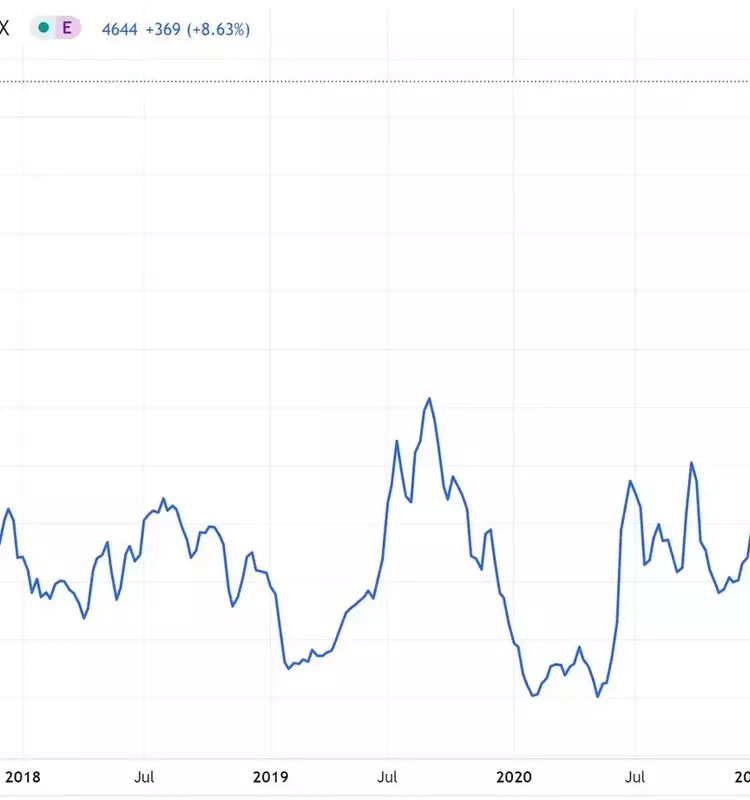
The Baltic Dry Index (BDI) functions as a crucial economic barometer, meticulously recording the expenses associated with the worldwide transportation of essential raw materials like coal and steel. This index, comprised of four distinct sub-indices that represent various sizes of dry bulk carriers, offers invaluable insights into the ebb and flow of global trade. Its inherent volatility mirrors shifts in the supply and demand for shipping capacity, making it a compelling predictor of future economic trends. By examining the BDI's movements, one can glean understanding into the health of diverse sectors, particularly those reliant on commodities such as coal, iron ore, and grains. However, despite its predictive power, the BDI is but one piece of the intricate economic puzzle and should be interpreted alongside other data points when making informed investment decisions.
Understanding the Baltic Dry Index: A Deep Dive into Global Shipping Economics
Originating from the London-based Baltic Exchange, the Baltic Dry Index (BDI) is an indispensable economic indicator that diligently measures the cost of transporting bulk raw materials across the world's oceans. This sophisticated index is not a singular entity but rather an aggregate of four specialized sub-indices: Capesize, Panamax, Supramax, and Handysize. Each sub-index represents a specific category of dry bulk carriers, differentiating them by their deadweight tonnage (DWT) and operational capabilities. This multi-faceted approach allows the BDI to provide a nuanced and comprehensive assessment of shipping rate trends.
The calculation of the BDI is a rigorous daily process. The Baltic Exchange meticulously collects shipping rates from numerous global routes, assessing over 20 different paths for each of its component vessel types. This extensive data collection, gleaned from interactions with dry bulk shippers worldwide, ensures a robust and geographically diverse measurement. The index is released daily, offering a real-time snapshot of the dry bulk shipping market.
The profound impact of the BDI on shipping costs stems from its sensitivity to global supply and demand. As an indicator primarily focused on raw materials—goods purchased for construction and manufacturing rather than speculative stockpiling—its fluctuations often foreshadow broader economic shifts. A surging BDI typically signals an increase in global demand for raw materials, implying an expansion of economic activity. Conversely, a sharp decline can indicate a contraction in demand, often preceding economic downturns. For instance, the significant drop in the BDI between September 2019 and January 2020, exceeding 70%, accurately hinted at an impending economic contraction, directly preceding the onset of the COVID-19 pandemic. Following this, the BDI saw a dramatic surge into 2021, reflecting the severe disruptions and delays in global shipping caused by the pandemic.
The vessel sizes contributing to the BDI are diverse, each tailored for specific cargo and routes. Capesize ships, the giants of the fleet, boast a capacity of 100,000 DWT or more, with an average of 156,000 DWT. Some can even reach a colossal 400,000 DWT. These behemoths predominantly ferry iron ore and coal on extensive international voyages, occasionally transporting grains, and are too large to traverse the Panama Canal. Panamax vessels, ranging from 60,000 to 80,000 DWT, primarily carry coal, grains, and smaller bulk goods like cement. These ships, while substantial, require specialized loading facilities and are designed to just fit through the iconic Panama Canal. The smallest category, Supramax (also known as Handymax), with capacities between 45,000 and 59,999 DWT, possesses unique loading equipment that grants them access to ports inaccessible to Panamax ships, thereby enhancing their versatility.
The commodities underpinning the BDI are broadly categorized into major and minor dry bulks. Major bulks, such as iron ore, coal, and grain, constitute approximately two-thirds of the world's dry bulk trade. India, China, and Japan stand out as major importers of energy-related dry bulks. Minor bulks encompass a variety of goods including steel products, sugars, and cement, making up the remaining third of the global dry bulk trade. The demand for these raw, pre-production materials is largely non-speculative, contributing to the index's reliable reflection of industrial activity. However, the BDI can exhibit considerable volatility. This is particularly true when global demand for raw materials experiences sudden surges or sharp declines, primarily because the supply of large dry bulk carriers is limited, with long lead times for construction and high production costs, preventing rapid adjustments to market fluctuations.
Navigating the Economic Currents: The Enduring Relevance of the Baltic Dry Index
The Baltic Dry Index (BDI), a widely recognized barometer of global economic health, offers a unique window into the underlying currents of trade and growth. Its historical movements, particularly in times of significant economic upheaval such as the 2008 financial crisis and the recent COVID-19 pandemic, have repeatedly demonstrated its capacity to signal major disruptions and recoveries. The BDI's sensitivity to the fundamental forces of supply and demand in the shipping industry makes it an indispensable tool for analysts seeking early indications of shifts in global economic activity. By focusing on the movement of essential raw materials, the index bypasses many of the complex and often distorting factors that influence other market indicators, providing a relatively unvarnished view of industrial demand. While its inherent volatility necessitates a cautious approach, the BDI serves as a powerful reminder of the interconnectedness of global economies and the critical role played by the often-unseen maritime trade in shaping our collective economic destiny.
