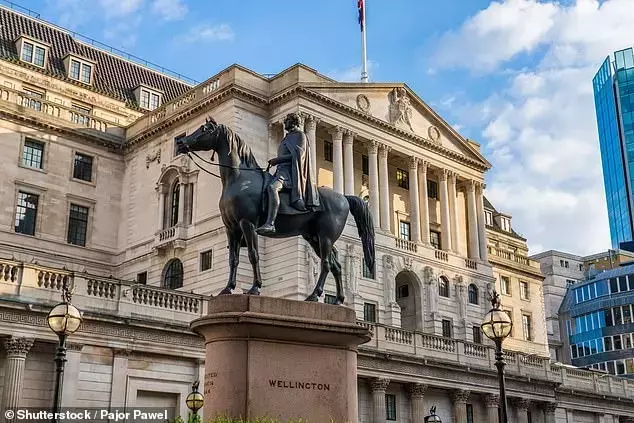
The Bank of England has opted to keep its key interest rate at 4%, a decision that financial markets largely expected. This move signals a cautious approach to managing the economy, particularly in light of ongoing concerns about inflationary pressures. While this stability might disappoint homeowners anticipating lower mortgage payments, it brings a degree of reassurance to savers. The future course of these rates remains tied to broader economic indicators, notably the rate of inflation and the overall health of the economy.
Bank of England Maintains Interest Rate at 4%, Shaping Future of Mortgages and Savings
In a pivotal announcement made on September 18, 2025, the Bank of England's Monetary Policy Committee (MPC) decided to hold the base interest rate at 4 percent. This action, largely foreseen by financial analysts, reflects a careful balance in managing economic stability amidst fears of escalating inflation. The committee's vote was split 7-2, with two members advocating for a 0.25 percentage point reduction. This follows a previous cut in August, which lowered rates from 4.25% to the current 4%, a significant drop from the 5.25% peak recorded just over a year prior.
For homeowners with mortgages, this decision means that the immediate prospect of lower borrowing costs has dimmed. Lenders typically factor in long-term interest rate trends, rather than reacting solely to individual policy decisions, suggesting that current mortgage rates are likely to remain stable. Industry experts, such as Chris Sykes, a property finance specialist at MSP Financial Solutions, noted that the market had already priced in this hold, leading to minimal changes in mortgage offerings. Currently, the most competitive two-year fixed-rate mortgages for those remortgaging with substantial equity stand at approximately 3.81%, while five-year fixes are around 3.88%.
Conversely, this rate retention is generally good news for savers. When the base rate remains steady or falls less than anticipated, it typically helps in stabilizing, or at least slowing the decline of, interest earned on savings accounts. However, savings rates have been on a downward trajectory, with the average easy-access account currently yielding below 3%, significantly less than the 3.8% inflation rate reported by the ONS for August. Financial experts, including James Blower, founder of The Savings Guru, highlight that current savings rates are still relatively high given the 4% base rate, but anticipate further declines if the base rate eventually falls to 3.5% as some market forecasts suggest for 2026.
The economic landscape continues to be shaped by inflation, which remained at 3.8% in August, exceeding the Bank's 2% target. This persistent inflation complicates the Bank's ability to stimulate economic growth through rate cuts. Peter Stimson, director of mortgages at MPowered, articulated this challenge, stating that a rate cut risks fueling inflation. The next MPC meeting in November will be crucial, with its outcome heavily dependent on evolving inflation figures and overall economic performance.
This decision by the Bank of England underscores the delicate balance policymakers must strike between supporting economic growth and controlling inflation. For individuals, this means continued vigilance over personal finances. Mortgage holders should consider locking in competitive fixed rates if they haven't already, as significant further reductions appear unlikely in the short term. Savers, meanwhile, should actively seek out the best available rates, particularly in fixed-rate bonds and ISAs, to protect their capital from being eroded by inflation. The market continues to evolve, making informed and proactive financial planning more important than ever.