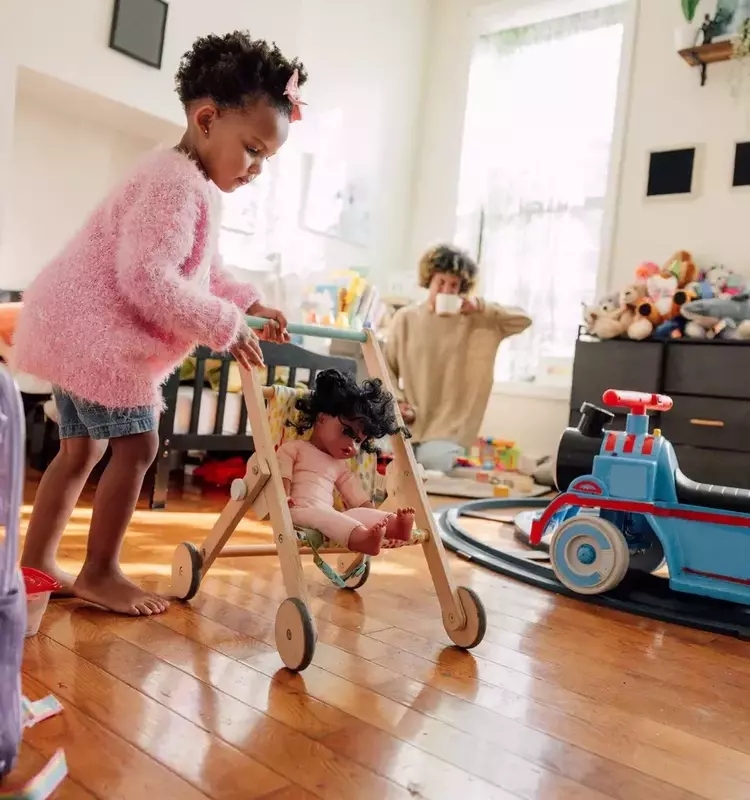
In an age saturated with consumerism, parents often feel pressured to constantly acquire the latest playthings for their children. However, a growing body of evidence suggests that a more restrained approach to toy ownership can actually be more beneficial for a child's development. This article delves into the concept of 'less is more' regarding toys, providing insights and strategies for parents to cultivate a more focused and creative play environment for their children.
The continuous influx of new products in the market often leads parents to believe that providing an abundance of toys is essential for their children's well-being and development. This societal expectation can result in cluttered homes and overwhelmed children. Many parents eventually discover that an excessive number of possessions, particularly toys, can be counterproductive, diminishing rather than enhancing the play experience.
As children mature, their desires for specific types of toys evolve, but the sheer quantity of items frequently remains constant. This overabundance often transforms tidying into an impossible chore, leading to household friction. Moreover, gifts from well-meaning relatives and friends contribute significantly to this accumulation, particularly during festive seasons and birthdays. Consequently, parents are left to grapple with how to effectively manage this ever-growing collection of playthings.
A study involving toddlers aged 18 to 30 months revealed a significant finding: children displayed superior play skills when presented with a limited selection of four toys, as opposed to sixteen. This research indicates that an excessive number of options can lead to overstimulation and distraction, hindering sustained engagement in play. Prolonged, focused play is crucial for children's cognitive and creative development, and a pared-down toy environment appears to facilitate this.
Evan Gold, a father of two and the founder of Simplify Parenthood, advocates for a minimalist approach to toys. He found that reducing his children's toy collection by half led to more prolonged and imaginative play. Gold emphasizes the importance of open-ended toys that can be utilized in various ways, suggesting that a small collection of such toys holds greater developmental value than a large assortment of single-purpose items.
Determining the ideal number of toys for a child can be challenging. Gold offers a guideline based on age: infants benefit from 4-6 simple, multi-sensory toys; toddlers thrive with 8-12 toys that encourage diverse skills like stacking or sorting; and preschoolers and older children can manage 12-15 core toys, supplemented by a few specialized items. This structured approach helps ensure that children have access to engaging toys without being overwhelmed.
When children have too many toys, they tend to exhibit restless behavior, flitting from one item to another without deeply engaging with any of them. This can lead to quick boredom and agitation. Both parents and children can experience feelings of overwhelm due to toy clutter, which might cause children to neglect their toys if the sheer volume makes it difficult to choose or access desired items.
Play is a fundamental aspect of childhood development, enabling children to understand their surroundings and acquire essential skills. Rachel, a mother of a 6-year-old, highlights the stress caused by visual clutter from toys. She notes that craft supplies and dress-up items are often her child's most engaging toys, while those specifically requested during holidays are frequently forgotten, leading to wasted resources and ecological concerns.
To manage toy collections more effectively, toy rotation is a practical strategy. Gold rotates his children's toys every few weeks, keeping only a third available at any given time. This method maintains children's interest and, as they grow, allows them to participate in the selection process. Other tips include establishing toy criteria, focusing on accessible storage solutions, and involving children in decluttering efforts, such as playing a 'Keep It Or Leave It' game to decide which toys to retain, donate, or discard.
Parents can also influence the inflow of new toys by communicating their preferences to friends and family. Some parents opt for "no gifts, please" policies for birthday parties, shifting the focus to shared experiences rather than material possessions. Alternatively, suggesting donations, books, or contributions to experiences like museum memberships or family vacations can be effective. This encourages a greater appreciation for time spent with loved ones over the accumulation of objects.
Embracing a minimalist approach to children's toys promotes focused and creative play. By carefully selecting developmentally appropriate toys, implementing rotation systems, and collaborating with children on decluttering, families can navigate the challenge of toy accumulation. Furthermore, encouraging experience-based gifts from friends and family helps foster a deeper appreciation for shared moments and reduces material overload.
