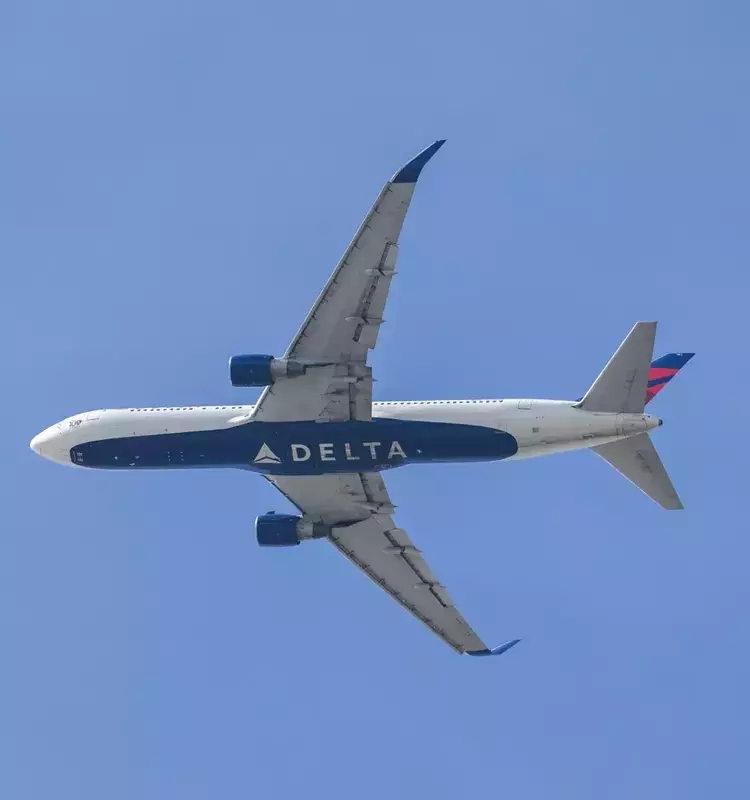
Berkshire Hathaway's recent acquisition of a substantial share in Delta Air Lines signals a noteworthy change in the company's investment philosophy, moving away from Warren Buffett's historical reservations regarding the airline sector. This strategic decision, executed during the initial quarter of CEO Greg Abel's leadership, sparks considerable interest, particularly given Buffett's well-documented past critiques and prior financial setbacks in airline investments. Despite previous cautionary statements and a significant loss from divesting airline holdings in 2020, Berkshire now perceives inherent value in Delta. This shift is underscored by Berkshire's considerable cash reserves and Delta's demonstrated profitability, even as the airline industry navigates ongoing challenges such as escalating fuel prices.
Berkshire Hathaway has embarked on a new chapter in its investment strategy, highlighted by its recent substantial investment in Delta Air Lines. This move represents a significant deviation from the cautious approach historically advocated by Warren Buffett, who famously regarded airline investments with skepticism due to their volatile nature and limited competitive advantages. The acquisition, valued at $2.65 billion for 39.8 million shares, occurred in the first quarter under the leadership of Greg Abel, who assumed the CEO role after Buffett's six-decade tenure. This investment challenges Buffett's long-standing warnings, including his humorous anecdote about turning a billionaire into a millionaire by buying an airline, and his personal experience of significant losses from previous airline ventures, such as the U.S. Air preferred stock in 1989 and the complete divestment of major airline stakes in 2020 during the COVID-19 pandemic.
Berkshire Hathaway's Strategic Shift to Airline Investments
Berkshire Hathaway, under the new leadership of CEO Greg Abel, recently made a significant move by acquiring a substantial stake in Delta Air Lines. This decision marks a notable departure from the long-standing investment philosophy of its former CEO, Warren Buffett, who famously expressed reservations about the airline industry. The acquisition of Delta shares, valued at $2.65 billion, has ignited discussions among investors and market analysts. Despite Buffett's past warnings and his own experiences with losses in the airline sector, the current leadership sees a strategic opportunity, potentially influenced by Delta's recent financial performance and Berkshire's substantial cash reserves.
This strategic shift is particularly striking given Warren Buffett's public statements over the years, where he consistently voiced skepticism about the profitability and long-term viability of airline investments. His memorable quip about turning a billionaire into a millionaire by investing in an airline encapsulated his cautious stance. Furthermore, Berkshire Hathaway experienced significant financial setbacks from its previous airline holdings, including a substantial loss when divesting its stakes in American, Delta, Southwest, and United Airlines during the 2020 COVID-19 pandemic. However, with Delta reporting $5 billion in profit for fiscal year 2025 and Berkshire Hathaway sitting on a record $397.38 billion in cash reserves, the company's new leadership evidently perceives a change in market dynamics. This current investment suggests a belief that Delta Air Lines, despite its challenges like fluctuating fuel prices and intermittent passenger revenue shortfalls, presents a compelling value proposition that warrants a renewed entry into the airline sector.
Navigating Past Skepticism and Future Challenges
The latest investment by Berkshire Hathaway in Delta Air Lines not only signifies a strategic pivot but also necessitates a careful navigation of the historical skepticism surrounding airline investments, particularly those articulated by Warren Buffett. His past pronouncements, which included vivid analogies of airlines as financial pitfalls and candid admissions of personal losses from previous ventures, underscored a deeply ingrained caution. This historical context raises questions about the motivations behind the current investment, prompting a re-evaluation of the airline industry's fundamentals and Delta's specific position within it. While the airline sector continues to face inherent challenges, including sensitivity to fuel costs and economic downturns, Berkshire's move suggests a calculated bet on Delta's future performance and resilience.
Buffett's persistent warnings, dating back to his 1996 shareholder letter and reinforced in his 2007 correspondence, highlighted the airline industry's elusive competitive advantages and its tendency to consume capital without consistent returns. His regret over the 1989 investment in U.S. Air, which ultimately led to significant financial distress, served as a powerful cautionary tale. Even after a brief return to airline investments in 2016, Berkshire liquidated its holdings at a multibillion-dollar loss during the 2020 pandemic, seemingly reinforcing Buffett's long-held beliefs. However, the present investment in Delta suggests that factors such as Delta's recent profitability in 2025 and Berkshire's substantial cash reserves have outweighed these historical concerns. Despite these positive indicators, the airline industry remains a challenging environment, as evidenced by Delta's recent struggles with passenger revenue per available seat mile and the impact of rising jet fuel prices, which continue to put pressure on the company's stock performance.
