Empowering the Public: A Vision for Shared AI Prosperity
Legislative Introduction: A Proposal for Public AI Ownership
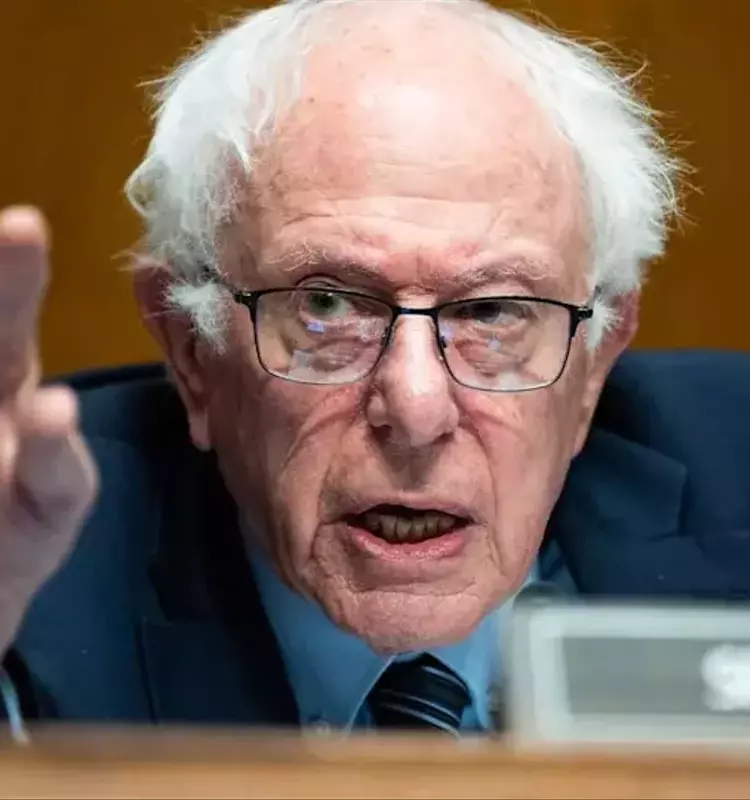
On Thursday, Senator Bernie Sanders formally introduced a legislative package designed to grant the American populace a direct 50% equity stake in the nation's leading artificial intelligence enterprises. This unprecedented move would be facilitated through a singular tax on the stock of these companies.
The Mechanism: $7 Trillion Federal AI Fund
As outlined in the proposed law, companies generating over $200 million in annual AI revenue would be mandated to transfer half of their shares to a newly established federal fund. According to Associated Press reports, Sanders estimates this fund could amass approximately $7 trillion in value, signifying a monumental shift in wealth distribution.
Oversight and Distribution: Empowering Citizens with AI Dividends
An independent, seven-member commission, subject to presidential nomination and Senate confirmation, would be tasked with overseeing this massive fund. This body would leverage its voting power to challenge corporate actions deemed detrimental to the average American. Sanders projects that each American citizen would receive direct annual payments exceeding $1,000, derived from a mandatory 5% dividend distribution from the fund. Furthermore, any new AI companies reaching the specified revenue threshold would be subject to the same equity transfer requirement.
Sanders' Stance: Prioritizing Public Benefit Over Corporate Profits
Senator Sanders emphasized the core principle behind his proposal: "The advantages cannot exclusively benefit a select group of affluent corporations. They must be disseminated among the American people." He asserted that the legislation would also necessitate the division of operations for large companies involved in both AI and non-AI sectors, ensuring that public ownership is concentrated within the AI segment. Critically, Sanders noted that any decline in AI company valuations would be borne by the companies themselves, not the federal government.
Broader Dialogue: AI Wealth Distribution Across the Political Spectrum
The concept of governmental participation in AI companies has garnered attention across various political viewpoints, though Sanders' plan stands out for its ambitious scope. OpenAI CEO Sam Altman has previously advocated for a public wealth mechanism to broadly disseminate AI profits. Similarly, Anthropic's Dario Amodei has expressed openness to analogous arrangements, suggesting that taxes on AI companies could support universal basic income initiatives. Even former President Trump has publicly entertained the idea of government involvement in AI development, envisioning it as a partnership with the American populace.
Distinguishing Approaches: Sanders' Firm Stance on Public Ownership
In his remarks to the Associated Press, Sanders clearly differentiated his legislative approach from more moderate proposals. He stated, "I believe individuals like Sam Altman and Trump, who may be sympathetic to this concept, are essentially saying: 'We're accumulating vast fortunes, so we'll be magnanimous and perhaps placate the public.' That is not the essence of our discussion."
Escalating the Debate: Aggressive Public Ownership of AI
The notion of federal government acquiring equity in private AI firms has been a subject of ongoing debate, with the previous administration exploring financial stakes in leading AI companies following Altman's initial proposition in 2025. Sanders' bill, however, represents a more assertive approach, advocating for outright public ownership of half of the largest AI corporations and direct involvement in their corporate governance.
Future Strategy: Campaigning on AI Ownership and Economic Equity
When questioned about his future political strategy, Sanders unequivocally indicated his intention to center his midterm campaign efforts on the issues of AI ownership and economic disparity, solidifying these as critical components of his political agenda
