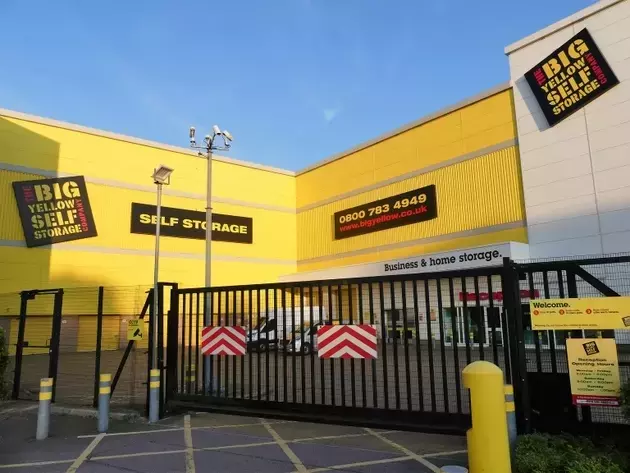
Big Yellow, a prominent player in the UK's self-storage sector, has experienced a notable downturn in its stock performance over recent months, with its value decreasing by almost a quarter since last October. This dip has made its valuation more attractive, now reflecting a significant 35% discount relative to its net asset value, leading to a revised 'hold' recommendation. While the company recorded a 2% increase in both revenue and adjusted profit before tax, a considerable drop in occupancy to 74.2% has sparked discussions about potential market saturation or heightened competition. Despite these challenges, Big Yellow continues its commitment to shareholders through a steady dividend, offering an attractive yield of 5.2% and adhering to a policy of distributing at least 80% of its adjusted earnings per share. The consolidating nature of the self-storage industry also presents a possibility of takeover bids, though this is not the primary driver of the current investment case.
Valuation and Market Concerns
The recent stock market performance of Big Yellow has brought its valuation into focus. A substantial 25% decline in share price since October has positioned the company at a 35% discount to its net asset value, suggesting that the stock is now more reasonably priced for investors. This adjustment has led to a 'hold' rating, indicating that while the company possesses solid fundamentals, current market conditions and specific operational factors temper expectations for significant short-term growth. This more balanced valuation offers an entry point for those considering long-term positions, acknowledging the underlying value despite recent share price movements. The perceived undervaluation, when juxtaposed with its steady operational performance, highlights a potential disconnect between market sentiment and intrinsic worth.
Despite a 2% growth in revenue and adjusted profit before tax, the significant fall in occupancy to 74.2% poses a critical concern. This drop could be an early indicator of increased competition or an oversupply of self-storage units in key markets, potentially impacting future earnings and growth prospects. Such a decline in occupancy demands careful monitoring, as it directly affects the company's profitability and capacity utilization. Investors are now tasked with weighing the attractiveness of a discounted valuation against the risks associated with a potentially saturated market. The company's ability to navigate these occupancy challenges will be crucial in determining its long-term financial health and stock performance, making strategic operational adjustments and market differentiation vital moving forward.
Dividend Policy and Takeover Potential
Big Yellow's commitment to its shareholders is evident in its consistent dividend growth and attractive yield. With a current dividend yield of 5.2% and a clear policy to distribute at least 80% of its adjusted earnings per share, the company demonstrates a strong focus on returning value to investors. This reliable dividend payout provides a degree of stability and predictability, which is particularly appealing in a fluctuating market environment. The modest yet consistent growth in dividends reinforces the company's financial discipline and its ability to generate sustainable cash flows, underscoring its appeal as an income-generating investment. This steadfast approach to shareholder returns is a key component of its investment profile.
The self-storage sector is currently experiencing a trend of consolidation, which introduces the intriguing possibility of Big Yellow becoming a takeover target. While not the central element of the current investment thesis, the ongoing M&A activity within the industry cannot be overlooked. Such a scenario could unlock additional value for shareholders beyond the company's operational performance. However, relying solely on a potential takeover for investment returns is speculative. Instead, the company's robust dividend policy and reasonable valuation form the core pillars of its investment appeal, with takeover potential serving as an ancillary, yet noteworthy, consideration that could provide an upside surprise in the evolving self-storage landscape. Investors should appreciate the intrinsic value first, with M&A as an added, but not guaranteed, benefit.
