Blizzard's AI Stance: Human Creativity Prevails in 'World of Warcraft: Midnight' Score
Games

Blizzard's AI Stance: Human Creativity Prevails in 'World of Warcraft: Midnight' Score

authorBy Sid Meier
DateMar 01, 2026
Read time2 min

In an industry increasingly embracing generative artificial intelligence, Blizzard Entertainment appears to be charting a different course, particularly within its development studios. Recent statements from key personnel indicate a strong preference for human-driven creativity, sidestepping the growing trend of integrating AI into various aspects of game production, from voice acting to visual art and even chat functionalities.

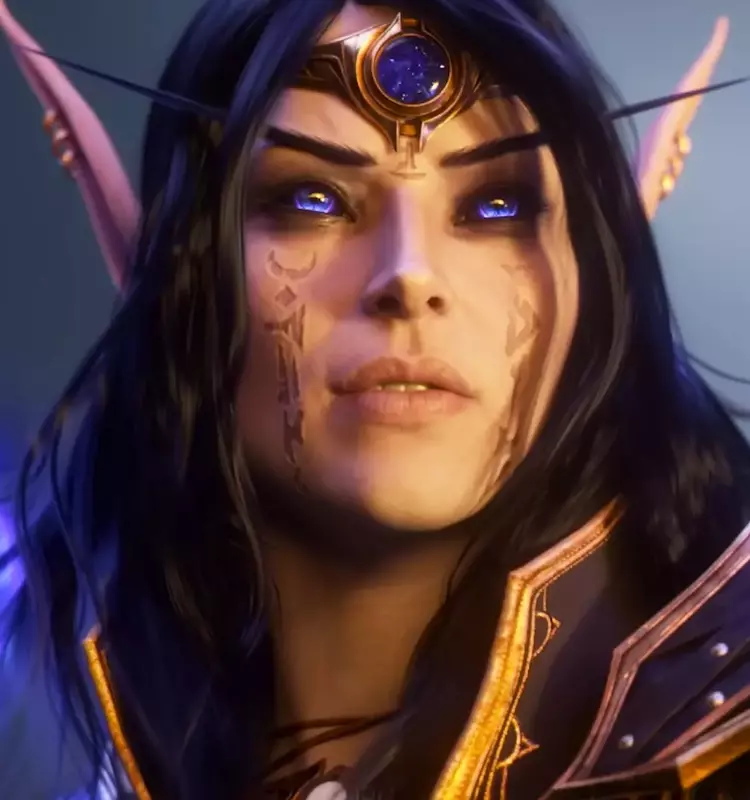
This commitment to human artistry is prominently highlighted in the creation of the musical score for the highly anticipated 'World of Warcraft: Midnight.' Leo Kaliski, the lead composer for the project, expressed a sense of fortune and satisfaction that generative AI is not being employed in the composition process. He emphasized the team's dedication to creating music through their own artistic vision and skill, asserting that they are simply crafting what they believe sounds compelling.

Kaliski's sentiments echo earlier declarations from other Blizzard developers. Aaron Keller, the game director for 'Overwatch,' previously voiced discomfort with presenting AI-generated content to players. Similarly, John Hight, former franchise director for 'World of Warcraft,' explicitly stated last year that AI was not being used in the development of the popular massively multiplayer online game. These consistent positions suggest a thoughtful and perhaps cautious approach to AI implementation within Blizzard's individual development teams.

While the company's president, Johanna Faries, has acknowledged the existence of a centralized governance team exploring the role of AI in development cycles, the messaging from specific game teams indicates a degree of autonomy in their creative decisions. This contrasts sharply with some industry counterparts whose leadership has enthusiastically endorsed AI as a foundational element for future projects, often with a more top-down directive.

Despite the current stance, the long-term trajectory remains uncertain, especially given the significant investment and interest of Blizzard's parent company, Microsoft, in integrating generative AI across its diverse portfolio. The hope is that the developers themselves, potentially bolstered by recent unionization efforts within Blizzard, can continue to advocate for and preserve human-centric creative processes in their games.

The distinction between the views of individual development teams and corporate directives highlights a broader industry debate. As generative AI becomes more sophisticated, the challenge for game studios will be to balance innovation with artistic integrity and player expectations. Blizzard's current approach, favoring human ingenuity, positions it as a notable entity in this evolving landscape.

More Articles
Rollin' Rascal: A Modern Take on Classic 3D Platforming
Discover Rollin' Rascal, a high-speed 3D platformer inspired by the classic Sonic Adventure games, now featuring ranked multiplayer. Developed by Gabriel Gonzales, known for his Sonic fangame Sonic GT, Rollin' Rascal offers exhilarating momentum-based physics, expansive levels with ramps and grind rails, and two playable characters, Rascal and QT. This demo, showcased at Steam Next Fest, highlights its impressive speed and fluid movement, despite minor bugs and a need for more diverse objectives. It promises a fresh, engaging experience for fans of fast-paced platforming.
By Jane McGonigalMar 01, 2026
Overwatch Sanrio Collaboration Inspires Rapid Cosplay Trend
The recent Overwatch x Sanrio collaboration has taken the gaming and cosplay communities by storm, with fans quickly embracing the adorable new character skins. This article explores the immediate and creative responses from cosplayers, who are showcasing impressive ingenuity in bringing these unique designs to life, highlighting popular interpretations and discussing the ease of adapting the game's new aesthetic into real-world costumes.
By Jane McGonigalMar 01, 2026
The Obscure Anime Origins of a New 'Magic: The Gathering' TMNT Card
A newly released Magic: The Gathering card featuring Leonardo from Teenage Mutant Ninja Turtles showcases a unique design from the rarely seen 1996 anime, "Mutant Turtles: Superman Legend." This article delves into the unexpected history behind this distinctive character iteration, exploring its connection to struggling toy sales and an attempt to revitalize the franchise in the Japanese market through two special episodes.
By Hideo KojimaMar 01, 2026
Space Marine 2 Players Criticize New Voice Line DLC for Poor Quality and Value
Players of Space Marine 2 are expressing significant dissatisfaction with the recently released $5 voice line DLC. Many find the content lacking in quality and value, citing issues such as voice interruptions, limited new lines, and the overall impression of being low-effort. This has led to widespread disappointment among the community, sparking discussions on forums and social media about the perceived 'scummy' nature of the offering.
By Kim SwiftMar 01, 2026
Stardew Valley's Soundtrack: The Unsung Hero of Cozy Gaming
This article explores the often-overlooked soundtrack of Stardew Valley, highlighting how its unique blend of nostalgic and fresh musical elements contributes significantly to the game's enduring charm and cozy atmosphere. The author argues that unlike many other relaxing games, Stardew Valley's music is distinct and memorable, capable of evoking deep emotional connections, a testament to its creator Eric Barone's profound involvement.
By Mark RosewaterMar 01, 2026