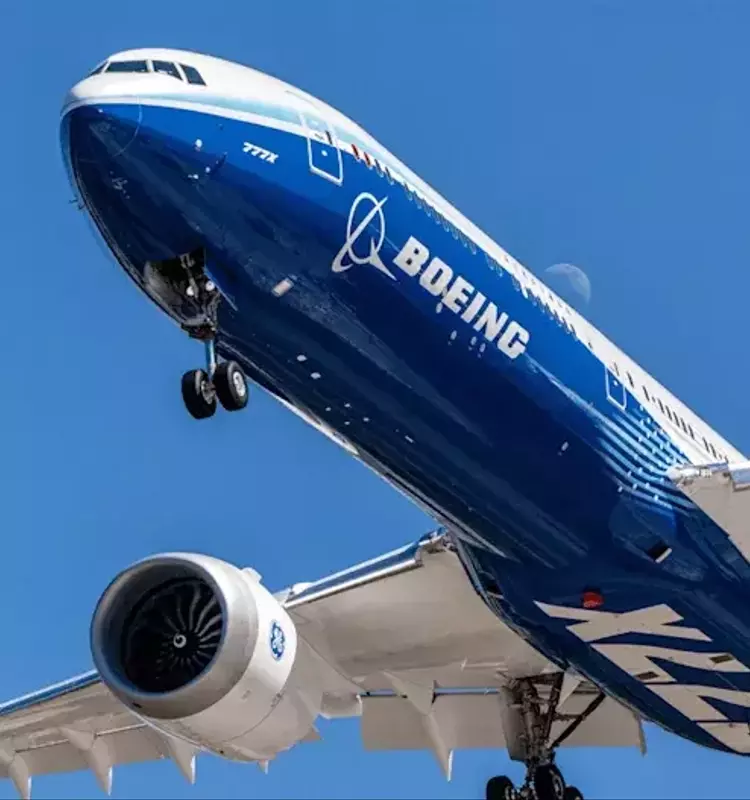
Boeing Co. recently disclosed its financial performance for the second quarter, reporting an adjusted loss that was more substantial than analysts had projected. This occurred even as the company's revenue exceeded market expectations, fueled by an increase in aircraft deliveries and the generation of positive cash flow. Despite the wider loss, the aerospace manufacturer's shares saw a slight uptick following the release of these results, reflecting a complex picture of its operational and financial health.
In the second quarter, Boeing recorded an adjusted loss of $0.76 per share, which was below the consensus estimate of a $0.29 per share loss. However, the company's revenue demonstrated an impressive 8% year-over-year increase, reaching $24.6 billion, surpassing the anticipated $23.95 billion. This revenue growth was largely propelled by a significant increase in commercial aircraft deliveries, with 171 units delivered compared to 150 in the same period last year. Furthermore, Boeing achieved an operating cash flow of $1.4 billion and a free cash flow of $0.6 billion, showcasing an improved liquidity position. The company's order backlog also expanded, reaching a record $715 billion, which includes over 6,200 commercial aircraft, highlighting strong future demand for its products.
Kelly Ortberg, Boeing's president and CEO, expressed satisfaction with the progress made, noting the stabilization of operations and the adherence to schedules for key certification programs. Within the Commercial Airplanes division, revenue climbed by 8% to $11.8 billion. Despite this sales increase, the segment continued to operate at a loss, posting a negative operating margin of 2.7%. During this period, Boeing initiated the transition of its 737 production program to an increased rate of 47 aircraft per month. Significant strides were also made in the certification process for the 737-7 and 737-10 models, with flight testing completed and certifications on track for 2026, anticipating first deliveries in 2027.
Conversely, the Defence, Space & Security division experienced a 13% revenue growth, reaching $7.5 billion. However, this segment also reported a negative operating margin of 0.2%, primarily due to $280 million in program losses associated with the VC-25B aircraft. In contrast, Boeing's Global Services division continued to be a strong performer, generating $5.3 billion in revenue and achieving an impressive operating margin of 18.1%, underscoring its role as a key driver of profitability for the company.
The second-quarter results present a nuanced view of Boeing's financial standing. While facing larger-than-expected adjusted losses, the company demonstrated robust revenue growth and positive cash flow, driven by increased commercial aircraft deliveries and a substantial order backlog. The Commercial Airplanes division is ramping up production and moving forward with crucial certifications, while the Global Services segment continues to bolster overall profitability.
