Bond Market Turmoil: A Deep Dive into Rising Treasury Yields and Equity Market Reactions
Finance

Bond Market Turmoil: A Deep Dive into Rising Treasury Yields and Equity Market Reactions

authorBy Mariana Mazzucato
DateAug 23, 2026
Read time3 min

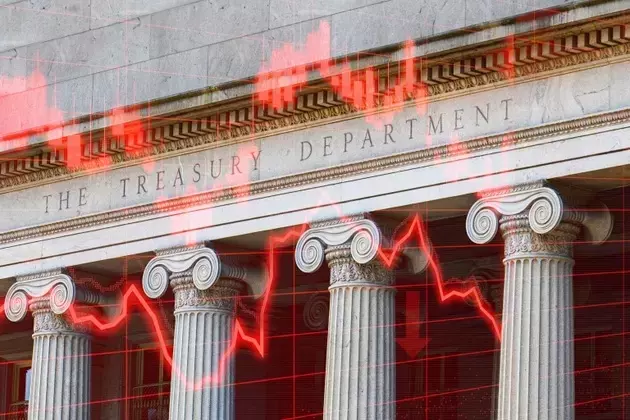
The financial markets experienced a week of significant upheaval, largely driven by a dramatic surge in bond yields. Long-dated Treasury yields reached levels not observed in decades, with the 30-year Treasury yield briefly surpassing 5.30%, marking a 19-year high. Concurrently, the 10-year Treasury yield closed the week at 4.738%, nearing a 20-month peak. This unprecedented movement in fixed-income markets sent ripples across equity valuations, prompting a re-evaluation of risk and return profiles. The S&P 500 saw a decline of 1.33%, the Nasdaq 100 dropped by 2.41%, and the Russell 2000 fell by 1.63%. In contrast, the Dow Jones Industrial Average demonstrated relative stability, declining by a more modest 0.80%. This broad market reaction underscores the interconnectedness of global financial systems and the profound influence of interest rate fluctuations on investor sentiment and asset prices.

The sharp increase in Treasury yields can be attributed to a confluence of factors, including persistent inflation concerns, hawkish signals from central banks, and robust economic data suggesting a resilient economy. Investors are increasingly pricing in the likelihood of higher interest rates for a longer period, a shift that directly impacts the present value of future cash flows, particularly for growth-oriented assets. The 14-day Relative Strength Index (RSI) for the S&P 500 has retreated to a neutral 54, moving away from the overbought conditions observed during the August rally. This technical indicator suggests that the market may be finding a new equilibrium after recent volatility. Furthermore, the dominance of the 'basis trade' in bond market activity, accounting for 35% of positions, highlights the prevalence of arbitrage strategies. This, combined with swap spread arbitrage and curve trades, leaves genuine buy-and-hold investors as a marginal force, representing only about 3% of the market. This structural characteristic of the bond market can amplify volatility during periods of stress, as highly leveraged positions may be forced to unwind, leading to rapid price movements.

The implications of such a significant shift in bond yields extend beyond immediate market movements. Higher borrowing costs for corporations and consumers can dampen economic activity, potentially leading to slower growth and increased recession risks. For equity investors, the rise in the risk-free rate makes bonds a more attractive alternative, often leading to a rotation out of stocks, especially those with high valuations and distant earnings prospects. The current market environment calls for a cautious approach, with a focus on companies with strong fundamentals, robust cash flows, and sustainable competitive advantages. The increased cost of capital also influences corporate financing decisions, potentially leading to reduced share buybacks and capital expenditures. This complex interplay between monetary policy, economic data, and investor behavior creates a challenging landscape for navigating the financial markets.

The bond market's recent performance serves as a critical indicator of underlying economic pressures and investor expectations. The sustained upward trajectory of Treasury yields reflects a market grappling with inflation, monetary policy tightening, and the broader economic outlook. While the equity markets have shown varying degrees of resilience, the overarching narrative remains one of caution and adaptation. Investors are urged to closely monitor macroeconomic developments and adjust their portfolios accordingly, recognizing that the current environment demands a nuanced understanding of market dynamics and a proactive risk management strategy.

More Articles
Finance
Nvidia's Earnings: High Expectations and Asymmetric Risks
Nvidia is facing extremely high expectations from the market as it approaches its earnings report. Analysts are predicting strong growth, setting a demanding benchmark for the company to surpass. Options and technical data indicate an imbalanced risk profile following the earnings release, with limited potential for significant gains and a considerable risk of a sharp decline to the $190 support level. Despite its history of consistently exceeding estimates, Nvidia's stock movements post-earnings typically stay within the implied ranges set by options, thus curbing the likelihood of exceptionally large gains.
By Robert KiyosakiAug 23, 2026
Finance
Weekly Dividend Increases: Analysis of Recent Announcements
This article summarizes dividend announcements from the past week, highlighting companies that have increased their dividends and one that declared a special dividend. Key companies discussed include Ubiquiti and Popular, both showing significant dividend growth. The analysis also covers investment-grade stocks like BPOP, SYBT, UI, and UNTY, assessing their valuations and dividend safety. A special dividend from ETD is noted, along with concerns about its sustainability.
By Michele FerreroAug 23, 2026
Finance
American Homes 4 Rent: A Solid Buy for Rental Property Investment
American Homes 4 Rent (AMH) presents a compelling investment opportunity, earning a "Buy" rating due to its attractive valuation and the positive impact of regulatory clarity on its operational advantages. The company showcased robust performance in Q2, with occupancy rates holding strong at 96.1%, alongside favorable lease spreads and stringent control over expenses. These factors collectively propelled its core FFO/share to a 5.2% year-over-year increase. Furthermore, the legislative landscape, particularly the ROAD to Housing Act, is poised to limit new entrants, thereby fortifying AMH's market position. AMH is also strategically expanding through its build-to-rent initiatives and exploring third-party management models to foster capital-efficient growth. The company is underpinned by a BBB credit rating, offers a competitive dividend yield of 3.8%, and maintains a forward P/FFO ratio below its historical average, signaling a potentially undervalued asset.
By David RubensteinAug 23, 2026
Finance
Unearthing High-Yield Dividend Opportunities
This article explores compelling investment opportunities featuring double-digit dividend yields, robust earnings coverage, and significant discounts to Net Asset Value (NAV). It delves into companies with strong or improving financial health that are actively repurchasing shares or planning to do so. The analysis also sheds light on the challenges these businesses face, which contribute to their current attractive valuations, offering insights for investors seeking high-yield prospects.
By Suze OrmanAug 23, 2026
Finance
Invesco S&P 500 Top 50 ETF: A Buy Amidst Market Dynamics
The Invesco S&P 500 Top 50 ETF (XLG) maintains a positive outlook, supported by an attractive valuation and diversified style exposure. With a P/E ratio of 21.2x and a PEG ratio below 2.0x, coupled with a 12.1% long-term EPS growth rate, XLG presents a compelling value proposition. However, investors should be mindful of short-term risks, including typical bearish seasonal patterns, technical stagnation, and the potential impact of rising interest rates on mega-cap debt issuance. Upcoming NVIDIA earnings and September market volatility are key factors to watch, as XLG offers concentrated exposure to leading US technology giants.
By Mariana MazzucatoAug 23, 2026