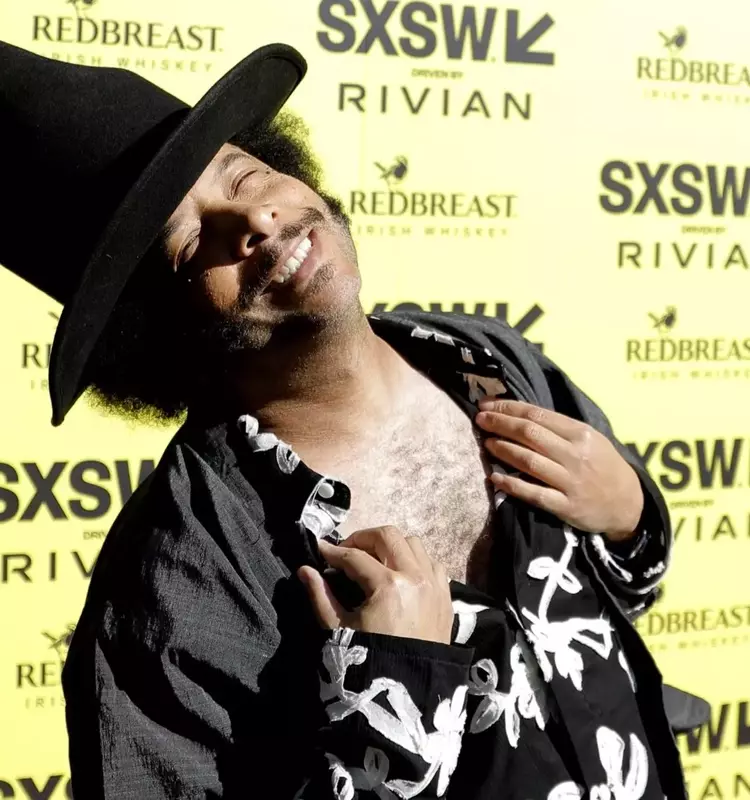
Boots Riley's 'I Love Boosters' Captivates SXSW with Social Commentary and Keke Palmer's Performance
Boots Riley's latest cinematic offering, 'I Love Boosters,' made a significant impact at its SXSW premiere, sparking discussions on the complex relationship between luxury fashion, the labor involved in its creation, and societal consumption patterns. The film, a thought-provoking blend of magical realism and sharp social critique, examines the economic disparities inherent in modern capitalism. Keke Palmer, who not only stars but also serves as an executive producer, delivers a powerful and memorable performance, drawing viewers into the narrative's exploration of shared human experiences amidst a uniquely crafted world. The synergy within the ensemble cast, particularly with Naomi Ackie, Taylour Paige, and Poppy Liu, enhances the film's resonance.
Riley's distinctive storytelling approach, known for its ability to weave fantastical elements into grounded social commentary, is fully realized in 'I Love Boosters.' The film challenges conventional perspectives on value, art, and labor, prompting audiences to consider the true cost behind the facade of high fashion. This work stands as a testament to Riley's evolving vision, building on the success of his previous projects and continuing his tradition of creating art that is both entertaining and intellectually stimulating.
Boots Riley's Vision: Art, Labor, and Late-Stage Capitalism
Boots Riley's new film, 'I Love Boosters,' which debuted at SXSW, offers a profound exploration of modern capitalism, particularly within the fashion industry. Riley, known for his unique blend of sharp social commentary and fantastical elements, uses the concept of 'boosters'—shoplifters who resell goods at a discount—to highlight the disconnect between luxury goods and the often-unseen labor behind them. He provocatively questions the origins of value, asking whether it resides in the artistic concept or the human effort involved in production. This inquiry extends to how societal desire for high-end products often overlooks the broader economic implications and the struggles of those who cannot afford them. The narrative cleverly critiques consumer culture and the systemic issues that perpetuate economic inequality, all wrapped in Riley's signature style that is both thought-provoking and entertaining.
The filmmaker's intent is to dissect the superficial allure of high fashion and expose the underlying economic tensions. By presenting a world where the lines between creation, consumption, and illicit trade are blurred, Riley encourages audiences to reflect on their own participation in capitalist systems. He posits that many aspire to engage with the art and conversation surrounding fashion, but are often excluded due to prohibitive costs. This creates a fertile ground for the 'boosters' to operate, satisfying desires for luxury at a fraction of the price, thereby highlighting the systemic failures that create such a market. The film leverages this premise to deliver a biting critique of societal values, artistic ownership, and the exploitation of labor, making it a compelling piece of contemporary social cinema.
Keke Palmer's Impact and the Ensemble's Chemistry in 'I Love Boosters'
Keke Palmer's multifaceted contribution to 'I Love Boosters' is a cornerstone of its success, not only through her starring role but also as an executive producer. Her performance has been singled out for its depth and relatability, capturing the essence of the film's exploration of universal struggles within a specific socioeconomic context. Palmer's decision to re-watch her own work—a rare occurrence for her—speaks volumes about the film's intricate layers and profound message. She emphasized how the film resonates with diverse communities, underscoring the shared challenges faced by people from various backgrounds, whether Black, Latin, or Asian. This ability to connect on a deeply human level elevates the narrative, making its social commentary all the more impactful and accessible to a broad audience.
The film's casting process, particularly the assembly of the core group of 'boosters' including Naomi Ackie, Taylour Paige, and Poppy Liu, played a crucial role in forging the vibrant chemistry that defines their on-screen dynamic. Boots Riley initially had reservations about casting Ackie, a British actor, in a role requiring a distinct Bay Area accent and mannerism, but her compelling audition quickly dispelled these concerns. Similarly, Taylour Paige embraced a smaller role with enthusiasm, valuing the opportunity to collaborate with inspiring artists and expand her artistic range. Poppy Liu attributed their strong bond to the intense, shared experience of living and filming together in Atlanta, which fostered an undeniable camaraderie evident in their performances. This blend of individual talent and collective synergy contributes significantly to the film's unique charm and its effective delivery of complex themes.
