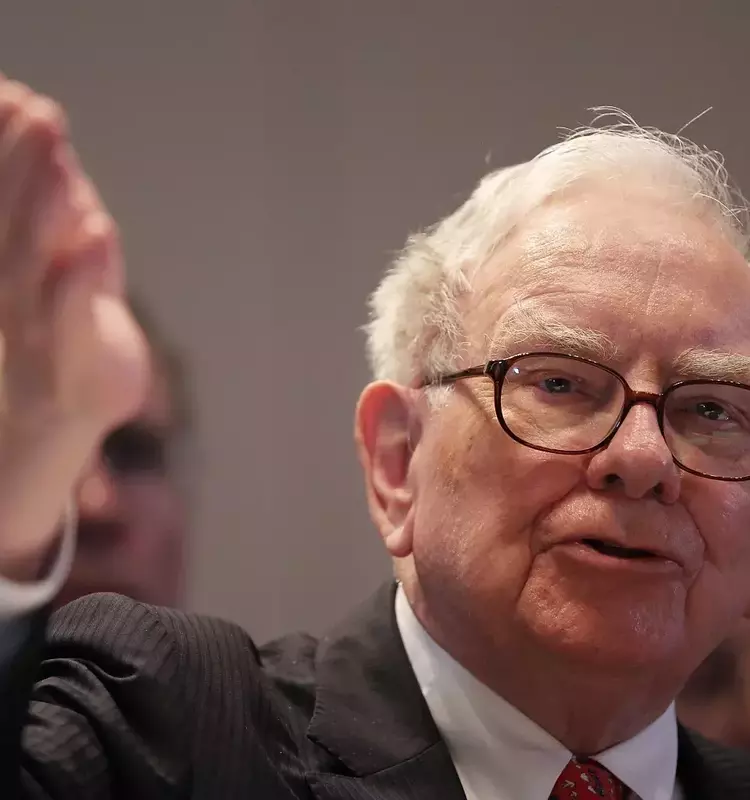
Warren Buffett, the renowned investor, adheres to a fundamental principle: safeguarding capital is paramount, even more so than maximizing gains. His methodology involves diligent research into companies, focusing on their inherent value rather than speculative trends. Buffett's approach to investment setbacks is characterized by candid acknowledgment, analytical review, and strategic repositioning of assets. He believes that a steady disposition and a long-term perspective are crucial for navigating the unpredictable currents of the financial markets.
Buffett's Core Principles for Prudent Investing
Buffett's investing philosophy is encapsulated in his famous dictum: 'Rule No. 1: Never lose money. Rule No. 2: Never forget Rule No. 1.' This isn't a literal guarantee against all losses but a strategic directive to prioritize capital preservation above all else. He argues that the mathematical reality of losses is stark: a 50% loss necessitates a 100% gain to merely break even, significantly hindering long-term wealth accumulation. This concept highlights the critical role of time and compounding in investment growth, which are severely impacted by substantial downturns.
To practically implement this philosophy, Buffett suggests several key strategies. Firstly, he advises investing exclusively in businesses one thoroughly comprehends, steering clear of market bubbles or companies with opaque operations. This contrasts sharply with the common tendency to chase popular trends, a practice Buffett consciously avoids. He emphasizes acquiring 'wonderful companies at fair prices' over 'fair companies at wonderful prices,' underscoring the importance of inherent business quality.
Secondly, maintaining a 'margin of safety' is crucial, providing a buffer against unforeseen market shifts or analytical errors. Furthermore, Buffett strongly advocates against leverage, as debt can amplify losses, making recovery exceptionally difficult. His steadfast refusal to 'double down' on losing investments, opting instead to reallocate capital to more promising opportunities, showcases his pragmatic approach to risk management. Notable instances include his divestment from airline stocks during the pandemic and his candid admission regarding the 'huge mistake' of his Tesco venture, as well as his eventual exit from IBM, prioritizing better capital deployment.
Finally, temperament is, for Buffett, more vital than intellect in investing. He champions emotional detachment, urging investors to resist the twin pitfalls of fear and greed. His counter-intuitive advice to 'be fearful when others are greedy and greedy when others are fearful' highlights his conviction that long-term success stems from rational decision-making amidst market irrationality. He advocates for a patient, unwavering commitment to quality investments, accepting short-term market volatility as a normal, inevitable aspect of the investment landscape.
From a journalistic and observational standpoint, Buffett's enduring success serves as a powerful antidote to the fast-paced, often speculative nature of modern finance. His disciplined, value-oriented approach offers timeless lessons for investors of all levels. In a world inundated with constant financial news and short-term market fluctuations, Buffett's emphasis on fundamental analysis, patience, and emotional resilience provides a much-needed grounding. His willingness to admit mistakes and learn from them further humanizes his legendary status, reminding us that even the most astute investors are not infallible. This perspective encourages a more thoughtful, less reactive engagement with personal and institutional investment strategies, fostering a deeper understanding of true wealth creation.
