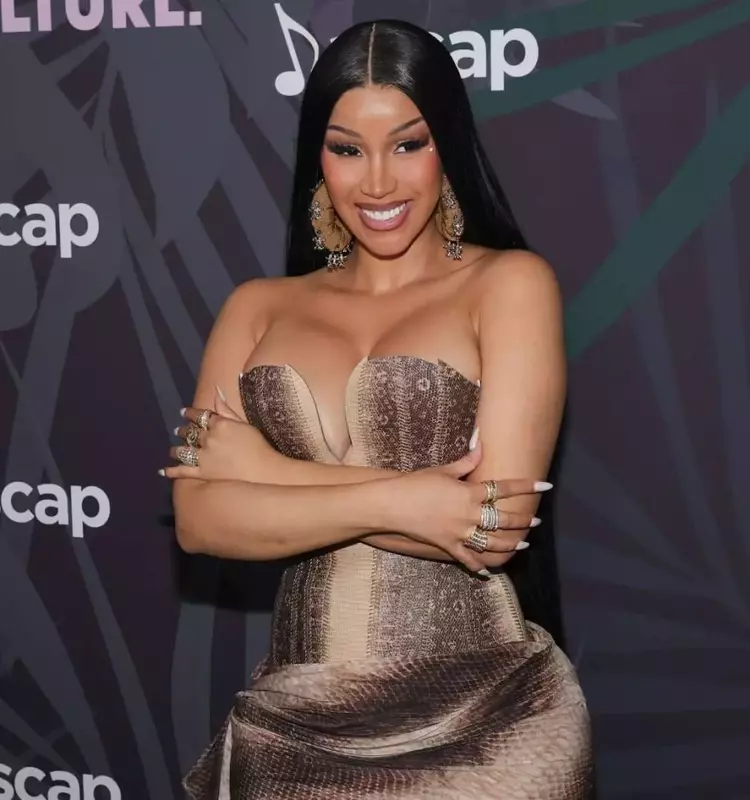
In a compelling move, Grammy-winning artist Cardi B has firmly addressed recent criticisms regarding the inclusion of her past hits, \"WAP\" and \"Up,\" on her forthcoming sophomore album, 'Am I the Drama?'. Set to release on September 19th, this album marks her much-anticipated follow-up to the acclaimed 'Invasion of Privacy' from 2018. Despite some industry backlash over the re-release of tracks several years old, Cardi B remains resolute, highlighting her dedication to her loyal fanbase and dismissing any suggestions that these additions are a strategy to boost sales figures. Her stance underscores a powerful statement on artistic autonomy and responsiveness to audience demand within the competitive music landscape.
Cardi B's Album Strategy Ignites Debate
In mid-June 2025, the dynamic musical artist Cardi B unveiled details of her next studio album, titled 'Am I the Drama?'. This announcement, made to an eager public, confirmed a 23-track compilation that notably features two of her massive chart successes, \"WAP\" and \"Up,\" both originally released over four years prior. The inclusion of these established hits sparked considerable debate and drew criticism from various corners of the music industry.
Responding directly to this wave of disapproval, on a Wednesday in late June, Cardi B utilized the social media platform X to articulate her rationale. She emphatically stated that this would be her sole public commentary on the matter. The artist clarified that these popular tracks, consistently requested by her fans and frequently searched for online, rightfully belong on an album. She argued that these songs do not contribute to initial week sales, challenging the notion that their presence is a manipulative tactic. Cardi B further expressed her frustration with the continuous industry pressure she has encountered throughout her career, pointing out perceived double standards. Her message to critics was clear and unyielding: she prioritizes her fans' wishes, even if it means defying conventional industry expectations.
The announcement video for the album, released on Monday, featured Cardi B dramatically adorned in a black gown, encircled by a multitude of artificial black birds. Her poignant voiceover set the tone for the album, proclaiming, \"Seven years and the time has come. Seven years of love, life and loss. Seven years I gave them grace, but now, I give them hell. I learned power is not given, it’s taken. I’m shedding feathers and no more tears. I’m not back, I’m beyond. I’m not your villain, I’m your karma. The time is here. The time is now.\" This powerful narrative hints at themes of resilience, evolution, and reclaiming her agency.
Reflections on Artistic Independence and Fan Engagement
Cardi B's recent actions and declarations offer a compelling lens through which to examine the dynamics between artists, their audience, and the broader music industry. Her unapologetic defense of including fan-favorite tracks on her new album, despite industry norms, resonates deeply. It highlights a critical aspect of modern artistry: the growing importance of direct fan engagement and the artist's right to shape their creative output without succumbing to external pressures. In an era where streaming numbers and initial sales figures often dictate success, Cardi B's emphasis on giving her fans what they desire, regardless of the commercial implications of re-releasing older material, is a refreshing and powerful statement. It reminds us that at the heart of music is a connection between the creator and the listener, a bond that can often supersede the stringent rules of the commercial machine. This situation prompts us to consider how much influence external critics should wield over an artist's vision and whether an artist's commitment to their core audience is ultimately more valuable than adhering to industry conventions.