Central Banks Face New Inflation Challenge Amid Geopolitical Tensions
Finance

Central Banks Face New Inflation Challenge Amid Geopolitical Tensions

authorBy Michele Ferrero
DateMay 27, 2026
Read time3 min

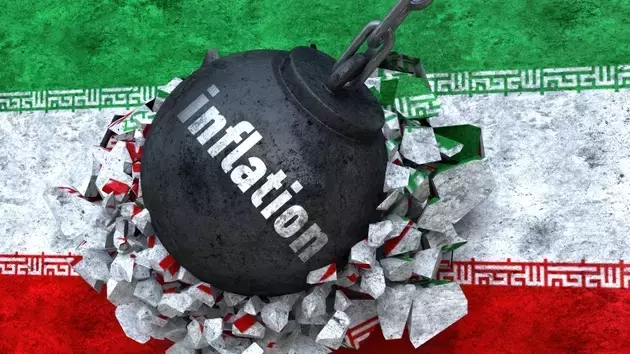
Federal Reserve Governor Chris Waller has voiced significant apprehension regarding the conventional 'look-through' approach to addressing inflation fueled by the Iran conflict. This stance signals a departure from the historical tendency of central banks to overlook transient spikes in oil prices, recognizing that prolonged geopolitical instability could fundamentally alter inflationary dynamics. Waller's concerns highlight the evolving challenges facing monetary authorities as they navigate a landscape increasingly shaped by unforeseen global events.

Historically, central banks have often adopted a 'look-through' strategy when confronted with sudden increases in oil prices. This approach is predicated on the belief that such price fluctuations, frequently triggered by geopolitical incidents, are temporary and will naturally dissipate without requiring significant monetary policy intervention. The rationale is to avoid overreacting to short-term volatility and maintain a focus on underlying, more persistent inflationary trends. This strategy has proven effective in periods where supply shocks were indeed short-lived and did not significantly influence long-term inflation expectations.

However, the current environment presents a more complex picture. Governor Waller and other central bankers are now questioning the continued viability of this traditional strategy. They argue that a series of recurring supply shocks, especially those with deep geopolitical roots, could lead to a fundamental shift in public perception regarding future inflation. If the public consistently observes inflation remaining elevated or fluctuating unpredictably due to these shocks, their long-term inflation expectations could become unanchored. This 'unanchoring' refers to a loss of public confidence in the central bank's ability to maintain price stability, potentially leading to a self-fulfilling prophecy of sustained higher inflation.

The risk of unanchored inflation expectations is particularly troubling. When individuals and businesses anticipate higher prices in the future, they adjust their behavior accordingly, demanding higher wages and raising prices for goods and services. This creates a vicious cycle that makes it much harder for central banks to bring inflation back to their target levels without resorting to more aggressive and potentially economically disruptive measures. The credibility of inflation targeting, a cornerstone of modern monetary policy, is therefore directly threatened by the perceived persistence of these inflationary pressures.

The recent remarks from Federal Reserve Governor Chris Waller underscore a critical juncture for global monetary policy. The ongoing geopolitical tensions and the resultant inflationary pressures demand a reassessment of traditional central bank strategies. The emphasis is now shifting towards proactively managing inflation expectations in a world where supply shocks may be less transient and more impactful than previously assumed, thereby ensuring the continued effectiveness of price stability mandates.

More Articles
Finance
Vera Therapeutics: Navigating the IgA Nephropathy Landscape with Atacicept
Vera Therapeutics (VERA) is nearing a crucial PDUFA date for its drug, atacicept, targeting IgA nephropathy. While clinical data demonstrates significant proteinuria reduction, long-term efficacy on eGFR remains to be seen. The company operates in a competitive market, necessitating strong differentiation. Financial stability is currently adequate for initial stages, but further funding will be essential for extensive market penetration. The current valuation reflects a cautious outlook, with substantial growth contingent on superior clinical outcomes compared to existing treatments.
By Strive MasiyiwaMay 27, 2026
Finance
Enterprise Products Partners: A Strong Midstream Contender
Enterprise Products Partners (EPD) stands out as a premier midstream investment, boasting scale, diversification, and robust assets. Despite recent revenue dips, EPD's cash flow and profitability are on an upward trend, fueled by strategic capital investments and favorable industry dynamics. Its valuation is appealing compared to its peers, offering a competitive 5.75% yield and an impressively low net leverage of 3.36, which enhances risk-adjusted returns.
By Robert KiyosakiMay 27, 2026
Finance
Quantum Investing: From Concept to Ecosystem Evolution
The May 2026 rebalance of the WisdomTree Quantum Computing Fund (WQTM) signifies a strategic shift towards enhancing direct quantum pure-player exposure, notably increasing allocation to Xanadu Quantum Technologies while retaining significant positions in D-Wave, IonQ, and Rigetti. This rebalance extends beyond mere chip focus, encompassing a broader spectrum of the quantum ecosystem, including photonic computing, networking, post-quantum cryptography, satellite key distribution, and essential components, reflecting the rapid yet uneven commercial maturation of quantum technologies.
By Suze OrmanMay 27, 2026
Finance
Zion Oil & Gas: An Investment Driven by Faith, Not Fundamentals
Zion Oil & Gas (ZNOG) has experienced a significant price surge, driven by religiously motivated investors despite a lack of commercial oil or gas discoveries. The company's funding model relies heavily on stock sales to a small group of believers, raising concerns about its sustainability. High operating costs and a limited cash runway suggest that ZNOG's current valuation, near $700 million, lacks fundamental justification.
By Nouriel RoubiniMay 27, 2026
Finance
NextEra and Dominion Energy to Merge in an All-Stock Deal
NextEra Energy Inc. and Dominion Energy Inc. are set to merge in a significant all-stock transaction. The combined entity is projected to achieve a market capitalization exceeding $249 billion and a rate base of $138 billion. This strategic move aims to leverage the escalating demand for electricity in the U.S., with plans for substantial annual capital expenditure and customer bill credits. The merger is anticipated to bolster the companies' positions as leaders in the energy sector.
By Michele FerreroMay 27, 2026