Comfort Systems USA (FIX) has seen its revenue double since 2023, primarily driven by the escalating demand for data centers and a strategic pivot towards advanced modular manufacturing. This impressive growth has been accompanied by a significant expansion in the company's EBITDA margin, climbing from 10% to 18%. However, forecasts indicate that both revenue and margin growth are likely to reach their zenith by 2026, with a more subdued trajectory thereafter. Despite a substantial backlog of $14 billion and a strong Return on Invested Capital (ROIC), the company faces inherent limitations due to physical constraints in labor availability and prefabrication capacity, which cap its potential for further expansion. Consequently, the stock is currently rated as a 'Hold'. A key risk factor for Comfort Systems USA is the potential for market overcapacity if the demand for data centers diminishes. Such a scenario could lead to margin compression and a notable adverse effect on earnings per share and overall share price.
The Surge of Data Center Demand and Modular Manufacturing
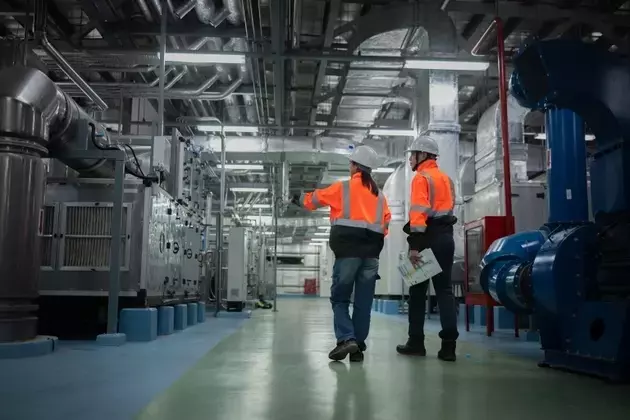
Comfort Systems USA has demonstrated remarkable financial performance, with revenue doubling since 2023, largely attributed to the robust demand from the data center sector. The company's strategic adoption of advanced modular manufacturing has played a crucial role in enhancing its operational efficiency and scalability. This innovative approach allows for the pre-assembly of complex systems off-site, reducing construction time and costs, and improving quality control. The burgeoning need for data storage, processing, and artificial intelligence capabilities has created an unprecedented market for data center infrastructure, placing companies like Comfort Systems USA at the forefront of this growth wave. This market dynamic has enabled the company to not only secure a substantial project backlog but also to optimize its pricing strategies, contributing to its impressive financial metrics.
The shift towards advanced modular manufacturing represents a significant competitive advantage for Comfort Systems USA. By leveraging prefabrication techniques, the company can streamline its construction processes, minimize on-site labor requirements, and mitigate supply chain disruptions. This methodology is particularly beneficial in the current environment where skilled labor shortages are a persistent challenge across the construction industry. Furthermore, the modular approach allows for greater customization and faster deployment of data center solutions, catering to the rapidly evolving needs of clients. This operational excellence, coupled with sustained demand from the data center industry, underscores the company's strong market position and its ability to capitalize on prevailing market trends, ensuring continued, albeit potentially decelerating, growth in the coming years.
Future Outlook and Risk Considerations
Despite the strong performance, Comfort Systems USA is projected to experience a deceleration in its growth trajectory. Analysts anticipate that both revenue and EBITDA margin growth will peak by 2026, followed by a period of slower expansion. This forecast is influenced by an expected normalization of data center construction demand and the inherent physical limitations on the company's operational capacity. While the current $14 billion backlog provides substantial revenue visibility and a high Return on Invested Capital (ROIC) highlights efficient capital deployment, the company's ability to further accelerate growth is constrained by factors such as labor availability and the maximum output of its prefabrication facilities. These bottlenecks suggest that while the company remains fundamentally strong, its exponential growth phase may be nearing its end, transitioning into a more mature, yet stable, growth pattern.
The primary risk factor identified for Comfort Systems USA is the potential for overcapacity within the data center market. A significant decline in data center demand, whether due to economic slowdowns, technological shifts, or intensified competition, could lead to a sharp reduction in new project awards. Such a scenario would likely compress profit margins as companies compete for fewer projects, directly impacting Comfort Systems USA's earnings per share and, consequently, its share price. While the current market outlook for data centers remains robust, the cyclical nature of large-scale infrastructure projects always poses a long-term risk. Investors should closely monitor market indicators for data center demand and the company's ability to diversify its service offerings or market segments to mitigate this concentration risk, ensuring sustained profitability beyond the current boom cycle.
