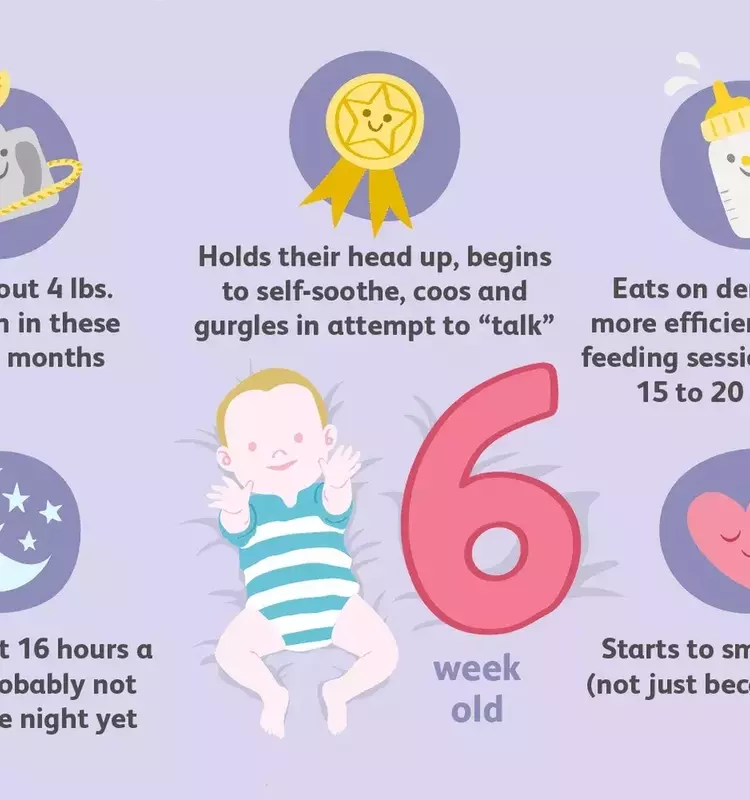
Navigating the initial weeks with a newborn can feel like a blur of rapid changes and unexpected challenges, yet it's also a period of profound growth and discovery. At six weeks, infants often undergo a significant growth spurt, leading to heightened feeding demands and periods of increased fussiness. This phase, while demanding, marks a crucial time for developmental leaps, including emerging social interactions and refined sensory perceptions.
During this period, parents might observe their baby becoming more interactive and responsive to their environment. Dr. Gina Posner, a pediatrician at MemorialCare Orange Coast Medical Center, notes that babies around this age begin to show greater alertness and awareness, often turning towards familiar voices. Engaging with the baby through conversation, playful sounds, and reading can further stimulate their social and cognitive development.
The six-week mark is frequently associated with increased crying and what parents often refer to as the "witching hour," typically occurring in the evenings. This can be a challenging time, exacerbated by growth spurts that necessitate more frequent feedings. Pediatrician Dr. Christina Johns advises parents to employ calming techniques such as rocking or using white noise. While managing infant fussiness, it’s equally vital for parents to prioritize their own well-being. Dr. Johns emphasizes that it is acceptable for parents to momentarily place a fed and changed baby safely in their crib, even if crying, to take a brief respite and regroup.
Beyond social development, significant physical and sensory advancements are also underway. Infants at six weeks are developing better hand-eye coordination, becoming more capable of grasping objects like rattles, though they may still release them quickly. Their ability to distinguish sounds improves, and they begin to perceive colors with greater clarity. These enhancements in sensory processing lay the groundwork for future learning and interaction.
Feeding remains a central aspect of a six-week-old's routine. While some babies might start to extend the intervals between feedings to three or four hours, many, particularly breastfed infants, may still require feeding every two hours due to the faster digestion of breast milk. The American Academy of Pediatrics suggests that the exact frequency can vary among infants, with on-demand feeding often recommended to maintain milk supply and ensure adequate nourishment.
Sleep patterns also evolve, with babies typically sleeping around 15 hours a day, divided between longer nighttime stretches and several daytime naps. For healthy, weight-gaining infants, pediatricians often advise allowing them to sleep for longer periods at night without waking for feeds. This transition, however, is gradual, and continued nighttime awakenings for feeding are normal and necessary for their ongoing growth.
As their awareness blossoms, incorporating infant-focused activities becomes increasingly beneficial. Simple activities like stroller walks, supervised tummy time on play mats, and interaction with brightly colored, sound-making toys can stimulate their senses and motor skills. These engagements are not just recreational but are integral to their developmental progress.
Health and safety considerations are also paramount. The six-week visit to the pediatrician often includes the administration of the first set of immunizations, which may encompass the hepatitis B, pneumococcal, DTaP, Hib, and polio vaccines, along with potentially the rotavirus vaccine. Parents should anticipate mild side effects such as redness and soreness at the injection site, or a low-grade fever, and can consult their pediatrician for advice on managing these symptoms.
For parents contemplating a return to work, preparing for the transition by introducing bottles to breastfed babies and establishing a pumping and milk storage routine is advisable. Pumping between nursing sessions or in the morning can help maximize milk supply for future use. These practical steps ensure a smoother transition for both parent and child.
This period, characterized by a blend of tender moments and intense demands, is fleeting. Despite the exhaustion that may accompany growth spurts and evening fussiness, parents can find comfort in knowing that this phase is temporary, and their baby will soon settle into longer sleep cycles and a more predictable routine, bringing new joys and challenges.
