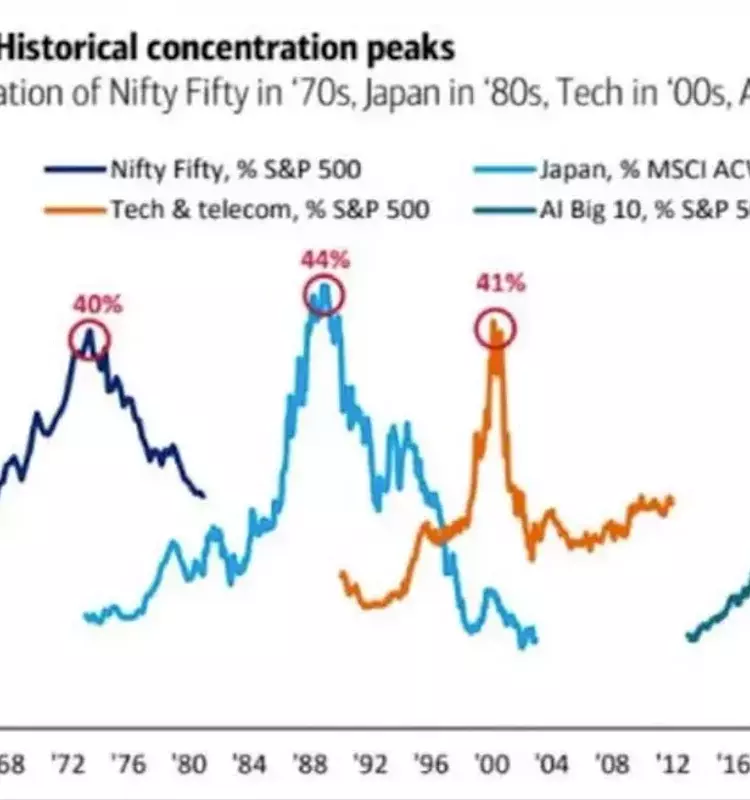
The current market landscape shows a striking resemblance to past periods of speculative excess, particularly concerning the technology sector. Analysts at Bank of America have drawn parallels between the present concentration of artificial intelligence (AI) related stocks and the market dynamics observed during previous bubbles, such as the infamous dot-com era. This high level of concentration, where a handful of large AI companies command a significant portion of the S&P 500, suggests a potential vulnerability to market corrections. The rapid surge in valuations for these companies, driven by intense investment in AI infrastructure, has propelled major indices to new highs, raising questions about the underlying sustainability of these gains.
As the market progresses into the latter half of the year, the durability of this AI-driven rally is expected to face rigorous scrutiny. Factors such as the anticipated earnings reports from these key technology firms and the Federal Reserve's stance on interest rates are poised to influence investor sentiment. Historically, periods of high market concentration, especially when coupled with aggressive monetary policies, have often preceded significant market adjustments. The narrative around AI investments may shift from pure growth potential to a more critical examination of tangible returns and the broader economic impact, potentially leading to a re-evaluation of current stock valuations.
The AI Stock Surge: Historical Parallels and Market Concentration
The remarkable ascent of AI-related stocks has led to an unprecedented level of market concentration, with the leading ten AI companies now accounting for a substantial 41% of the S&P 500 index. This phenomenon echoes the market conditions observed during the dot-com bubble, when a similar concentration of technology and telecommunications firms preceded a significant market downturn. The rapid appreciation in value of companies like Nvidia, Microsoft, Alphabet, Amazon, Meta, Apple, Tesla, Broadcom, Micron, and Advanced Micro Devices has been fueled by an intense investment spree in artificial intelligence infrastructure, contributing to the Nasdaq Composite's impressive performance in the second quarter of 2026. This growth, while indicative of the burgeoning AI sector, raises concerns about the potential for an overheated market and the risk of a bubble forming.
The current market environment, characterized by a dominant presence of a few mega-cap AI stocks, reflects a pattern seen in historical market bubbles. The enthusiasm for AI technology has translated into massive capital inflows, driving the valuations of these companies to new heights. The almost insatiable demand for AI-enabling hardware, such as semiconductors from AMD and memory solutions from Micron, has propelled these companies to record stock prices. However, this level of concentration suggests that the broader market's performance is heavily reliant on the fortunes of these select few companies. Any significant shifts in their performance or investor sentiment could have a disproportionate impact on the overall market, making it susceptible to the same kind of corrections that followed previous periods of market exuberance.
Future Outlook: Challenges and Potential Shifts in the AI Trade
As the market moves into the next quarter, the bullish trend in AI stocks is expected to encounter significant tests. The primary drivers behind the 2026 AI trade are now widely recognized, which may reduce the likelihood of positive surprises during the upcoming earnings season. This increased transparency could lead to a more measured evaluation of these companies' growth prospects and financial performance. Furthermore, the possibility of the Federal Reserve adopting a more hawkish stance on interest rates, as indicated by potential comments from the new Fed Chairman, Kevin Warsh, could pose a considerable challenge. Higher interest rates typically make high-multiple growth stocks, prevalent in the AI sector, less attractive to investors, potentially triggering a rotation of capital into other market segments.
The sustainability of the current AI stock rally hinges on several critical factors, including the performance of these companies in the upcoming earnings reports and the broader macroeconomic environment. While the investment in AI infrastructure has driven considerable growth, a shift in market sentiment could occur if the financial results do not meet the elevated expectations. Moreover, the evolving monetary policy landscape, with a potential for tighter credit conditions, could dampen investor appetite for speculative growth stocks. Market experts suggest that while gains may continue, the narrative will likely evolve from unbridled enthusiasm to a more critical assessment of value and returns. Investors may begin to question the long-term viability of continuously investing in a few dominant tech companies, leading to a potential re-evaluation and diversification of portfolios away from the concentrated "Magnificent Seven" into broader market opportunities.
