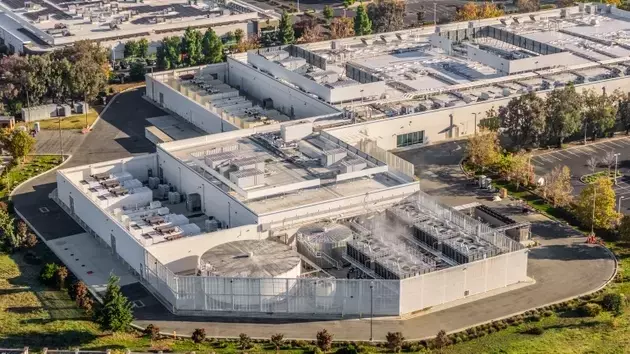
Core Scientific is undergoing a significant strategic transformation, shifting its core business from Bitcoin mining to providing high-density colocation services for artificial intelligence. This pivot is aimed at capitalizing on the escalating demand for robust power infrastructure within the AI industry. The company's recent financial disclosures underscore the success of this transition, with colocation services now representing the primary revenue driver, characterized by healthy profit margins and a substantial pipeline of power capacity.
The company's strategic reorientation is largely driven by the surging requirements of the artificial intelligence sector for specialized infrastructure. AI operations, particularly those involving advanced models and extensive data processing, demand immense computational power and stable, high-capacity energy sources. Core Scientific's existing power generation and data center capabilities, initially developed for energy-intensive Bitcoin mining, are proving to be highly adaptable and valuable assets in this new market. This allows the company to repurpose its infrastructure, catering to a sector with arguably more stable and lucrative long-term prospects than the volatile cryptocurrency market.
In the first quarter of 2026, Core Scientific reported impressive results that clearly demonstrate the impact of its new strategy. Colocation revenue surged to $77.5 million, unequivocally establishing this segment as the company’s dominant income stream. This marked a notable shift from previous periods where Bitcoin mining revenues held sway. Accompanying this revenue growth were gross profit margins of 57%, indicating strong operational efficiency and pricing power within the colocation market. Furthermore, Core Scientific highlighted a multi-gigawatt power pipeline, signaling substantial future expansion capabilities and ongoing commitment to scaling its AI infrastructure offerings.
A pivotal development in Core Scientific's transition is its expanded collaboration with CoreWeave, a specialized cloud provider for AI workloads. This partnership serves as a strong validation of Core Scientific's strategic pivot towards AI infrastructure. The collaboration is projected to generate over $10 billion in contracted revenue, with 590 megawatts of power capacity already leased. This long-term contractual commitment provides a stable and predictable revenue stream, significantly de-risking Core Scientific's financial outlook. The potential for further upside remains substantial as the company continues to convert its extensive power pipeline into active colocation agreements, addressing the critical scarcity of AI power infrastructure in the market.
While the strategic shift presents a high-growth opportunity, Core Scientific also faces challenges, including high leverage and customer concentration risks. Nonetheless, the company’s ability to offer crucial power infrastructure in an AI-driven economy, marked by industry-wide supply constraints, positions it as an intriguing high-risk, high-reward investment. The company is actively working to mitigate these risks by diversifying its client base and optimizing its financial structure, aiming to solidify its standing as a leading provider of essential AI infrastructure.
Core Scientific's journey from a Bitcoin miner to a key AI infrastructure provider underscores a proactive adaptation to evolving technological landscapes. The company is strategically repositioning itself to meet the critical infrastructure demands of the burgeoning AI industry, leveraging its existing power assets and expanding its colocation capabilities. This transformation promises significant revenue growth and enhanced profitability, cementing Core Scientific's role in powering the future of artificial intelligence.
