CoreWeave's AI Infrastructure Expansion and Financial Implications
Finance

CoreWeave's AI Infrastructure Expansion and Financial Implications

authorBy Lisa Jing
DateAug 24, 2026
Read time2 min

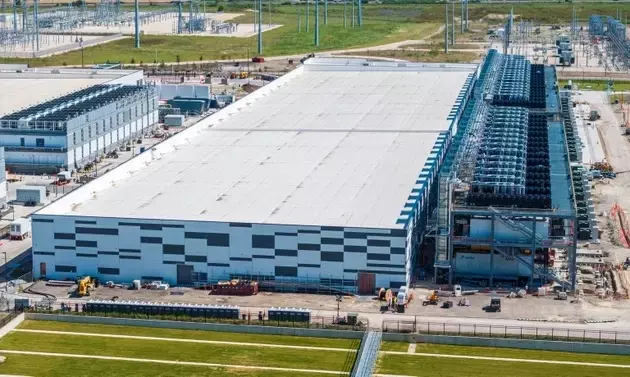
CoreWeave is rapidly establishing itself as a dominant force in the artificial intelligence infrastructure sector, with ambitious plans for expanding its data center capabilities. By the close of 2026, the company anticipates achieving approximately 1.8 gigawatts (GW) of operational data center capacity. This aggressive growth trajectory is projected to culminate in an impressive 8.0 GW by 2030, underscoring CoreWeave's commitment to meeting the escalating demands of AI computation. However, this expansion is heavily financed through debt, which now approaches $30 billion at a weighted-average interest rate of 9.0%, raising questions about the long-term financial stability given the burgeoning interest expenses.

CoreWeave's expansion efforts have been extraordinary, especially when considering its starting point. At the end of 2023, the company possessed merely 70 megawatts (MW) of active data center capacity. The projected growth to 1.8 GW by the close of 2026 signifies an approximate 25-fold increase in its asset base within a remarkably short period. This rapid scaling demonstrates the company's ability to quickly deploy and operationalize large-scale infrastructure projects, positioning it as a key enabler for advanced AI applications. The ambitious target of 8.0 GW by 2030 further emphasizes that CoreWeave is still in the nascent stages of its infrastructure development, with substantial growth yet to be realized.

The financial strategy underpinning CoreWeave's expansion relies heavily on debt financing. The current net debt burden stands at nearly $30 billion, with a significant weighted-average interest rate of 9.0%. This substantial debt load translates into considerable interest expenses. It is inevitable that these expenses will soon surpass the $3.0 billion mark annually. This financial outlay presents a notable challenge for a company that has yet to consistently achieve positive operating income. Managing this growing debt and its associated costs will be critical for CoreWeave as it continues its aggressive expansion and strives for sustained profitability in the competitive AI infrastructure market.

In summary, CoreWeave is making significant strides in the AI infrastructure landscape through its ambitious data center expansion. While its rapid growth is undeniable, the company's substantial debt and rising interest expenses present considerable financial hurdles. The success of its long-term strategy will depend on its ability to generate sufficient operating income to manage these costs effectively and capitalize on the booming demand for AI-driven computational resources.

More Articles
Finance
Analyst Warns of Significant Downside Risk for SpaceX Stock, Citing Valuation Concerns
A recent analysis by Phillip Securities' Glenn Thum suggests a potential 45% decline in SpaceX's stock price, setting a target of $75 per share. Despite the company's strong growth and market position, Thum highlights concerns regarding high capital expenditures, revenue concentration from a single AI client, uncertain cloud service revenue streams, and a substantial operating loss in its space division. Additionally, an elevated price-to-sales ratio and upcoming lock-up expirations for insiders are expected to exert selling pressure, making the stock a risky investment for now.
By Lisa JingAug 24, 2026
Finance
Vivian Tu's Financial Advice: Prioritizing Debt Repayment Over Investing
Vivian Tu, a former Wall Street trader and founder of "Your Rich BFF," advises individuals with high-interest credit card debt to prioritize paying it off before investing in the stock market. She highlights that the high interest rates on credit cards, often exceeding 20%, make it mathematically unsound to pursue stock market gains (averaging 10% annually) while such debt accrues. This guidance aligns with recommendations from financial authorities like the SEC and FINRA, which emphasize eliminating high-interest debt and establishing an emergency fund as foundational steps before embarking on investment ventures.
By Strive MasiyiwaAug 24, 2026
Finance
Ondas: Significant Q2 Growth and Future Prospects
Ondas reported a robust second quarter, with revenue soaring over thirteen-fold year-on-year and a pro forma backlog reaching $757 million. The company's strategic defense orders and involvement in the US drone procurement cycle, along with recent acquisitions, signal substantial opportunities. However, concerns arise from a rapidly increasing share count, widening adjusted EBITDA losses, and upcoming share issuances, leading to a "Hold" rating with a target value of $9.50, and a more attractive entry point at $7, or after demonstrating improved operational efficiency.
By Suze OrmanAug 24, 2026
Finance
Navigating Bitcoin's Future: Is a Bottom in Sight or Are More Dips Ahead?
This article explores whether Bitcoin has truly hit its bottom, considering historical bear market durations and broader market indicators like the S&P 500. While some bullish signals are present, the analysis suggests caution and recommends dollar-cost averaging to mitigate timing risks and leverage potential future growth in the cryptocurrency market.
By Robert KiyosakiAug 24, 2026
Finance
Gold's Resurgent Rally: A Bullish Outlook for Precious Metals
This article presents a bullish case for gold and precious metals, highlighting the recent upside breakout of the SPDR Gold Shares ETF (GLD). After a period of consolidation, GLD has recaptured key moving averages on increased volume, signaling strong technical support. The author emphasizes the enduring appeal of gold amidst weakening dollar trends, bond market dynamics, and increasing government debt, positioning it as a strategic asset for investors.
By Mariana MazzucatoAug 24, 2026