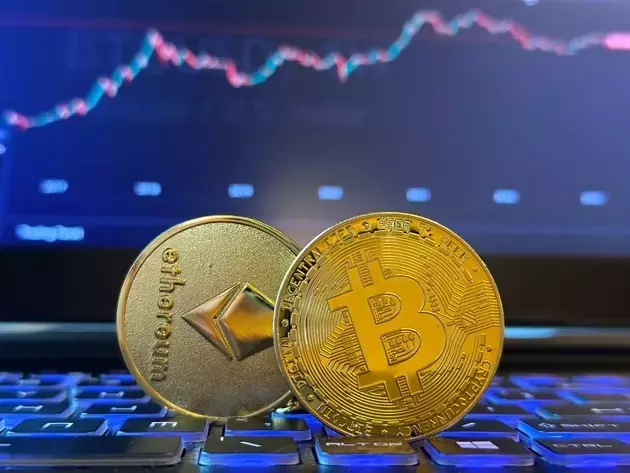
Cryptocurrency Market Stagnates Amid Geopolitical Uncertainty: Bitcoin and Ethereum Lose Momentum
The cryptocurrency landscape, particularly for Bitcoin and Ethereum, finds itself in a state of arrested development, trapped within a narrow trading channel. This market inertia is significantly influenced by lingering uncertainties surrounding the ongoing peace negotiations involving Iran. Notably, a divergence has emerged: unlike their historical correlation, these digital currencies are no longer robustly tracking the recent rallies observed in conventional risk assets such as the Nasdaq, hinting at an intrinsic fragility within the digital asset sector.
Cryptocurrency Markets Grapple with Geopolitical Tensions, Losing Sync with Traditional Assets
In recent times, the global financial markets have witnessed a peculiar decoupling: while traditional risk assets have enjoyed a resurgence, major cryptocurrencies like Bitcoin (BTC-USD) and Ethereum (ETH-USD) remain ensnared in a frustratingly tight trading range. This stagnation is primarily fueled by the continued ambiguity surrounding the Iran peace process, a geopolitical event whose resolution remains elusive and casts a long shadow over investor sentiment in the crypto space.
Historically, digital assets often mirrored the performance of tech-heavy indices such as the Nasdaq. However, this symbiotic relationship appears to be weakening. Despite a recent upward surge in Nasdaq, cryptocurrencies have failed to generate comparable momentum, signaling a potential shift in market dynamics and an underlying vulnerability unique to digital assets. Investors are keenly observing the technical indicators for both Bitcoin and Ethereum, searching for clues about their next significant move.
For Bitcoin, the technical outlook suggests a bullish-neutral stance as long as it remains above its 50-day moving average, currently around $74,800. However, the formation of a potential 'head and shoulders' pattern raises concerns. Should the critical support level fail, Bitcoin could experience a downward correction towards the $70,000 mark. Meanwhile, Ethereum displays a relatively weaker position compared to Bitcoin, having already dipped below its 50-day moving average of $2,220. Maintaining its price above $2,000 is paramount for Ethereum, as a sustained breach could trigger an accelerated sell-off across the broader altcoin market.
The crypto market's immediate future hinges significantly on external factors. A definitive resolution to the Iran peace process could either ignite a catch-up rally for digital currencies or exacerbate their current weakness, depending on the nature of the outcome. Similarly, stability in West Texas Intermediate (WTI) Crude oil prices, often a barometer of global economic health, will play a crucial role in shaping investor confidence. Therefore, closely monitoring headline news and geopolitical developments remains essential for anyone looking to navigate these volatile markets.
The current market environment offers a compelling case study in the evolving relationship between geopolitical events, traditional finance, and the burgeoning cryptocurrency sector. The lack of upward momentum despite positive signals from traditional markets underscores the growing need for investors to consider unique risk factors pertinent to digital assets. As the global landscape continues to shift, the resilience and independence of cryptocurrencies will be tested, demanding a nuanced understanding of both macroeconomic trends and specific technical indicators. This period of consolidation might be a prelude to a significant move, reinforcing the importance of informed decision-making in the volatile world of digital finance.
