Currency Markets Fluctuate Amidst Economic Data and Geopolitical Tensions
Finance

Currency Markets Fluctuate Amidst Economic Data and Geopolitical Tensions

authorBy Morgan Housel
DateJul 19, 2026
Read time2 min

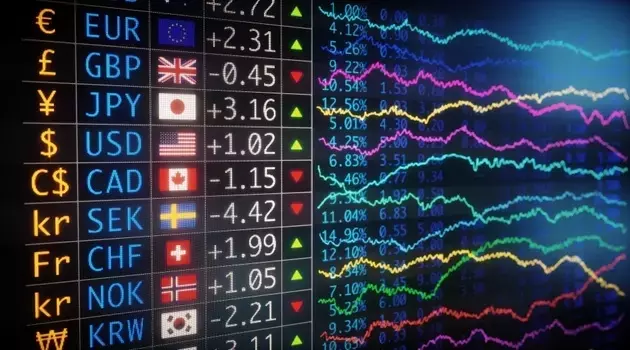
Global currency markets displayed significant volatility last week, influenced by a combination of economic data releases and emerging geopolitical concerns. The US dollar, a traditional safe haven, weakened against most major currencies following softer-than-expected inflation reports, while the Japanese yen bucked this trend. Elsewhere, the euro and sterling showed signs of resilience, albeit for different reasons.

Currency Market Dynamics: A Detailed Analysis

Last week witnessed a notable shift in the global currency landscape. The US dollar experienced a broad decline against a basket of G10 currencies, with the singular exception of the Japanese yen. This weakening trend was largely precipitated by the release of US Consumer Price Index (CPI) and Producer Price Index (PPI) figures, which came in below market expectations. These softer inflation readings led to a perceptible easing of interest rate hike expectations, reflected in a nearly eight basis point reduction in the US two-year yield.

Simultaneously, the euro, despite its underlying challenges, managed to achieve a four-week high against the dollar, momentarily touching just below $1.1485. This temporary surge suggested a momentary reprieve for the common currency. Across the English Channel, the British pound sterling also registered a two-month peak, climbing to almost $1.3560. This upward movement in sterling was reportedly fueled by market speculation surrounding the potential appointment of Home Secretary Mahmood as the new Chancellor of the Exchequer, indicating that political developments can significantly sway currency valuations.

Reflections on Global Financial Interconnectedness

The past week's currency movements serve as a stark reminder of the intricate interconnectedness of the global financial system. Even seemingly isolated economic indicators, such as inflation data from a single major economy, can trigger a cascade of reactions across different currency pairs. The dollar's response to the inflation reports underscores the market's sensitivity to monetary policy expectations. Furthermore, the performance of the euro and sterling highlights how both economic fundamentals and political narratives play crucial roles in shaping currency valuations. As investors, it is imperative to adopt a holistic view, considering not only statistical data but also broader geopolitical shifts and domestic political landscapes, to truly understand and anticipate market dynamics. The dynamic interplay between these factors dictates the ebb and flow of currency strength, making continuous vigilance and adaptive strategies essential for navigating the complexities of international finance.

More Articles
Finance
The Emergency Banking Act of 1933: A Turning Point in US Financial History
The Emergency Banking Act of 1933 was a pivotal piece of legislation enacted during the Great Depression to stabilize the US banking system. It introduced measures like the FDIC to insure bank accounts and granted the president expanded powers during financial crises. This act aimed to restore public confidence in banks and address the widespread bank failures of the era. Its enduring impact continues to shape the American financial landscape today.
By Mariana MazzucatoJul 19, 2026
Finance
Stanley Druckenmiller's Duquesne Family Office Portfolio: Q1 2026 Adjustments
This report details the Q1 2026 changes in Stanley Druckenmiller's Duquesne Family Office 13F portfolio. The portfolio decreased from approximately $4.49 billion to $3.38 billion, featuring 22 notable positions. Natera remains the largest holding, with a significant increase this quarter, constituting around 18% of the total assets. Key adjustments include increased stakes in BBB Foods, Alcoa, Sea Ltd., and STMicroElectronics, alongside major divestments from Alphabet and DocuSign, reflecting a trend-following approach with concentrated investments in biotech, semiconductors, and international equities.
By Suze OrmanJul 19, 2026
Finance
Stoke Therapeutics: A Promising Biotech for Dravet Syndrome Treatment
Stoke Therapeutics (STOK) presents a compelling investment opportunity, demonstrating a robust RNA-based platform for Dravet Syndrome. Its lead asset, zorevunersen, is undergoing a Phase 3 trial, with initial results anticipated by late December and top-line data in the latter half of 2027. Supported by a strong cash reserve and key partnerships, STOK is well-positioned to navigate future milestones, with analysts projecting significant upside potential and substantial peak sales for zorevunersen.
By Michele FerreroJul 19, 2026
Finance
Navigating Fixed Income in a Period of Economic Uncertainty
This report examines the fixed income landscape amidst global economic divergence and central bank policy uncertainty. It highlights the United States' economic resilience, driven by AI investments, in contrast to Europe's challenges. The report advises investors to prioritize actual economic data over central bank rhetoric, identifying opportunities in shorter U.S. rates and various global interest rate curves, and in securitized credit and select emerging market debt.
By Lisa JingJul 19, 2026
Finance
Johnson Controls: Technical Concerns Lead to Rating Downgrade Despite Strong Data Center Demand
Johnson Controls is poised for significant growth, fueled by the booming data center sector and a substantial $20 billion backlog. The company's focus on AI-powered HVAC solutions and proprietary technology gives it a strong competitive edge. However, despite a favorable long-term outlook and reasonable valuation, technical indicators suggest a potential near-term market pullback, prompting a rating downgrade to 'Hold' as investors may realize profits.
By Strive MasiyiwaJul 19, 2026