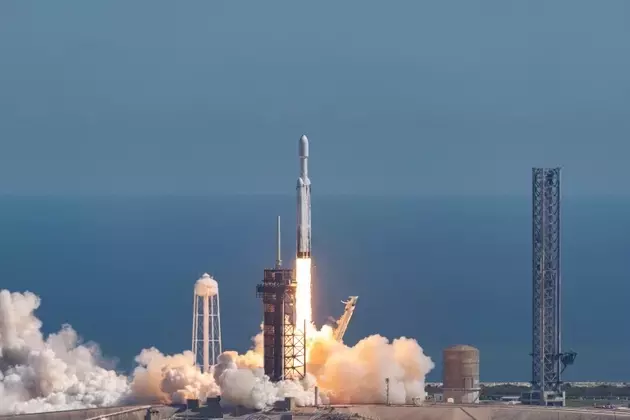
The landscape of space exploration and commerce has been fundamentally reshaped by the advent of reusable rocket technology. This innovation has dramatically altered the financial dynamics of accessing space, transforming what was once a prohibitively expensive and infrequent undertaking into a more economically viable and regular operation. This shift has, in turn, opened doors for an array of new business models across various sectors, including satellite broadband, defense applications, and the development of orbital infrastructure. The cascading effect of these reduced launch costs extends throughout the entire space ecosystem, fostering an environment ripe for unprecedented growth and opportunity.
For many decades, humanity's endeavors in space were largely confined to the realms of scientific discovery, governmental missions, and speculative investment. However, the high costs and logistical complexities associated with single-use rockets severely limited the scope and frequency of these activities. Each launch represented a monumental financial outlay, often making commercial ventures in space impractical or excessively risky. This created a significant barrier to entry for innovators and entrepreneurs, hindering the rapid development and deployment of space-based technologies.
SpaceX, with its pioneering work in reusable rocket technology, has emerged as a pivotal force in overcoming these historical limitations. By engineering rockets capable of vertical landing and subsequent re-flight, the company has achieved a significant reduction in per-launch costs. This technological breakthrough has not only made space more accessible but has also made it possible to conduct missions with a frequency previously unimaginable. This increased accessibility and affordability are critical for the sustained growth and expansion of the space economy, driving innovation across multiple industries.
The impact of lower launch costs reverberates throughout the entire space industry. Projects that were once deemed too expensive or too risky are now becoming feasible. For instance, the deployment of vast satellite constellations for global broadband internet, such as Starlink, is directly enabled by the ability to launch numerous satellites affordably and frequently. Similarly, advancements in defense capabilities, earth observation, and the establishment of in-orbit manufacturing and servicing platforms all hinge on consistent and cost-effective access to space. SpaceX's strategic approach of not just providing launch services but also developing integrated space infrastructure, exemplified by Starlink, creates a powerful feedback loop where launch capabilities directly fuel recurring revenue streams and expand the company's influence across the burgeoning space sector.
As the space economy continues to expand, investors are increasingly looking for ways to participate in this growth. However, direct investment in companies like SpaceX, which is privately held, can be challenging. Consequently, various investment vehicles have emerged, offering indirect exposure to the space sector. It is crucial for investors to thoroughly evaluate the structure, liquidity, fee arrangements, and underlying assets of these vehicles. The term 'SpaceX exposure' can encompass a wide range of indirect investments, and understanding what is actually owned and the associated risks is essential for making informed decisions in this dynamic and rapidly evolving market.
The transformation instigated by reusable rocket technology marks a profound shift in the space industry, moving it from a niche, high-cost domain to a more accessible and commercially vibrant frontier. This evolution is fostering a new era of innovation and economic activity beyond Earth's atmosphere.
