Debt Restructuring: A Pathway to Financial Stability
Finance

Debt Restructuring: A Pathway to Financial Stability

authorBy Nouriel Roubini
DateApr 29, 2026
Read time2 min

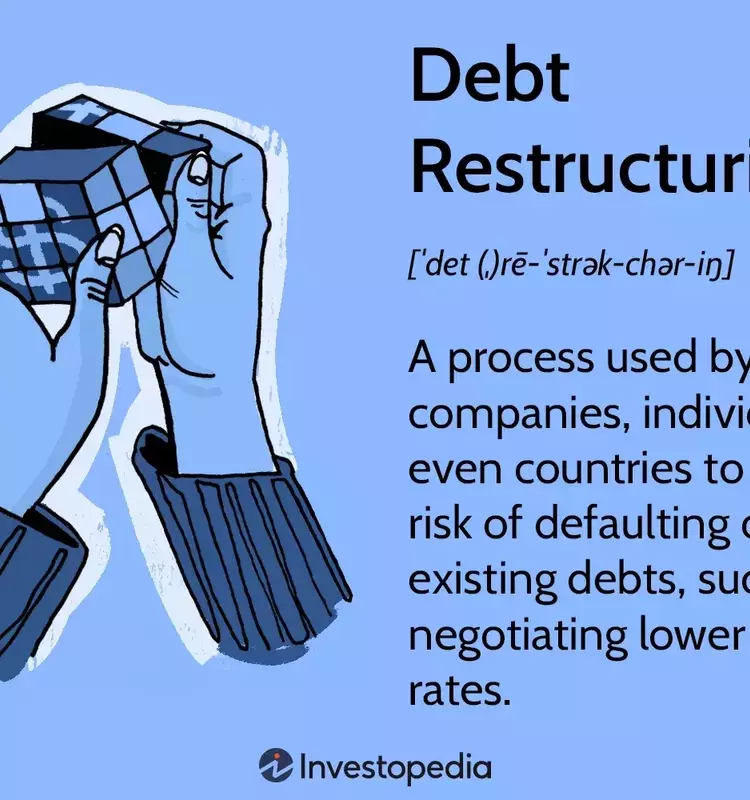
When facing significant financial challenges, whether as an individual, a corporation, or even a nation, a strategic approach known as debt restructuring offers a crucial alternative to the severe consequences of bankruptcy. This process involves carefully revising the terms of existing debt obligations to enhance financial viability and avert potential defaults. By engaging with creditors, debtors can seek modifications such as reduced interest rates, extended repayment periods, or even the conversion of debt into equity, creating a more manageable financial landscape.

Debt restructuring is a multifaceted tool, with its application varying across different entities. For businesses, a common strategy is a debt-for-equity swap, where creditors exchange a portion of their claims for ownership in the company, demonstrating a commitment to the firm's long-term survival. Companies might also renegotiate with bondholders, requesting a 'haircut'—a reduction in outstanding interest or principal—or issue callable bonds to retain flexibility in future debt management. Similarly, sovereign states often negotiate with international creditors to re-align repayment terms for their national debt, sometimes shifting private sector burdens to public institutions to cushion economic impacts. Individuals, too, can engage in personal debt restructuring, either independently or through reputable debt relief agencies, although vigilance against scams is paramount.

Ultimately, debt restructuring provides a vital mechanism for all parties involved to navigate financial distress collaboratively. By prioritizing negotiation and compromise over the disruptive path of bankruptcy, this process aims to create outcomes that are more favorable for debtors, allowing them to rebuild their financial health, and for creditors, who can maximize their recovery. It underscores the importance of proactive financial management and strategic problem-solving in mitigating economic crises.

More Articles
Finance
Understanding Efficiency Ratios: Key to Business Performance and Banking Sector Insights
Efficiency ratios are vital financial metrics that reveal how effectively a company converts its assets and liabilities into revenue. These ratios are particularly crucial for assessing short-term operational performance, demonstrating a company's ability to manage resources, liabilities, equity, and inventory. For banks, this ratio specifically gauges how adeptly management controls non-interest expenses relative to revenue, with a ratio below 50% considered optimal. By comparing these ratios within an industry, stakeholders can identify businesses with superior operational management and potential for improved profitability.
By Morgan HouselApr 29, 2026
Finance
Understanding the Durbin-Watson Statistic in Regression Analysis
The Durbin-Watson statistic is a crucial tool in regression analysis, particularly for time series data. It measures autocorrelation in residuals, with values between 0 and 4. A value near 2 indicates no autocorrelation, while values below 2 signify positive autocorrelation and above 2 point to negative autocorrelation. This statistic helps analysts identify and address serial correlation, which can otherwise lead to misleading interpretations of data trends. It's especially useful in technical analysis for understanding how past stock prices influence future movements.
By Michele FerreroApr 29, 2026
Finance
Subrogation: Understanding the Insurer's Right to Recovery
Subrogation is a legal principle that grants an insurer the right to pursue a third party responsible for a loss to recover funds paid out to the insured. This process is crucial in various insurance types, including auto, property, and health, as it helps mitigate insurance costs, prevent double recovery, and protect policyholders from lengthy disputes.
By Strive MasiyiwaApr 29, 2026
Finance
Understanding Credit Facilities: Types, Benefits, and Drawbacks
A credit facility offers businesses flexible access to funds, functioning as an umbrella loan that allows withdrawals up to a set limit without repeated approval processes. Unlike traditional loans, it provides financial agility for various needs, from equity financing support to managing operational cash flow. However, this flexibility comes with potential complexities, including fees, covenants, and stringent eligibility criteria, making it a powerful yet demanding financial tool.
By Strive MasiyiwaApr 29, 2026
Finance
Rocky Brands Battles Margin Squeeze and Market Skepticism
Rocky Brands, Inc. (RCKY) recently reported its first-quarter 2026 financial outcomes, revealing revenue growth but also a significant reduction in profit margins and a 75% drop in net income. The company's gross margin declined to 36.5% from approximately 41%, primarily due to the reversal of tariff-related benefits. This situation has exposed underlying operational challenges and a slowdown in organic growth. Despite an optimistic outlook for 2026, including projections for a strong margin recovery and 6% revenue growth, the current less favorable tariff environment poses risks. Consequently, a "Hold" rating is maintained on RCKY, as the stock's valuation of 14.5–18 times earnings appears to hinge on these ambitious forecasts, with potential downsides to both profit margins and top-line performance.
By Strive MasiyiwaApr 29, 2026