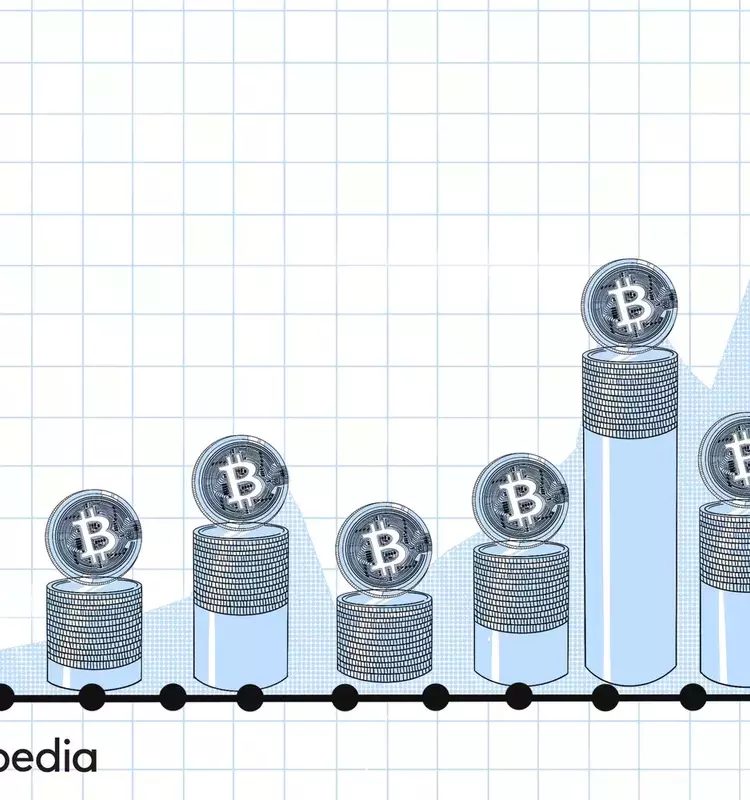
Since its launch, Bitcoin has consistently been a focal point of financial markets, exhibiting a turbulent price trajectory. What began as a novel digital currency has transformed into a significant investment vehicle, reflecting a complex interplay of market forces, investor sentiment, and global economic shifts. Understanding its historical performance offers critical insights into the unique characteristics driving the cryptocurrency market.
The journey of Bitcoin’s valuation is marked by dramatic surges and corrections, influenced by factors ranging from technological advancements to macroeconomic events. This article delves into the key periods of Bitcoin's price evolution, examining the forces that have shaped its value and the ongoing dynamics that continue to define its market behavior. From its humble origins to its current status as a major financial asset, Bitcoin's story is one of innovation, speculation, and profound market impact.
Early Volatility and Exponential Growth
From its debut in 2009, Bitcoin's value began at virtually zero, marking its initial price as a mere fraction of a dollar. However, this period quickly gave way to its first notable price surge in October 2010, when its value climbed from under $0.10 to $0.15, culminating in a rise to nearly $0.30 by the year's end. The momentum continued into 2011, with Bitcoin breaking the $1 threshold and eventually peaking at $30.05 in June. This initial boom was followed by a sharp correction, reducing its price to approximately $4 by the close of 2011, setting a precedent for its future volatile behavior. After a relatively stable 2012, Bitcoin experienced substantial growth in 2013, starting at $13 and skyrocketing past $100 by April and $200 by October. The year concluded with a remarkable gain, pushing Bitcoin beyond $1,000 in December before settling around $760.
The years from 2016 to 2020 further underscored Bitcoin's dramatic price swings. By the end of 2016, its value had gradually increased to over $900. The real explosion occurred in 2017, as Bitcoin surpassed $2,000 in May and then soared to an unprecedented $19,118 by December 18. This peak attracted global attention from investors, governments, and economists, leading to a proliferation of competing cryptocurrencies. The subsequent years, 2018 and 2019, saw more subdued price movements, with a brief rally to $12,000 in July 2019 before closing the year at $7,294. However, 2020 reignited Bitcoin's surge amidst the COVID-19 pandemic, as the cryptocurrency opened the year at $7,768 and dramatically increased to $27,081 by December 28, representing a 248.62% increase. This period highlighted Bitcoin's role as a speculative asset sensitive to global economic anxieties and policy shifts.
Recent Milestones and Market Influences
The period from 2021 to 2025 witnessed Bitcoin continuing its pattern of significant price movements and growing integration into mainstream finance. Early 2021 saw Bitcoin quickly break its previous records, exceeding $45,000 by February and reaching nearly $60,000 by mid-April, driven by increasing institutional interest. Despite a 50% drop by July, it rebounded to scrape $52,660 in September before another correction. November 2021 marked another all-time high of $67,549, but increased uncertainty due to inflation and new COVID-19 variants led to price fluctuations, closing 2021 at $46,709. The first half of 2022 was characterized by a gradual decline, with Bitcoin falling below $30,000 by May and further to under $20,000 by year-end. However, 2023 brought a strong recovery, with Bitcoin starting at $16,688 and closing the year impressively at $43,599.
2024 began with a landmark event: the approval of spot Bitcoin ETFs by the SEC, which initially caused market rebalancing and outflows from some funds but ultimately broadened access for investors. This led to rapid price increases, with Bitcoin breaching $60,000 again and hitting new highs of $72,125 on March 11 and $73,079 on March 13. The fourth halving event in April 2024 saw a modest gain, with the price closing at $63,851. In September 2024, a Federal Reserve rate cut positively impacted major indices and Bitcoin, which traded around $63,000. Late 2024 saw unprecedented highs, with Bitcoin reaching $75,902 following political developments and exceeding $100,000 by December 8. These surges continued into 2025, with Microstrategy's significant purchase pushing the price to $106,136 in January, and further highs of $111,679 in May and $123,339 in August. Despite a brief dip due to disappointing economic reports, Bitcoin hit another all-time high of over $126,198 in October 2025, demonstrating its ongoing sensitivity to both financial and political news, maintaining a highly volatile yet upward-trending market presence.
