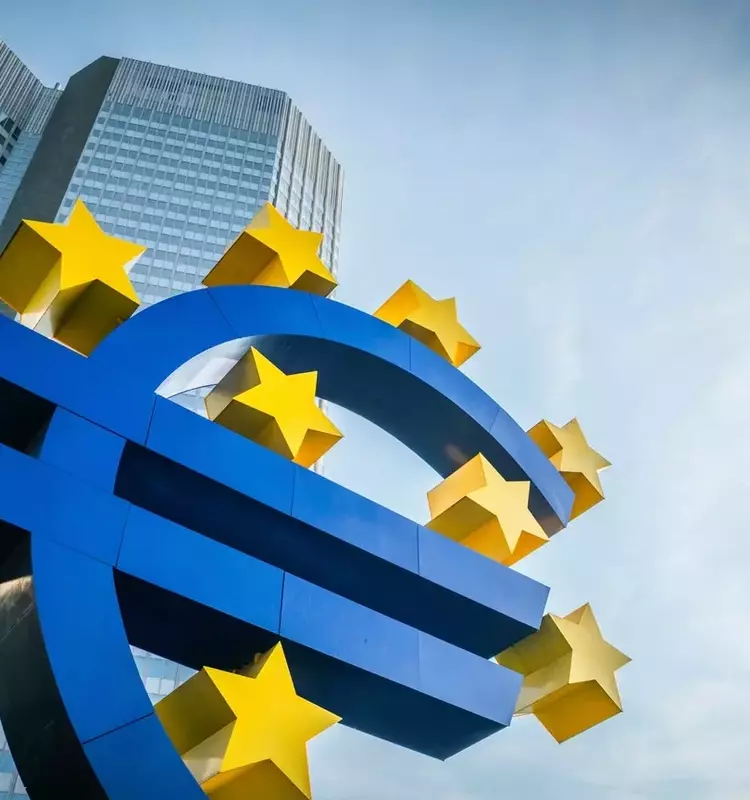
ECB Holds Policy Rates Steady Amidst Global Economic Currents
Finance

ECB Holds Policy Rates Steady Amidst Global Economic Currents

authorBy David Rubenstein
DateJul 24, 2026
Read time3 min

The European Central Bank recently announced its decision to keep policy rates stable. This move comes after a period of adjustment, with the bank having previously implemented a rate increase. The global economic landscape, particularly events in the Middle East, continues to influence financial outlooks. Despite these external pressures, a subdued but steady economic expansion is foreseen, supported by the eurozone's economic resilience observed in the second quarter of the year. Although consumer price increases showed some deceleration in June, the persistent elevation of energy expenses continues to exert upward pressure on production costs, leading businesses to adjust their pricing strategies upwards.

ECB Maintains Status Quo on Interest Rates Amidst Inflation Concerns

In a widely anticipated announcement yesterday, the European Central Bank (ECB) opted to maintain its benchmark policy rates without alteration. This decision follows a rate hike enacted during its previous meeting. This stability in monetary policy arrives at a time of complex economic signals, influenced by both global geopolitical events and domestic inflationary dynamics.

Principal Financial Group's team, including Chief Global Strategist Seema Shah, Market Strategist Christian Floro, and Market Strategist Magdalena Ocampo, observed that despite the ongoing conflict in the Middle East, which presents a significant headwind, the overall economic trajectory for the eurozone is expected to remain one of modest growth. This forecast is underpinned by the surprising robustness of economic activity recorded in the second quarter, suggesting a degree of resilience within the regional economy.

However, the battle against inflation is far from over. While headline inflation saw some moderation in June, the impact of high energy prices continues to permeate the economy. The elevated costs associated with energy inputs are translating into higher operational expenses for businesses, which in turn are being passed on to consumers through increased prices for goods and services. This phenomenon highlights the lingering challenge posed by supply-side shocks and their intricate effects on the broader pricing environment.

The ECB's cautious stance reflects a balancing act: acknowledging the need to control inflation while carefully monitoring external shocks and ensuring economic stability. The central bank's future actions will likely hinge on the evolution of energy prices, the trajectory of core inflation, and the resilience of economic growth in the face of ongoing global uncertainties.

The European Central Bank's decision to hold interest rates steady offers a moment of reflection on the intricate interplay between global events and regional economic policy. It highlights the delicate balance central banks must strike between curbing inflation and fostering sustainable growth, particularly when confronted with external shocks. For market participants and policymakers alike, the ongoing saga of energy prices and their pass-through effects into consumer costs remains a critical area of focus. This situation underscores the importance of adaptive and forward-looking economic strategies in an increasingly interconnected and volatile world.

More Articles
Finance
Understanding Cryptocurrency Storage: Wallets and Best Practices
Storing digital assets safely is paramount for cryptocurrency investors. This guide explores various crypto storage options, including exchange-hosted wallets, offline hardware wallets (cold storage), online software wallets (hot wallets), and traditional paper wallets. Each method offers distinct advantages and disadvantages regarding security, accessibility, and convenience, making the choice dependent on individual needs and risk tolerance.
By Strive MasiyiwaJul 24, 2026
Finance
ImmuCell's First Defense Product: Driving Growth in Animal Health
ImmuCell Corporation (ICCC) is leveraging its flagship product, First Defense, to enhance cattle health and productivity. This core offering is gaining significant commercial traction among dairy farmers year-round. The company has also successfully improved manufacturing efficiency and repurposed assets from its Re-Tain product line to bolster First Defense's production capacity. Despite a reliance on a limited number of distributors and a concentrated product portfolio, the company's valuation appears poised for continued growth as First Defense expands its market presence.
By Mariana MazzucatoJul 24, 2026
Finance
Alger Focus Equity Fund: Strong Performance in Q2 2026 Driven by Tech and AI Investments
The Alger Focus Equity Fund's Class A shares significantly outpaced the Russell 1000 Growth Index in the second quarter of 2026. This success was primarily fueled by strategic overweights in Information Technology and Communication Services, particularly through investments in AI infrastructure and data center enablers like Nebius Group, Western Digital Corporation, and Astera Labs, Inc. These sectors capitalized on the growing demand for compute capacity driven by accelerating enterprise AI adoption and cloud investments, leading to the S&P 500 Index's strongest quarterly recovery since 2020.
By Fareed ZakariaJul 24, 2026
Finance
Norsk Hydro's Strategic Evolution Towards Low-Carbon Aluminum Leadership
Norsk Hydro is strategically transforming into a leading low-carbon aluminum producer by integrating renewable power sources and recycling initiatives. The company's Q2 2026 performance showcased strong financial health with increased revenue and EBITDA, driven by its integrated business model. Hydro capitalizes on Europe's aluminum demand, maintaining regional premiums and long-term power agreements, while executing a disciplined capacity expansion strategy. Despite these strengths, the company trades at a notable valuation discount, presenting a compelling investment case given its diversified earnings and strong positioning in the low-carbon economy.
By Lisa JingJul 24, 2026
Finance
Silgan Holdings: A 'Hold' Due to Stagnant Profit and Cash Flow Despite Revenue Growth
Silgan Holdings (SLGN) maintains a 'hold' rating as its revenue growth is hindered by stagnant profits and cash flow. Although the valuation appears cheap, it isn't compelling enough compared to its industry peers to warrant an upgrade. Management anticipates improved profitability in 2026 through cost reductions and increased volumes, targeting an adjusted EPS of $3.73–$3.93. The author awaits Q2 2026 results for concrete evidence of sustained financial improvement.
By David RubensteinJul 24, 2026