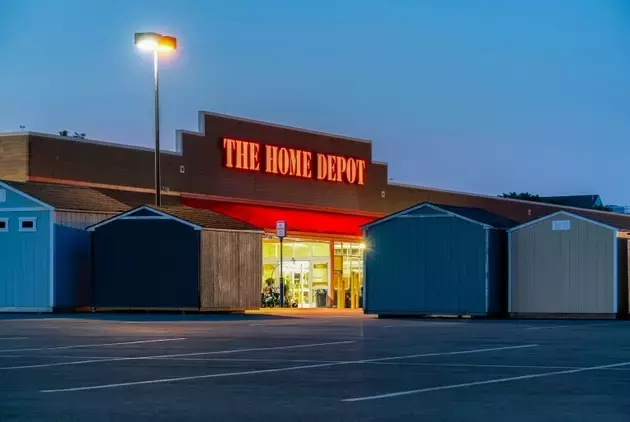
Economic Headwinds and Home Depot's Unattractive Valuation
Finance

Economic Headwinds and Home Depot's Unattractive Valuation

authorBy Michele Ferrero
DateMay 06, 2026
Read time3 min

Home Depot is currently navigating a complex economic landscape marked by persistent inflationary pressures and a decelerating housing market, factors that collectively dim its investment appeal. The cyclical nature of its business, heavily reliant on consumer spending for home improvement and construction, renders it particularly susceptible to broader economic downturns. Analysts suggest that the company's valuation, evidenced by a trailing twelve-month GAAP PE ratio of 22.76x, is overly optimistic and necessitates a substantial 23% growth in levered free cash flow to warrant its current market price. This confluence of macroeconomic headwinds and a demanding valuation indicates that Home Depot may not be an opportune investment choice at this time, prompting a recommendation to sell.

Economic Pressures Impact Home Depot's Outlook

In the current financial climate, Home Depot, a prominent player in the home improvement sector, finds itself grappling with a multitude of economic adversities. A key concern is the pervasive inflation across various consumer categories, ranging from daily necessities like food and fuel to significant expenditures such as healthcare and education. This widespread increase in living costs invariably constrains household budgets, directly impacting discretionary spending on home remodeling and construction projects. Moreover, the ongoing geopolitical tensions, particularly the prolonged conflict involving Iran, contribute to global economic uncertainty, potentially exacerbating inflationary pressures and energy costs. The housing market, a critical driver for Home Depot's business, is showing clear signs of deceleration. Rising interest rates and reduced consumer confidence are contributing to a cooling trend in both new home sales and existing property renovations. These factors collectively point to a challenging period for the company, with projections suggesting a slowdown in remodeling and construction activities extending through the summer months. This environment underscores Home Depot's inherent cyclical vulnerability, making its stock an less attractive option for investors seeking stability and growth.

From an investor's perspective, the current situation with Home Depot serves as a stark reminder of the importance of macro-economic analysis in investment decisions. While a company's intrinsic strengths, such as market dominance and operational efficiency, are crucial, external economic forces can significantly influence its trajectory. The challenges faced by Home Depot highlight how broad economic trends like inflation and housing market dynamics can quickly shift the investment landscape. It emphasizes the need for investors to remain vigilant, not just about company-specific metrics, but also about the larger economic picture. This scenario also underscores the principle that even fundamentally strong companies can become overvalued, especially when market expectations do not align with evolving economic realities. For prudent investors, this situation offers a valuable lesson in balancing long-term potential with short-term market conditions and valuation discipline.

More Articles
Finance
Artisan Value Fund: Navigating Q1 2026 Market Dynamics
The Artisan Value Fund experienced a challenging first quarter in 2026, underperforming the Russell 1000 Value Index. This was primarily attributed to a market environment favoring momentum stocks over quality factors. Despite the broader trend, energy holdings such as EOG Resources, Diamondback Energy, and SLB emerged as key contributors, driven by supply shocks in the energy market. The fund's Q1 performance reflects the complex interplay of market forces and strategic sector allocations.
By Mariana MazzucatoMay 06, 2026
Finance
Fidelity's Consumer Staples Portfolio Navigates Q1 2026
Fidelity Select Consumer Staples Portfolio's Retail Class shares underperformed in Q1 2026, gaining 6.10% against the MSCI U.S. IMI Consumer Staples 25/50 Index's 6.97%. Despite this, the consumer staples sector saw overall outperformance. Key factors influencing the fund included an overweight position in Keurig Dr Pepper, which detracted from relative performance, and strong gains from Bunge Global SA due to increased biofuel mandates. Portfolio manager Ben Shuleva strategically increased holdings in Mondelez International and Kenvue, both now top-10 positions.
By Suze OrmanMay 06, 2026
Finance
Magna International: Positioned for Future Growth Through Strategic Efficiency and Market Resilience
Magna International (MGA) has demonstrated robust performance, recovering from a previous downturn. The company's first-quarter 2026 results showcased a 3% increase in sales, reaching $10.4 billion, despite a 7% contraction in global light vehicle production. This growth was significantly boosted by a 58% rise in EBIT and a 77% surge in adjusted EPS year-over-year, primarily driven by enhanced operational efficiency and strategic restructuring efforts. These achievements highlight MGA's strong adaptability and potential for sustained profitability in a challenging market.
By Robert KiyosakiMay 06, 2026
Finance
Amazon: Growth Prospects and Valuation Compared to Competitors
This analysis re-evaluates Amazon's (AMZN) investment appeal, building on previous assessments. While Amazon reported impressive Q1 revenue and EPS, its AWS cloud computing division, despite reaccelerated growth, trails rivals like Azure and Google Cloud. The company's significant capital expenditures are impacting near-term free cash flow. Although strategic initiatives such as proprietary chips and enhanced supply chain services offer long-term promise, Amazon's current valuation remains less attractive when juxtaposed with its hyperscaler counterparts.
By Morgan HouselMay 06, 2026
Finance
Chevron: Promising Returns and Strategic Growth on the Horizon
Aristotle Global Equity Advisory strategically adjusted its portfolio, acquiring Chevron while reducing exposure to other assets. Chevron's acquisition of Hess in 2025 significantly bolsters its position in Guyana's Stabroek block, a prime location for low-cost, high-return oil development. Furthermore, the anticipated completion of the Tengiz expansion in Kazakhstan is set to unlock substantial free cash flow, following a considerable period of capital investment.
By Fareed ZakariaMay 06, 2026