Unlocking Your Child's School Day: Simple Strategies for Deeper Conversations
Crafting Precise Questions for Engaging Dialogue
To encourage children to share more about their school day, it's beneficial to ask precise questions rather than broad ones like, "How was your day?" According to Dr. Dana Basu, a licensed clinical psychologist, specific inquiries about activities or emotions experienced at school can significantly improve a child's ability to recall and articulate their day's events. For younger children, questions about playtime, physical education, or moments requiring help can be effective. For older children, asking about science lab partners, humorous incidents, lunch companions, or even their favorite teachers can open up more detailed discussions.
Initiating Conversation by Sharing Your Own Experiences
Children are more inclined to confide in parents who openly share their own daily experiences. Elizabeth Manly, a former elementary teacher, suggests that parents start conversations by narrating details from their own day, no matter how small. This practice helps children, especially younger ones, develop the communication skills needed to talk about their day. When parents model descriptive sharing, it provides a framework for children to mimic, making it easier for them to articulate their own experiences when prompted with specific questions about their school day, such as what they ate for snack or which story they read.
Prioritizing Connection Over Immediate Interrogation
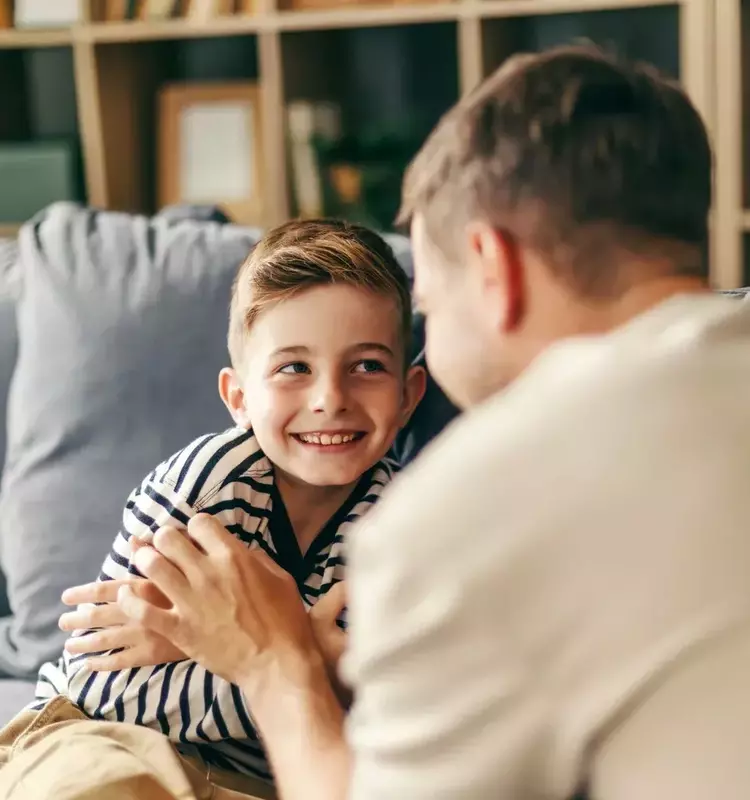
Sometimes, the best approach to understanding a child's school day is to initially ask nothing at all. Elle Kwan of Hand in Hand Parenting advocates for delaying questions until after a period of connection. School can be overwhelming for children, and upon returning home, they primarily seek comfort, safety, and reassurance of their parents' happiness to see them. Offering hugs, engaging in playful activities, or simply sharing laughter can help children feel secure and grounded. Once they are relaxed and at ease, they are far more likely to open up about their day, making the conversation more natural and less forced.
Leveraging Open-Ended Questions for Richer Responses
When ready to converse, using open-ended questions serves as an excellent starting point for deeper discussions. Daniela Wolfe, a high school social worker and mother of two, notes that generic questions often yield brief, uninformative answers. Instead, asking questions that require more than a yes/no response, such as "What made you laugh today?" or "What made you sad?" can elicit more comprehensive replies. These questions should be seen as conversation starters, with parents prepared to ask follow-up questions to delve further, ensuring the dialogue feels like a supportive exchange rather than an interrogation.
Fostering Openness Through Non-Direct Eye Contact
For children who are shy or resistant to sharing, initiating conversations without direct eye contact can be surprisingly effective. Parenting expert Varda Meyers Epstein explains that avoiding direct gaze reduces social pressure, making children feel less "put on the spot" and more willing to talk. This technique can be applied in various casual settings, such as while washing dishes with a child at the kitchen table, driving in the car, or even through text messages. By removing the intensity of direct eye contact, parents create a more comfortable environment for their children to open up freely.
Playing the 'High Low Buffalo' Game for Family Sharing
Grace Poole, a registered behavior technician and stay-at-home mom, suggests the 'High Low Buffalo' game as a fun and effective way to encourage family members, including children, to share their day. In this game, each person shares a 'high' (best part), a 'low' (worst part), and a 'buffalo' (something interesting or random). This activity encourages participation from everyone, including parents and siblings, fostering a sense of shared experience. Consistent play establishes a safe space for authentic and vulnerable sharing, helping family members understand each other better and strengthening emotional bonds beyond the game itself.
