Elon Musk Predicts SpaceX Will Surpass DeepMind in AI Leadership
Money

Elon Musk Predicts SpaceX Will Surpass DeepMind in AI Leadership

authorBy Scott Pape
DateMar 16, 2026
Read time2 min

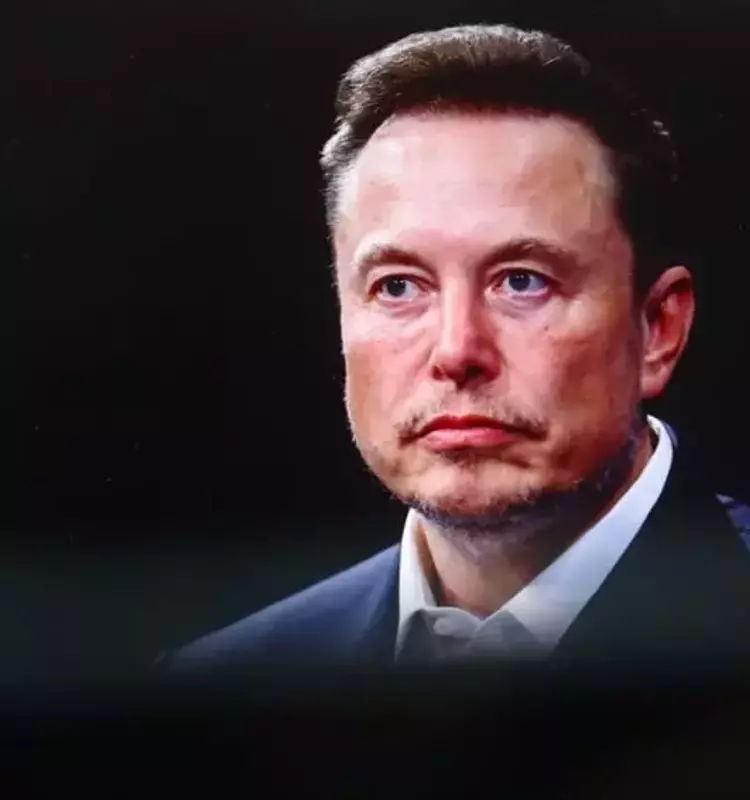
Elon Musk, the CEO of Tesla, has put forth an intriguing idea: SpaceX, a company primarily known for its space ventures, could eventually outpace leading AI research institutions such as Google DeepMind in the field of artificial intelligence. This assertion suggests that the future trajectory of AI advancement might not be confined solely to entities focused on developing chatbots and intricate language models, but could instead be shaped by organizations possessing extensive technological foundations.

Currently, the competition in AI is largely perceived as a rivalry between prominent research facilities like OpenAI and DeepMind, which have been instrumental in advancing large language models and sophisticated reasoning systems. DeepMind, in particular, has achieved significant milestones, including the creation of AlphaFold, and plays a crucial role in Alphabet's expanding AI ambitions. However, Musk's viewpoint hints at a broadening of this competitive arena, suggesting that companies with significant infrastructure could redefine who leads the AI race.

SpaceX, recognized for its rocketry and satellite technology, already operates on a vast technological scale. Its Starlink satellite constellation, comprising thousands of satellites, heavily relies on autonomous systems and advanced software for operational management. This formidable infrastructure, coupled with Musk's burgeoning AI ecosystem, which includes xAI, could theoretically provide SpaceX with an unparalleled platform for the development of advanced, large-scale AI systems. This implies that the organizations constructing the world's most extensive technological frameworks may ultimately determine the direction and future of artificial intelligence.

The landscape of artificial intelligence is continuously evolving, and the emergence of unexpected contenders like SpaceX underscores the dynamic nature of innovation. This highlights a future where technological convergence and integrated systems could become the new frontier for AI leadership, pushing the boundaries of what is currently imaginable and encouraging a broader, more interdisciplinary approach to technological advancement.

More Articles
Global Market Dynamics and Portfolio Adjustments: March 2026
This report analyzes the evolving global market landscape in March 2026, characterized by geopolitical tensions, cautious central bank policies, and government fiscal interventions. It explores economic conditions across Europe, the UK, Japan, Asia, and North America, and details specific company performances and strategic adjustments within a model stock portfolio, emphasizing resilience in the face of macro-economic shifts.
By Dave RamseyMar 16, 2026
Unpacking Eli Lilly's Valuation: Is the Market Overly Optimistic?
Eli Lilly has experienced remarkable growth propelled by its GLP-1 medications, Zepbound and Mounjaro. While its market capitalization approaches $900 billion, questions arise regarding whether its stock valuation is excessively high. This analysis explores the factors driving investor bullishness and examines potential risks, including future competition and the impact of a premium price on investor safety, despite the company's strong performance and promising pipeline.
By T. Harv EkerMar 16, 2026
DocuSign's Q4 Earnings Outlook: AI Integration and Shifting Metrics Take Center Stage
DocuSign is set to announce its fourth-quarter earnings, with analysts anticipating a modest revenue beat. The company is poised to highlight its strategic shift from billings to ARR as a key performance indicator, alongside the exciting new growth opportunities emerging from its integration with Anthropic's Claude Code AI. This marks a pivotal moment as DocuSign expands beyond its core e-signature business.
By T. Harv EkerMar 16, 2026
Retirement Savings: The 65-Year-Old's Financial Benchmark
Planning for retirement involves more than just saving arbitrarily; it requires a strategic financial target. Financial experts suggest that by age 65, individuals should aim to have approximately 10 to 11 times their peak annual income saved. This benchmark, supported by institutions like T. Rowe Price and Fidelity, is crucial for maintaining one's lifestyle in post-working years. Early and consistent saving, coupled with astute portfolio management, forms the cornerstone of a secure retirement.
By Dave RamseyMar 16, 2026
The Trajectory of Gold: Can the SPDR Gold ETF Maintain its Upward Momentum?
This article explores the future prospects of the SPDR Gold ETF (GLD) given the recent surge in gold prices. It delves into the reasons behind gold's appeal, particularly amidst global financial uncertainty and rising sovereign debt, drawing insights from prominent investors like Ray Dalio. The discussion also touches upon the historical performance of gold relative to other asset classes and the implications of the ETF's expense structure on long-term returns, offering a comprehensive look at gold as an investment.
By T. Harv EkerMar 16, 2026