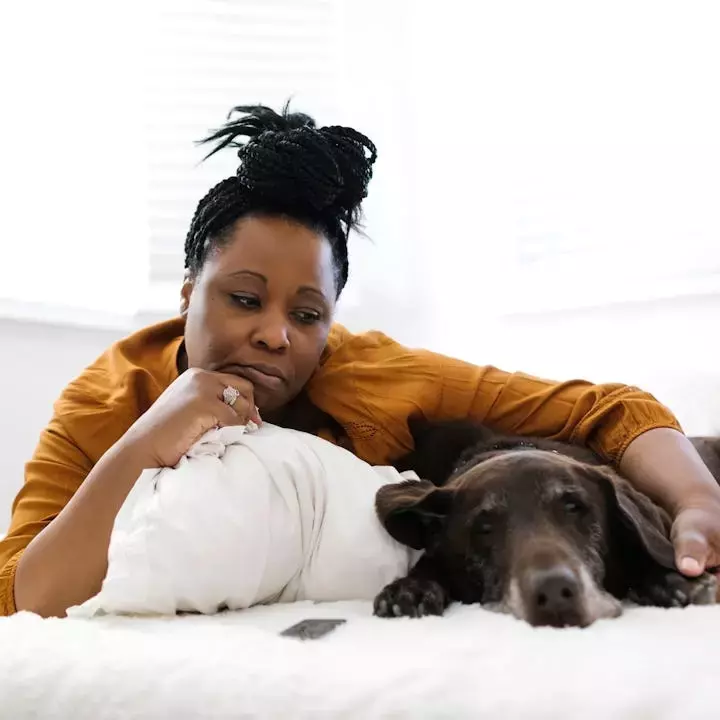
A recent body of scientific inquiry reveals a profound connection between humans and their canine companions, suggesting that dogs possess a remarkable ability to detect and internalize human emotional states, particularly stress. This intricate emotional resonance, often described as 'emotional contagion,' goes beyond mere observation; it involves dogs actively sensing various subtle and overt signals emanating from their owners. Understanding this phenomenon is crucial for fostering healthier relationships with our pets, as it highlights how our emotional well-being directly impacts theirs, prompting a deeper appreciation for the complex dynamics of the human-animal bond.
For many dog owners, the intuitive sense that their pet reacts to their emotional state is a common experience. Research now provides empirical backing for these observations. Dr. Stephanie Liff, a veterinarian and advisor for Spot & Tango, explains that dogs are exceptionally intuitive, interpreting human feelings through a myriad of cues. These include facial expressions, the tone of our voices, body language, and even chemical signals such as cortisol, the stress hormone. This means our furry friends can literally 'smell' our anxiety, responding to changes in our physiological state that we might not even consciously recognize. A significant study published in Scientific Reports in 2019 demonstrated that dogs' long-term cortisol levels often mirror those of their owners, indicating a deep, sustained emotional linkage. Furthermore, a 2025 study suggested that work-related stress in humans can 'cross over' to their dogs, particularly when owners continue to ruminate on workplace issues at home. This emphasizes that it's not just the presence of stress, but also our processing and lingering over it, that impacts our canine companions.
The mechanisms behind this canine sensitivity are multifaceted. Dr. Hilary Humm-Beatty, a veterinarian at Embrace Pet Insurance, suggests two primary pathways: direct emotional transmission, akin to empathy, where dogs genuinely feel their companion's stress; and indirect transmission, where dogs respond to behavioral changes influenced by human stress. This latter pathway involves dogs picking up on shifts in routines, increased tension, and altered emotional availability from their owners. Dr. Kathryn Dench of Paw Origins likens dogs to emotional 'weather readers,' constantly assessing their environment for cues. When they sense a 'stormy forecast' from their human, they adapt their behavior accordingly, which can sometimes manifest as signs of stress in the dogs themselves. This intricate interplay underscores the profound co-evolution of humans and dogs, where canines have developed sophisticated social observational skills to better navigate their shared world.
Recognizing the signs of stress in a dog that may be absorbing its owner's anxiety is key to intervention. While individual responses vary, common indicators include increased pacing, whining, hypervigilance, clinginess, restlessness, changes in appetite, destructive behaviors, difficulty settling, and heightened barking or reactivity. Dr. Dench estimates that in households with persistent human anxiety, a significant majority of dogs (60-70%) will exhibit corresponding behavioral or physiological symptoms. However, it's crucial for owners not to view this as a personal failing or a cause for guilt. As Dr. Dench reassures, this phenomenon highlights the strong bond between humans and dogs, rather than implying harm caused by the owner. Instead, it serves as an opportunity to understand and address shared emotional challenges more effectively.
The good news is that the emotional connection is bidirectional: dogs also play a vital role in reducing human stress. Dr. Liff points out that interacting with dogs can increase dopamine and oxytocin levels, lower cortisol, and even improve blood pressure in humans, demonstrating a reciprocal relationship where both species benefit. Therefore, while our stress can affect our dogs, their presence and interaction can also be incredibly therapeutic for us. For anxious owners, the experts unanimously advise against spiraling into guilt. Instead, focus on proactive strategies: maintain consistent routines, prioritize walks and playtime, practice calm departures and arrivals, create tranquil spaces for your dog, and engage in grounding exercises together. Dr. Liff also suggests creating 'transition rituals' between work and home, such as a post-work walk, to help both humans and dogs decompress. Ultimately, these scientific findings reinforce what many dog owners instinctively know: dogs don't just share our homes; they share our lives and our emotional journeys.
