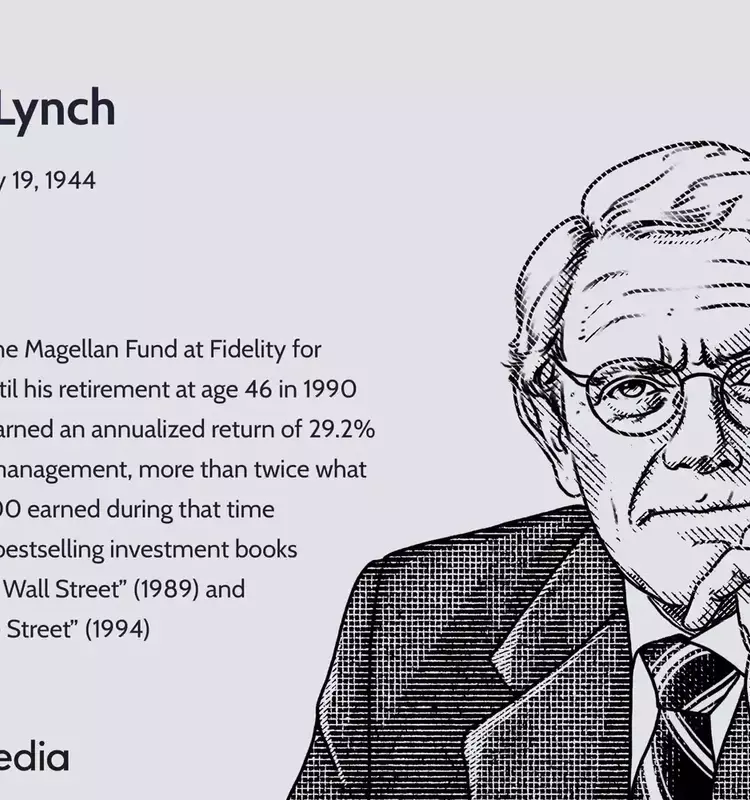
Peter Lynch ascended from humble beginnings to become one of the most celebrated investors of modern times. For 13 years, he masterfully guided the Magellan Fund, achieving an average annual return of approximately 29%. His remarkable success is matched by an enduring investment philosophy that empowers individual investors: grasp the essence of your holdings, adopt a long-term perspective, and trust your unique insights. Through his literary contributions, educational outreach, and philanthropic endeavors, Lynch continues to shape contemporary thought on investment strategies.
Peter Lynch, an iconic figure in the investment world, is widely recognized for his extraordinary achievements as a fund manager at Fidelity. He famously spearheaded the Magellan Fund, transforming it into one of history's most successful mutual funds. Lynch assumed leadership of the fund at the young age of 33 in 1977 and continued at its helm for 13 years, eventually retiring in 1990 at 46. His adaptable investment approach and straightforward advice—to 'invest in what you know'—established him as a guiding light for both seasoned financial professionals and everyday individuals seeking to navigate the stock market.
The Genesis of a Financial Icon
Peter Lynch's journey into the world of finance began with a blend of academic pursuit and practical experience. Born in Newton, Massachusetts, in 1944, a pivotal moment in his childhood, the passing of his father when Peter was ten, led to him taking on a caddying job at a prestigious golf club. This early exposure proved instrumental, as overheard conversations about the stock market sparked his nascent interest in investing. These formative experiences laid the groundwork for his future career, blending the realities of economic necessity with intellectual curiosity. His tenure as a caddy not only provided financial support but also ignited a lifelong passion for understanding market dynamics.
Lynch's academic path further solidified his financial acumen. He utilized a caddy scholarship to attend Boston College, where he earned a finance degree in 1965. A year later, he gained initial professional exposure as a summer intern at Fidelity, a company that would later become synonymous with his name. His astute early investments, notably in an air freight company called Flying Tiger, helped fund his graduate studies at the University of Pennsylvania's Wharton School of Business, where he completed his Master of Business Administration in 1968. Following his marriage to Carolyn Hoff and a period of service in the Army ROTC program from 1968 to 1970, Lynch secured his first full-time role at Fidelity at 25, starting as a textiles and metals analyst. This rapid progression from a caddy to a full-time analyst at a leading financial institution highlights his exceptional talent and determination.
Triumph at the Magellan Fund and Enduring Principles
In 1977, Peter Lynch was appointed to lead the Magellan Fund, a relatively small yet aggressive capital appreciation fund established in 1963, primarily focused on domestic investments. Under his dynamic management, the fund achieved an extraordinary average annual return of 29%, consistently outperforming the S&P 500 in all but two years of his tenure. This remarkable track record transformed the Magellan Fund from a $20 million entity into a $14 billion powerhouse under his guidance, demonstrating the profound impact of active management and establishing Lynch as a beacon for investors seeking superior returns relative to market benchmarks. His success solidified his reputation as one of history's most effective fund managers.
Lynch's investment philosophy, characterized by thorough company research and a bottom-up approach, became legendary. He emphasized a blend of fundamental analysis, common sense, and a long-term perspective. His famous adage, “buy what you know,” encouraged investors to focus on companies they understood well and were familiar with through everyday life. This strategy enabled investors to form realistic expectations about a company's growth potential and future prospects. Furthermore, Lynch is widely credited with developing the price-to-earnings-growth (PEG) ratio, a crucial tool that helps investors assess whether a stock's price is reasonable given its growth outlook. He advocated for investing in companies with historically low price-to-earnings ratios within their industry and for the company itself, believing these offered significant potential for long-term outperformance. His insights continue to resonate, highlighting the importance of diligent research and a grounded understanding of one's investments.
