Home Equity Lines of Credit (HELOCs) are a popular financial tool for homeowners, offering a revolving credit line that can be accessed as needed. Unlike traditional installment loans, HELOCs provide flexibility, allowing borrowers to draw funds multiple times up to an approved limit. This adaptability makes them attractive for various financial needs, from home renovations to unexpected expenses. However, this flexibility also necessitates a robust understanding of their operational nuances and potential risks. It is paramount for homeowners to meticulously assess their financial capacity and the specific terms of a HELOC before committing, as mishandling can lead to severe financial repercussions, including the potential loss of one's home. Therefore, a thorough evaluation of all aspects, including the draw and repayment periods, interest rate structures, and associated fees, is indispensable for a sound financial decision.
The process of securing a HELOC involves multiple factors, each with its own set of implications for the borrower. From how the credit line is structured and the maximum amount one can borrow, to the various costs involved and how the home's value is appraised, every detail influences the overall utility and affordability of the HELOC. Understanding these elements is not just about comparing offers but about ensuring the chosen product aligns seamlessly with one's financial goals and risk tolerance. This comprehensive insight allows homeowners to leverage their home equity responsibly, transforming it into a strategic asset rather than a financial burden. By asking the right questions and delving into the specifics of each HELOC option, individuals can navigate this complex financial landscape with confidence and clarity.
Navigating HELOC Structures and Borrowing Capacity
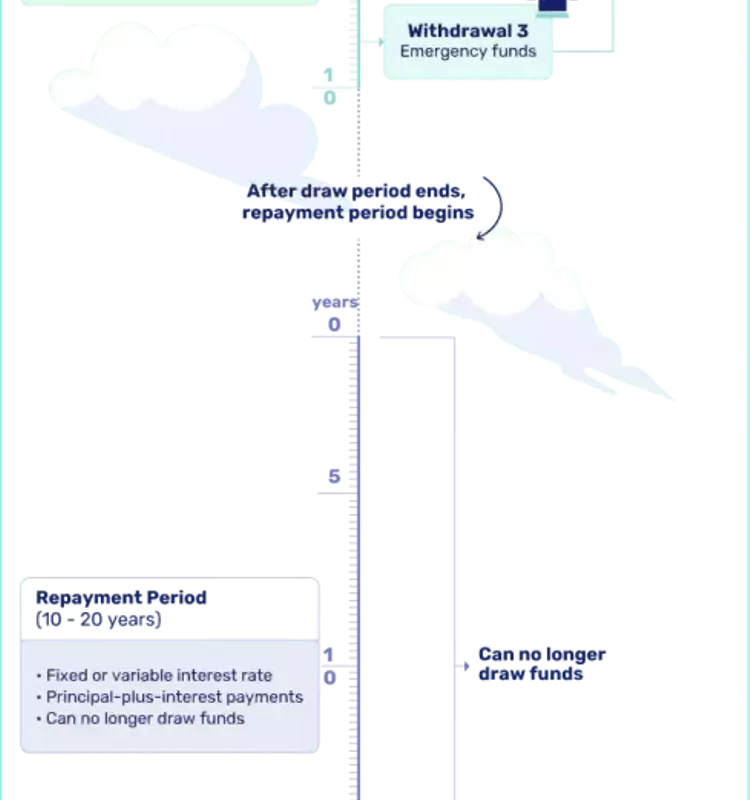
Understanding the fundamental structure of a Home Equity Line of Credit (HELOC) and its borrowing limits is the first crucial step for any homeowner. HELOCs are typically divided into two main phases: the draw period and the repayment period. The draw period, often lasting around 10 years, allows you to access funds as needed, much like a credit card, with payments often limited to interest only. Following this, the repayment period, which can extend for 20 years or more, requires payments on both the principal and interest. The amount you can borrow is heavily influenced by your combined loan-to-value (CLTV) ratio, which considers your existing mortgage and the potential HELOC against your home's appraised value. Lenders have varying CLTV limits; a higher limit may offer more accessible funds but also increases financial risk if home values decline. Factors such as your credit score and income also play a significant role in determining your eligibility and the maximum credit line offered.
The flexibility of HELOCs, while a major advantage, also presents unique challenges, particularly regarding financial discipline. Some lenders offer hybrid HELOCs that allow for fixed-rate mini-loans within the credit line, providing a measure of predictability for specific large projects. These variations highlight the importance of aligning the HELOC product with your specific borrowing and repayment strategy. Furthermore, understanding how lenders assess your home’s value—whether through a full appraisal, automated valuation models (AVMs), or hybrid approaches—can impact the amount you qualify for and the associated costs. While AVMs offer speed, a full appraisal generally provides a more accurate valuation, especially if recent home improvements have increased your property's worth. Evaluating these structural components and borrowing parameters is essential to ensure the HELOC not only meets your immediate needs but also remains manageable throughout its lifecycle.
Understanding HELOC Costs and Payment Dynamics
Beyond the principal amount, the costs and payment dynamics of a HELOC are critical factors that directly impact its affordability and overall financial viability. Most HELOCs feature variable interest rates, meaning your payments can fluctuate with market changes. While this can sometimes lead to lower initial payments, it also introduces uncertainty and potential for increased costs over time. It is vital to scrutinize the lender's specific rules governing these rates, including the margin added to the index rate, any step adjustments, and the upper and lower caps on rate changes. Additionally, initial setup costs, often referred to as closing costs, are a significant consideration, similar to those incurred with a first mortgage. These can sometimes be rolled into the HELOC balance, but this strategy means paying interest on these fees, increasing your total borrowing expense. Awareness of these elements prevents unexpected financial burdens and enables more accurate budgeting for future payments.
In addition to interest and closing costs, borrowers should be aware of other potential fees such as annual maintenance fees or charges for specific types of draws. These seemingly minor costs can accumulate, affecting the true cost of your HELOC. Minimum draw requirements are another important consideration, as some lenders mandate a certain amount be drawn at the outset or with each subsequent withdrawal, ensuring the credit line is actively utilized. This can sometimes lead to borrowing more than immediately necessary, emphasizing the need for a clear understanding of your spending plan. Critically, borrowers must project their maximum potential payments by using HELOC calculators, factoring in the highest possible interest rates and maximum credit line usage. This foresight helps determine if the HELOC remains affordable even under unfavorable market conditions, thereby safeguarding against default and potential foreclosure. Understanding the various methods of accessing funds, such as direct deposits or HELOC credit cards, also plays a role in managing spending habits and financial discipline.