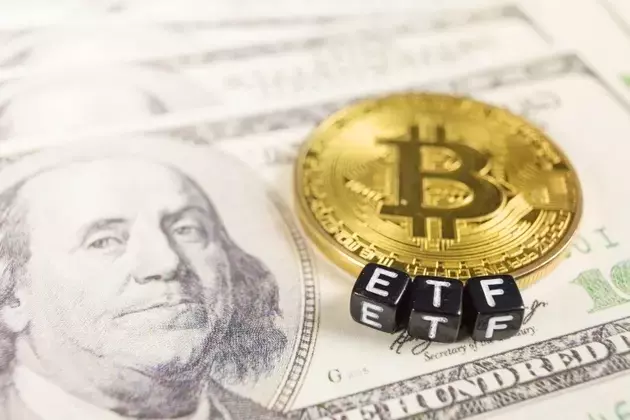
The recent market performance of Bitcoin and Ethereum, now deeply entwined with the traditional financial ecosystem through Exchange Traded Funds (ETFs), has revealed a complex interplay of institutional activity and underlying market structures. Despite experiencing substantial outflows driven by institutional deleveraging and specific ETF redemption mechanisms, the core demand for these digital assets appears to remain robust. The concentrated nature of these outflows, particularly within BlackRock's IBIT, along with a significant IBIT block trade, points towards a strategic reallocation of assets rather than a wholesale abandonment by major players. This suggests a continued institutional interest, albeit with evolving strategies for exposure to the crypto market.
Furthermore, the unique characteristics of Ethereum's ETHE, particularly its staking mechanism, are poised to play a crucial role in its future price trajectory. With a substantial portion of ETHE assets locked in staking, a supply compression effect is anticipated. This dynamic, coupled with the eventual resumption of ETF creations pending regulatory approvals, is expected to magnify any upward price movements. The inherent design of the AP mechanism, which amplified the recent downturn, is now forecasted to symmetrically accelerate a recovery, with broad macroeconomic liquidity shifts and the direction of ETF flows serving as pivotal catalysts for both Bitcoin and Ethereum.
Institutional Influences and Bitcoin's Resilience
The integration of Bitcoin and Ethereum into the traditional financial system through the introduction of Exchange Traded Funds (ETFs) has fundamentally reshaped their market dynamics. While these digital assets were initially conceived as alternatives to conventional banking, their new ETF wrappers mean they are now highly susceptible to the same institutional forces that govern traditional financial markets. This integration was starkly illustrated by recent record outflows from both Bitcoin and Ethereum, primarily attributed to institutional deleveraging and the operational mechanics of ETF redemptions. Such outflows initially raised concerns about a potential loss of institutional confidence, but a closer examination of the data reveals a more nuanced picture.
A significant $1.29 billion IBIT block trade, alongside concentrated outflows from BlackRock's IBIT, suggests that these movements are not indicative of a structural abandonment of the asset class. Instead, they point to internal reallocation strategies within institutional portfolios. Large investors are likely repositioning their holdings, possibly moving between different crypto-related investment vehicles or adjusting their exposure based on risk assessments and market opportunities. The robust $58.72 billion institutional inflow base further supports the notion of sustained institutional interest, indicating that while the composition of holdings may shift, the foundational demand for Bitcoin remains strong, positioning it for potential future growth as institutional strategies mature.
Ethereum's Staking Advantage and Market Recovery
Ethereum's market narrative is significantly shaped by the unique features of its ETHE staking mechanism, which sets it apart from Bitcoin's dynamics. A substantial 71% of ETHE assets are currently locked in staking, a process that inherently introduces supply compression into the market. This reduction in available supply is a critical factor that is expected to amplify price recovery once the Securities and Exchange Commission (SEC) provides further approvals, leading to the resumption of ETF creations. The constrained supply, combined with renewed institutional buying pressure, could create a powerful upward momentum for Ethereum, making its recovery potentially more pronounced than that of Bitcoin.
The AP mechanism, a critical component of ETF operations, which previously accelerated the selloff by facilitating rapid redemptions, is now poised to symmetrically accelerate the recovery. This mechanism, designed for efficient market making, will enable faster inflows and creations of ETF units as investor sentiment shifts positively. Key catalysts for this recovery in both BTC and ETH will be broader macroeconomic liquidity shifts, such as changes in interest rates or quantitative easing policies, and a definitive positive shift in ETF flow direction. As global liquidity conditions improve and institutional investors re-engage with conviction, the operational efficiencies of the ETF structure are expected to channel capital back into these digital assets with considerable speed, driving significant price appreciation.
