eToro's Strategic Acquisition of TradeZero: A Deep Dive into its US Expansion and Market Reaction
Unlocking New Horizons: eToro's Bold Bet on the American Trading Landscape
eToro's Strategic Move to Acquire TradeZero and Expand into the US Equities Market
eToro Group Ltd. announced its intention to acquire TradeZero, an online brokerage specializing in serving active traders in the U.S., for a sum potentially reaching $231 million. This acquisition marks a pivotal step in eToro's ongoing strategy to deepen its engagement within the American stock market, highlighting a clear ambition to broaden its product offerings and user base in this key region.
TradeZero's Value Proposition: Infrastructure and Market Access
Established in 2015, TradeZero has carved out a niche by offering commission-free trading for U.S. stocks and options through its broker-dealer affiliates. For eToro, the appeal of TradeZero lies in its sophisticated trading platforms, robust broker-dealer infrastructure, and an active community of traders. Furthermore, this acquisition provides eToro with a strategic entry point into the Canadian market, as TradeZero operates across the U.S., Canada, and other international territories.
Accelerated Growth and Enhanced Offerings Through Synergy
Yoni Assia, Co-Founder and CEO of eToro, emphasized that this acquisition serves as a fast track for introducing new products to U.S. customers. He highlighted the synergistic potential, stating that the combined entities would innovate at a faster pace, reinforcing eToro's vision to develop a comprehensive global financial super-app for the next generation of investors.
Positioning Against Market Leaders in the US Equities Sector
By integrating TradeZero, eToro aims to bolster its competitive standing against larger, more established brokerage firms. While eToro gained recognition for its cryptocurrency trading and social copy trading features, penetrating the U.S. equities market has been a more formidable challenge. TradeZero's licensed U.S. operational framework and its dedicated active-trader client base are expected to enable eToro to directly compete with major players like Robinhood.
Financial Details of the Acquisition
The acquisition, valued at up to $231 million, comprises a mix of cash and up to 2.5 million newly issued Class A common shares from eToro. This consideration is subject to standard adjustments. TradeZero reported approximately $80 million in revenue over the preceding twelve months, with an impressive gross margin of 81%.
eToro's Crypto Strategy Amidst US Regulatory Landscape
This strategic focus on equities comes as eToro's cryptocurrency offerings in the U.S. remain limited. Following a 2021 settlement with the SEC, U.S. users are restricted to trading only Bitcoin, Ethereum, and Bitcoin Cash, with a grace period to divest other assets. In response, eToro has pursued alternative strategies, such as acquiring Zengo, a self-custody wallet firm, for $70 million, and experimenting with tokenized stocks on the Ethereum blockchain for continuous trading.
Unexpected Market Response to the Acquisition Announcement
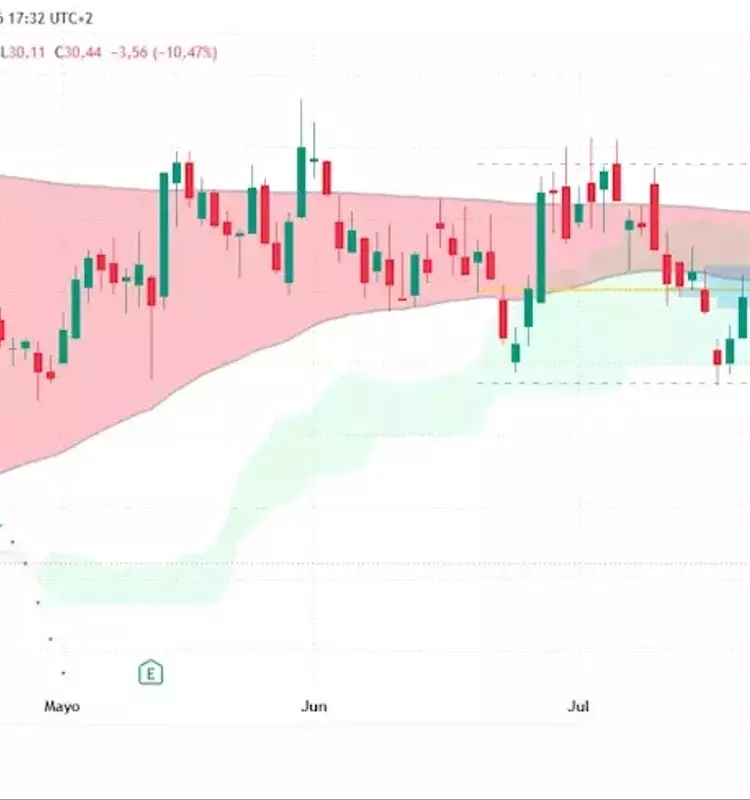
Despite the strategic benefits, the announcement did not positively impact eToro's stock performance. Shares of eToro (ETOR) saw a decline of over 10% in Tuesday's trading, reaching a low of $30.11 and closing down by approximately 10.5% for the day. This drop extended from an earlier 4.4% premarket slide, bringing the company's market capitalization to roughly $3.33 billion.
Factors Contributing to Investor Skepticism
The selloff occurred despite eToro surpassing its second-quarter earnings estimates, reporting an EPS of $0.68 against a consensus of $0.61. The prevailing cryptocurrency bear market appears to be a significant factor influencing investor sentiment, as crypto revenue fell by about 30% in the quarter, even though equities demonstrated growth. The fact that eToro is partly financing the TradeZero acquisition with new shares and entering a U.S. equities market heavily dominated by Robinhood also contributed to investor caution. In Q2, eToro reported 4.28 million funded accounts, an 18% year-over-year increase, with net contributions totaling $229 million. Having priced its IPO at a valuation between $3.7 billion and $4 billion in 2025, eToro anticipates the TradeZero deal to finalize in the first half of 2027, pending regulatory approvals.
