The Evolution of the Rust Belt: From Industrial Powerhouse to Economic Transformation
Finance

The Evolution of the Rust Belt: From Industrial Powerhouse to Economic Transformation

authorBy Morgan Housel
DateMay 11, 2026
Read time3 min

The Rust Belt, a geographical area encompassing parts of the Midwest and Northeast United States, once thrived as a beacon of American industry. However, shifts in economic landscapes, both domestically and internationally, led to significant challenges and a new identity for the region. Understanding its history, decline, and ongoing transformation provides insight into the broader dynamics of economic change.

The Rust Belt's Industrial Genesis and Decline

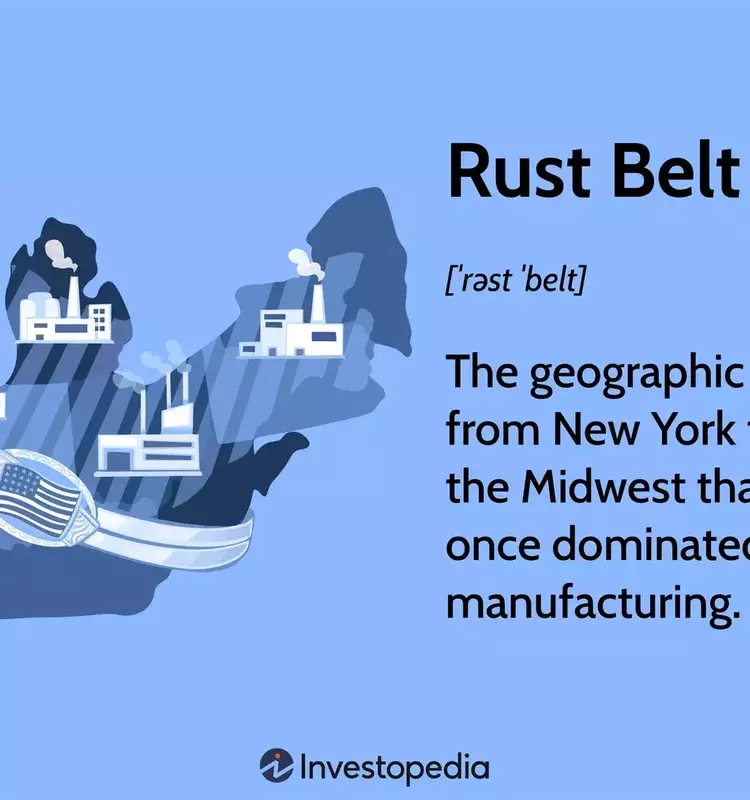
The Rust Belt, a term coined to describe the industrial heartland stretching from New York through the Midwest, historically flourished due to its strategic location. Proximity to the Great Lakes and various waterways facilitated easy access to raw materials and efficient distribution of manufactured goods. This advantageous position fueled the growth of industries such as coal mining, steel production, and diverse manufacturing, making it a pivotal region for America's economic output.

However, the prosperity began to wane between the 1950s and 1970s. The region's manufacturing base, heavily reliant on outdated equipment and facing escalating domestic labor costs, found itself increasingly vulnerable. The absence of significant competition in its early booming years fostered a lack of innovation among many established companies. This complacency proved detrimental when global trade barriers lowered, leading to an influx of foreign imports and a shift in production to regions with lower labor costs, particularly in the Southern U.S. The consequence was a dramatic decline in industrial activity, widespread factory closures, and a significant exodus of the population seeking employment elsewhere.

Economic Hardship and Political Realignments

The economic downturn in the Rust Belt led to a noticeable increase in poverty and a profound transformation of the urban landscape. Many cities in the region experienced a significant loss of high-paying blue-collar jobs, compelling residents to relocate in search of better opportunities. This demographic shift not only altered the social fabric but also had considerable political ramifications. Historically a Democratic stronghold, several Rust Belt states witnessed a political realignment in recent elections, with shifts towards Republican candidates. This illustrates how economic discontent can influence political outcomes, underscoring the region's continued importance in national elections.

The challenges faced by the Rust Belt were further exacerbated by the COVID-19 pandemic. Unlike white-collar professions that could adapt to remote work, the predominantly blue-collar workforce in the Rust Belt was heavily impacted by factory shutdowns and reduced demand. This resulted in massive job losses, with some areas experiencing unemployment rates far exceeding the national average. The pandemic intensified the existing vulnerabilities of the region, highlighting the critical need for economic diversification and resilient industries to safeguard its communities against future crises.

More Articles
Finance
Understanding Community Land Trusts: A Key to Affordable Housing
Community Land Trusts (CLTs) are vital non-profit entities addressing housing affordability by separating land and home ownership. They enable individuals to own their homes while the CLT retains the land, ensuring long-term affordability and curbing speculative price increases. This model empowers communities, particularly those affected by historical discrimination, to build generational wealth and maintain accessible housing for future generations, fostering sustainable neighborhood development.
By Strive MasiyiwaMay 11, 2026
Finance
Baillie Gifford's Q1 2026 Portfolio Adjustments: A Detailed Review
Baillie Gifford's Q1 2026 13F portfolio saw a decrease in value from approximately $120 billion to $98 billion. Key holdings like NVIDIA, Amazon, MercadoLibre, Spotify, and NU Holdings constituted about 27% of the total assets. The firm strategically increased stakes in companies such as Sea Ltd., AppLovin, DexCom, and Duolingo, notably building positions in DUOL despite market fluctuations. Conversely, Baillie Gifford reduced its exposure to major holdings including NVDA, AMZN, MELI, SPOT, and SHOP, indicating a focused approach on profit realization and portfolio recalibration. While maintaining a diverse portfolio, these adjustments highlight a shift towards managing risk and pursuing selective growth opportunities.
By Morgan HouselMay 11, 2026
Finance
Invesco Water Resources ETF: Not the Optimal Choice for Water Sector Exposure
The Invesco Water Resources ETF (PHO) has shown weaker performance compared to both the S&P 500 and other water-focused ETFs since late 2024. Its portfolio primarily consists of holdings like Waters, Roper, and Ecolab, which have limited direct ties to the water industry. While PHO might improve if the AI capital expenditure trend slows and other sectors recover, it currently does not fulfill the investment needs of most individuals seeking dedicated water exposure.
By Robert KiyosakiMay 11, 2026
Finance
EPR Properties: Strong Performance and Strategic Diversification
EPR Properties maintains a 'Buy' rating due to its undervaluation and significant re-rating potential as it continues its portfolio transformation. The company reported a solid quarter, with a 7.7% increase in Adjusted Funds From Operations (AFFO) and a 5.1% rise in its sustainable monthly dividend. EPR is accelerating its shift away from theater-reliant assets, increasing its 2026 investment guidance to $500M–$600M. While macro risks, such as inflation and high interest rates, could pose challenges, conservative valuations suggest the intrinsic value remains above current market levels.
By Nouriel RoubiniMay 11, 2026
Finance
The New York Times' Q1 Performance and Valuation Outlook
The New York Times reported robust first-quarter results for 2026, driven by a significant increase in digital advertising revenue and consistent subscriber growth. Despite these positive indicators, the company's current valuation, trading at approximately 28 times forward earnings, appears to outpace its revenue growth trajectory and rising operational costs. While potential revenue from AI licensing offers an upside, its unquantified nature suggests it doesn't currently justify the elevated stock price. A more conservative valuation range of $60–$65 would better align with its financial fundamentals.
By Strive MasiyiwaMay 11, 2026