The Federal Reserve is currently facing a significant challenge, balancing persistent inflationary pressures with the potential for slowing economic growth, exacerbated by recent geopolitical events leading to oil supply disruptions. As central bankers prepare for their upcoming meeting, the decisions made will have far-reaching implications for the US and global economy. The situation is marked by a delicate interplay of factors, where a strong economy coexists with vulnerabilities, making the Fed's role in maintaining stability more critical than ever.
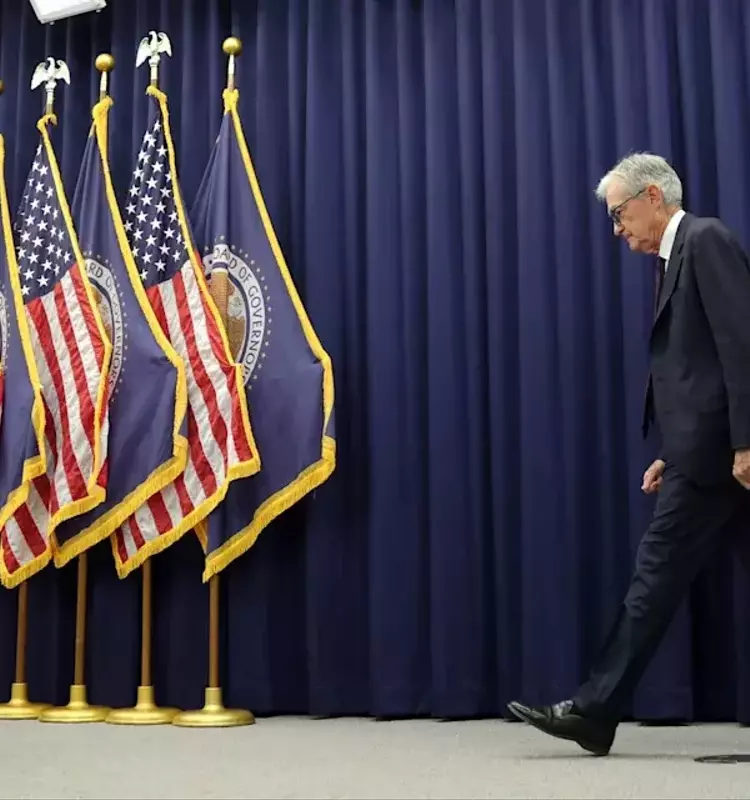
On the scheduled Fed meeting day, the primary focus will be on Chair Jerome Powell's press conference, set for 2:30 p.m. ET. While a change in interest rates is not widely anticipated at this juncture, the Federal Open Market Committee's (FOMC) statements and the updated dot plot, which outlines members' projections for future interest rates, will be closely scrutinized. These elements will offer vital insights into the Fed's assessment of current economic conditions and its forward guidance, especially as recent labor market data provided some room to address inflation, but new oil shocks complicate the broader picture.
The impact of continuous supply disruptions, such as the ongoing conflict in the Middle East, transforms market dynamics into a complex and unpredictable scenario. Historically, events like the COVID-19 pandemic and geopolitical tensions have consistently reshaped economic landscapes. These disruptions introduce volatility, making it difficult for investors and policymakers to predict future trends. The current surge in oil prices, directly linked to geopolitical instability, is particularly concerning as it directly challenges central banks' efforts to manage inflation, even as growth momentum shows signs of fading.
In this challenging climate, the US economy demonstrates resilience yet remains susceptible to external shocks. The Federal Reserve finds itself caught between its dual mandate of achieving maximum employment and price stability. The recent increase in oil prices, while contributing to inflation, also carries the risk of dampening economic growth. The job market, once characterized by more openings than job seekers, has seen a shift, with the ratio of job openings to unemployed workers falling below 1x. This indicates a tightening labor market, which, combined with rising oil prices, intensifies concerns about a potential economic downturn.
Furthermore, the Securities and Exchange Commission (SEC) is reportedly considering changes to quarterly earnings reporting requirements, possibly allowing companies to report results semi-annually. Proponents argue this could reduce administrative burdens for businesses, while critics, including prominent figures like Warren Buffett and Jamie Dimon, emphasize the importance of regular financial disclosures for investor transparency, though they suggest eliminating earnings guidance. This debate highlights the ongoing efforts to refine corporate governance and reporting standards in an evolving financial ecosystem.
In other market news, several sectors are experiencing significant movements. Oklo, a developer of small modular reactors, has secured a crucial agreement with the Department of Energy, signaling potential for nuclear power expansion. Delta Airlines has upwardly revised its revenue forecast, buoyed by robust travel demand despite increasing fuel costs. The housing market, after showing signs of recovery, faces renewed challenges from potentially higher mortgage rates. In the tech sector, Nebius saw its stock drop following debt raising announcements, while an AI drone software company achieved a remarkable debut with a 700% stock surge. Bitcoin also continued to demonstrate its 'resilient' nature, outperforming traditional assets like gold and stocks amidst global uncertainties.
The current economic environment is a testament to the interconnectedness of global events and their profound influence on financial markets. The Federal Reserve's forthcoming announcements are therefore critical, not just for interest rate policy but for providing a clearer picture of how it plans to navigate these multifaceted challenges. The careful management of inflation, coupled with strategies to support economic growth, will be paramount in steering the US economy through this complex period of uncertainty and external pressures.
