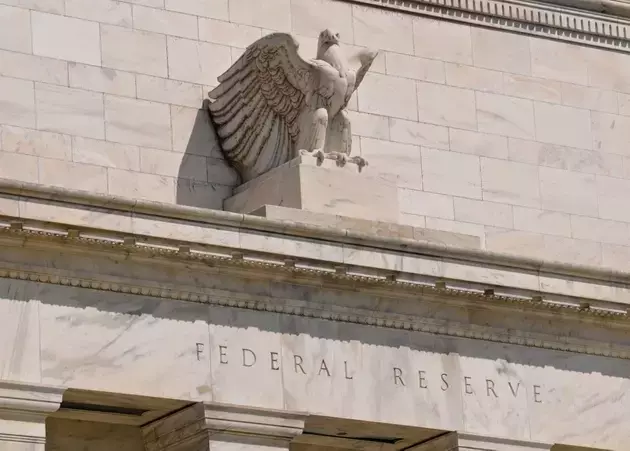
Federal Reserve Holds Rates Steady as Warsh Era Begins: A New Chapter in Monetary Policy
Finance

Federal Reserve Holds Rates Steady as Warsh Era Begins: A New Chapter in Monetary Policy

authorBy Lisa Jing
DateJun 19, 2026
Read time3 min
This report delves into the Federal Reserve's recent monetary policy decisions, highlighting the pivotal role of the newly appointed chair, Kevin Warsh. It examines the rationale behind maintaining stable interest rates and the strategic operational reforms being introduced. The analysis also explores the implications of these changes for the economy and financial markets.

A New Dawn for the Federal Reserve: Stability Amidst Change

The Inaugural Meeting Under Warsh's Leadership: A New Policy Stance

During its initial meeting with Kevin Warsh at the helm, the U.S. Federal Reserve decided to keep the federal funds rate unchanged, setting it within a range of 3.5% to 3.75%. This move signals the commencement of a distinct policy direction under the new chair, characterized by a more assertive approach to monetary policy. The decision was accompanied by the announcement of several new task forces aimed at overhauling critical aspects of the Fed's operations.

Strategic Reforms and Unwavering Inflation Target

Warsh's leadership heralds a period of significant internal reform. New task forces have been established to meticulously review and modernize the Fed's communication strategies, balance sheet management policies, and overall productivity. These initiatives underscore a commitment to enhancing efficiency and transparency. Despite these widespread changes, the Fed's long-standing 2% inflation target remains sacrosanct, serving as an immutable anchor for its monetary policy framework.

Shifting Dynamics in Rate Hike Expectations

A notable outcome of Warsh's first meeting is the perceptible shift in the committee's outlook on future rate adjustments. Nine out of eighteen members now anticipate a rate increase within the current year. This consensus reflects a pronounced move towards a more hawkish policy stance, effectively dispelling any lingering perceptions of an easing bias that may have prevailed previously. This recalibration suggests a proactive approach to managing inflationary pressures and economic stability.

Global Economic Influences on U.S. Monetary Policy

The Federal Reserve's policy decisions are not made in isolation; they are intricately linked to global economic developments. For instance, the prospect of a peace agreement between the U.S. and Iran could have profound implications for global oil prices and, consequently, for the Fed's ongoing battle against inflation. Such geopolitical shifts can either alleviate or exacerbate inflationary pressures, influencing the Fed's strategic responses.

Outlook for U.S. Treasury Yields and the Dollar's Trajectory

The current economic landscape, marked by persistent core inflation and robust U.S. economic growth, suggests that higher U.S. Treasury yields may endure for an extended period. This scenario is likely to exert upward pressure on the U.S. dollar, particularly when compared to currencies of countries experiencing weaker economic performance, such as the Canadian dollar. Investors and market participants will be closely monitoring these trends for their potential impact on investment strategies.

TD Wealth's Role and Market Insights

As an integral component of the TD Bank Group, TD Wealth plays a crucial role in providing comprehensive financial services to a global client base. With a substantial presence in Canada through TD Direct Investing, TD Wealth Private Client Group, TD Wealth Private Investment Advice, and TD Wealth Financial Planning, it offers a spectrum of solutions ranging from self-directed investing to tailored wealth management. Clients benefit from access to highly regarded investment analysts, economists, and market strategists, ensuring informed decision-making in a dynamic economic environment.

More Articles
Finance
Strategic Vulnerabilities: Hormuz Strait and Global Economic Dependence
Billionaire investor Bill Ackman highlights the critical vulnerability of global economies' reliance on the Strait of Hormuz, especially in light of a recent U.S.-Iran agreement. He draws parallels to dependencies on Taiwan's semiconductor industry and China's pharmaceutical supply chains, emphasizing the need for strategic diversification to ensure long-term peace and security.
By Morgan HouselJun 19, 2026
Finance
Memory Giant's Unprecedented Surge: A Deep Dive into Market Dynamics
SanDisk (SNDK) has experienced an astonishing 4,589% return in the past year, fueled by escalating demand for memory products within the AI infrastructure sector. This remarkable growth is particularly significant for a company with a $295 billion market capitalization and $13.2 billion in sales, transitioning from a $1.5 billion loss to a $4.5 billion profit. However, despite this strong momentum, the stock appears to be overextended. Its trailing Price-to-Earnings (P/E) ratio is close to 60x, while its forward P/E is under 11x, and most analyst price targets are currently below the market price.
By Lisa JingJun 19, 2026
Finance
Market Dynamics: Oil Prices, Federal Reserve Policy, and the Rise of AI in the Market
This week, a surprising peace agreement between the U.S. and Iran led to a significant drop in oil prices, easing inflation worries and boosting sectors like technology and consumer discretionary. Concurrently, the Federal Reserve maintained interest rates, but Chair Kevin Warsh's firm stance hinted at future policy adjustments, pushing bond yields higher. The AI sector continues to demonstrate strong growth, with increased demand for semiconductors and data center infrastructure driving market leadership.
By Mariana MazzucatoJun 19, 2026
Finance
Argentina's Economic Resurgence: A Deep Dive into the Global X MSCI Argentina ETF
This article provides a comprehensive analysis of the Global X MSCI Argentina ETF (ARGT), outlining the rationale for an upgrade from 'Hold' to 'Buy'. It explores the significant economic reforms undertaken by the Milei Administration, which have led to stabilizing inflation and improved fiscal balances. The article also highlights the ETF's attractive valuation and the potential for substantial upside as Argentina's economic turnaround gains momentum, particularly with expected GDP growth surpassing IMF forecasts.
By Suze OrmanJun 19, 2026
Finance
Touchstone Value Fund's Q1 2026 Performance Analysis
The Touchstone Value Fund experienced underperformance against the Russell 1000 Value Index in Q1 2026. While holdings in Energy, such as Halliburton Co. and Exxon Mobil Corp., performed well due to commodity prices, weaknesses in Financials and Consumer Discretionary sectors, exemplified by Western Alliance Bancorporation, hindered overall returns. The fund maintains a focus on undervalued companies with strong profitability and growth potential, despite macroeconomic uncertainties.
By Strive MasiyiwaJun 19, 2026