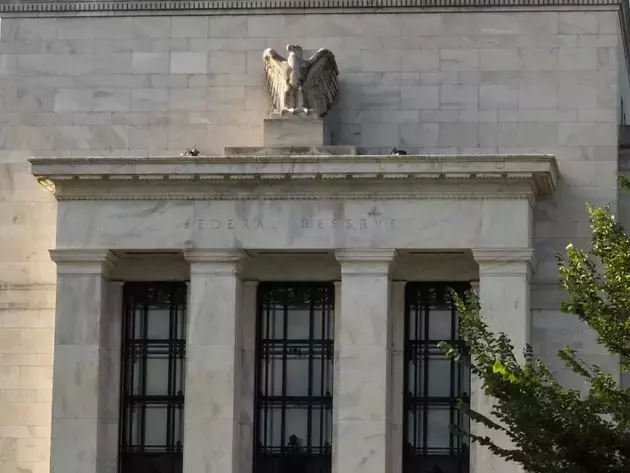
The Federal Reserve recently made the strategic decision to maintain its current interest rates, signaling a cautious approach amidst growing economic uncertainties. This move comes despite notable internal disagreements and the resurgence of inflationary pressures, particularly those driven by global energy markets. The central bank's communication strategy remains minimal, offering little forward guidance and emphasizing a data-dependent outlook for future policy adjustments. This highlights a nuanced stance, balancing the need for price stability with the complexities of a dynamic economic landscape.
The Federal Reserve's decision to hold interest rates steady reflects a careful assessment of ongoing economic conditions. Despite the resurgence of energy-driven inflation and significant internal dissent, the central bank has opted for a period of observation rather than immediate action. This approach suggests that policymakers are keenly watching how various economic indicators evolve, particularly those related to the broader spread of inflation beyond the energy sector. The unified dissent from some members underscores the differing perspectives within the Federal Open Market Committee regarding the appropriate timing and magnitude of monetary policy interventions. This internal debate highlights the challenges faced by the Fed in navigating a complex economic environment where various factors, both domestic and international, exert pressure on price stability and economic growth.
The Federal Reserve's Cautious Stance on Interest Rates
The Federal Reserve recently chose to maintain its benchmark interest rates within the 3.50%-3.75% range, reflecting a deliberate stance of patience amid a complex economic backdrop. This decision was made despite noticeable hawkish dissents from certain members of the Federal Open Market Committee (FOMC) and the emergence of renewed inflation risks, largely driven by volatility in global energy markets. The central bank's communication has been notably sparse, providing minimal forward guidance on future policy actions. Instead, the FOMC has indicated that any shifts in its monetary policy will be contingent upon clear evidence of inflation extending beyond the energy sector and embedding itself more broadly within the economy. This wait-and-see approach underscores the Fed's commitment to data-driven decision-making, aiming to avoid premature or overly aggressive interventions that could destabilize economic recovery.
The decision to hold rates steady signifies the Federal Reserve's strategic intent to monitor incoming economic data closely before implementing further adjustments. The notable dissent among FOMC members indicates a diversity of views within the committee regarding the appropriate course of action, particularly concerning the potential for persistent inflation. These dissenting voices likely advocated for a more proactive stance, given the renewed inflationary pressures. However, the majority opted for caution, emphasizing that policy modifications would be enacted only when concrete evidence demonstrates a wider diffusion of inflationary trends. This cautious approach allows the Fed to assess the impact of existing monetary policies and market-driven tightening, ensuring that any future rate adjustments are well-justified and proportionate to the economic challenges at hand. The ongoing observation of inflation dynamics, labor market conditions, and broader economic indicators will be crucial in guiding the Fed's future monetary policy decisions, ensuring flexibility and adaptability in response to evolving circumstances.
Inflationary Pressures and Market Expectations
Despite the Federal Reserve's decision to hold interest rates, the specter of inflation, particularly from energy markets, continues to loom large, influencing both policymaker deliberations and market expectations. The emphasis on a strict 2% inflation target, as reaffirmed by prominent figures within the Fed, signals a firm commitment to price stability. However, the central bank's reluctance to engage in preemptive rate hikes, instead favoring market-driven tightening and data dependency, suggests a strategy focused on allowing economic forces to play out. This approach implies that the Fed will likely react to, rather than anticipate, significant inflationary surges, particularly if they demonstrate broad-based economic penetration. The current market dynamics, characterized by a steepening yield curve, reflect investor anticipation that the Fed's patience may be tested sooner rather than later, especially if energy inflation broadens before the next significant policy review.
The current economic environment presents a delicate balancing act for the Federal Reserve. While committed to its 2% inflation target, the Fed is keen to avoid unnecessary interventions, opting instead to let market mechanisms contribute to financial tightening. This strategy acknowledges the inherent time lags in monetary policy transmission and seeks to leverage market expectations as an initial layer of control. The observed steepening of the yield curve is a critical indicator of this dynamic, as it suggests that market participants are pricing in higher future interest rates, anticipating that sustained inflationary pressures, particularly if energy costs continue to rise and spread across other sectors, will eventually compel the Fed to act more decisively. The period leading up to the next FOMC meeting will be crucial, as the Fed monitors whether current inflation remains confined to specific sectors or if it begins to permeate broader economic activities, thus challenging its current patient stance and potentially triggering a more aggressive policy response from the central bank.
