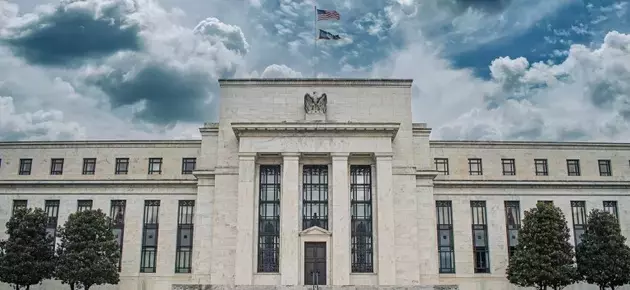
Federal Reserve's Expanding Balance Sheet and Debt Absorption Challenges
Finance

Federal Reserve's Expanding Balance Sheet and Debt Absorption Challenges

authorBy Suze Orman
DateMay 31, 2026
Read time2 min

The Federal Reserve's balance sheet has become a central point of discussion as it continues to expand, reflecting a renewed phase of quantitative easing despite previous efforts towards tightening. This detailed examination highlights the shifting dynamics in the Fed's monetary policy, the implications for the US debt market, and the diminishing international appetite for American government bonds.

Following a brief period of quantitative tightening, the Federal Reserve initiated a new round of quantitative easing. In March and April, the Fed injected $43 billion into the economy, with an additional $4 billion added in May. This resumption of expansionary policy means the Fed's balance sheet, currently at a substantial $6.7 trillion, is set to grow further, potentially exceeding $10 trillion during the next economic downturn. This continuous expansion raises questions about long-term financial stability and the efficacy of traditional monetary tools.

A critical aspect of the current financial landscape is the fluctuating yield on US Treasuries, which has largely remained between 3.25% and 4.75% since September 2022. This stability belies a significant underlying challenge: the decreasing international demand for newly issued US debt. Over the past 18 months, the Treasury has issued approximately $4 trillion in new debt, yet international investors have only absorbed about 10% of this amount. This indicates a growing reliance on domestic buyers, potentially signaling a lack of confidence from foreign entities and increasing the vulnerability of the US bond market.

Furthermore, China, a major historical holder of US debt, has been steadily reducing its Treasury holdings. This trend exacerbates the issue of declining international participation. The Fed's current strategy involves offsetting new quantitative easing by selling mortgage-backed securities and aggressively purchasing short-term debt. This intervention aims to steepen the yield curve and maintain market liquidity. However, such an approach is largely seen as unsustainable in the long run, particularly if external buyers continue to pull back from the US debt market.

The current state of the Federal Reserve's balance sheet and the challenges in debt absorption underscore a pivotal moment for the US economy. The ongoing expansion of the balance sheet, coupled with decreased international interest in US Treasuries, highlights significant structural vulnerabilities. The reliance on domestic support and the Fed's market interventions, while offering short-term stability, point towards a complex and potentially precarious future for the nation's fiscal health.

More Articles
Finance
SpaceX: The Next Trillion-Dollar Company?
SpaceX, Elon Musk's aerospace venture, is poised to potentially join the exclusive trillion-dollar club with an anticipated IPO targeting a nearly $2 trillion valuation. This move would mark the largest initial public offering in history, positioning SpaceX among tech giants like Amazon and Nvidia. While current trillion-dollar companies are well-established, SpaceX, despite its early growth stage and significant capital expenditures in AI, space, and connectivity, demonstrates substantial revenue growth, presenting a unique, high-risk, high-reward opportunity for aggressive investors.
By Lisa JingMay 31, 2026
Finance
Allspring Short-Term Bond Plus Fund Q1 2026 Commentary
The Allspring Short-Term Bond Plus Fund experienced underperformance relative to its benchmark during the recent quarter. While duration exposure and specific security choices negatively impacted returns, strategic sector and quality allocations provided positive contributions. The US economy continues to be bolstered by robust consumer spending, fueled by AI-related capital expenditure growth and ongoing fiscal stimulus.
By David RubensteinMay 31, 2026
Finance
East Asian Economic Shifts: A Greater Concern Than Geopolitical Chokepoints
This analysis delves into the economic stability of East Asian powerhouses, Japan and South Korea, arguing that their financial shifts present a more significant global risk than the geopolitical tensions surrounding the Strait of Hormuz. It highlights how rising bond yields in these nations could drain worldwide liquidity, creating market volatility. The article also points out South Korea's role as a bellwether for the global memory chip market and the broader tech sector, suggesting that any downturn there could have ripple effects globally. Investment opportunities in banking and defense sectors are also explored.
By David RubensteinMay 31, 2026
Finance
Top Cryptocurrencies to Consider for Investment in June
This analysis identifies five leading cryptocurrencies—Bitcoin, Ethereum, Solana, XRP, and Ondo Finance—as prime investment opportunities for June, citing regulatory advancements, increasing institutional adoption, and favorable market conditions. These digital assets are poised for potential growth amid converging catalysts, offering investors a strategic entry point before broader market rallies.
By Strive MasiyiwaMay 31, 2026
Finance
Nomura Wealth Builder Fund: Outperforming in a Volatile Market
The Nomura Wealth Builder Fund's Institutional Class shares outpaced their 60/40 benchmark in Q1 2026. This success was driven by strategic allocations to US quality and income stocks, as well as US large-cap value stocks, which surpassed the S&P 500 Index. The Fund's diversified approach across geographies and asset classes underscores its commitment to robust portfolio construction.
By Mariana MazzucatoMay 31, 2026