Federal Reserve's Interest Rate Outlook Divides Policymakers Amidst Inflation Concerns
Finance

Federal Reserve's Interest Rate Outlook Divides Policymakers Amidst Inflation Concerns

authorBy Mariana Mazzucato
DateJul 10, 2026
Read time2 min

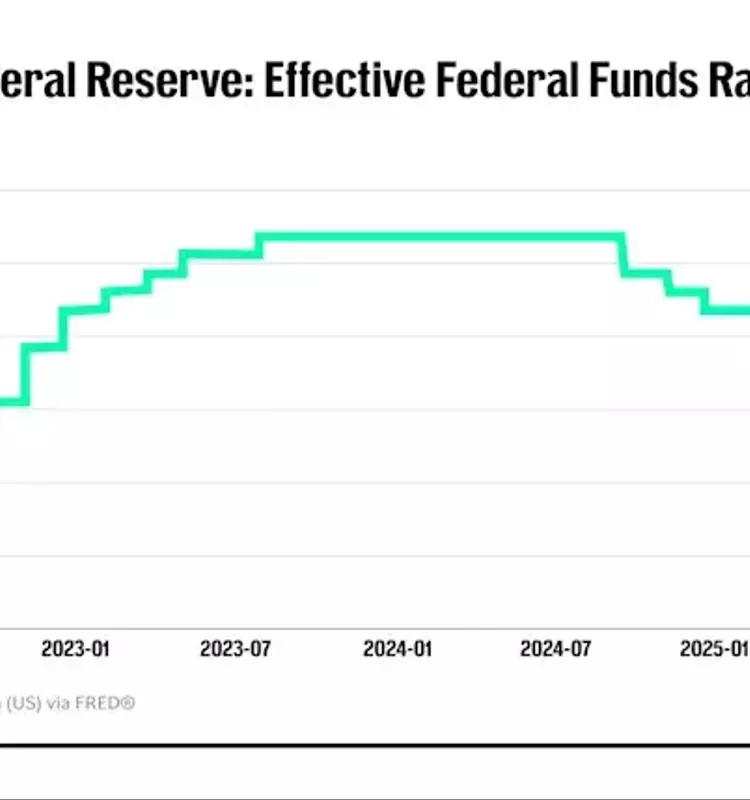
The Federal Reserve finds itself at a crossroads, with recent minutes from the Federal Open Market Committee (FOMC) revealing a significant divergence among policymakers concerning the future direction of interest rates. Factors such as global conflicts, trade tariffs, and the burgeoning demand for AI-related investments are creating a complex economic landscape that could potentially fuel inflationary pressures, leading some officials to consider rate increases later in the year.

Despite these inflationary concerns, the immediate consensus is to await further economic indicators. The FOMC's June meeting highlighted worries about persistent high inflation, yet members emphasized the necessity of additional data before any decisive action on the benchmark Federal Funds Rate. This cautious approach also acknowledges the possibility that incoming data could signal a need for rates to remain steady, or even to be lowered sooner than anticipated by many market observers. Jeffrey Roach, Chief Economist at LPL Financial, characterized the discussions as a "good family fight," underscoring the broad spectrum of potential outcomes and the committee's reluctance to commit to a specific path without clearer economic signals, particularly in light of geopolitical instability in the Middle East.

The Fed's mandate involves a delicate balancing act: fostering maximum employment while maintaining stable prices. Lowering interest rates can stimulate job growth but risks exacerbating inflation, potentially leading to an upward spiral. Conversely, raising rates helps to cool price increases but can dampen the labor market by increasing borrowing costs and stifling economic activity. This year, the FOMC has held interest rates steady, having previously implemented rate cuts in late 2025 to bolster employment. These "insurance" cuts ceased when the perceived risk of higher prices began to outweigh concerns about job market stability. Federal Reserve Chair Kevin Warsh reiterated the commitment to achieving 2% inflation target, which has been missed for the past five years, stressing that the Fed would deliver price stability despite differing views on the tactics and strategy.

The path forward for the Federal Reserve remains uncertain, reflecting the intricate interplay of domestic economic conditions and international events. The division within the FOMC underscores the complexity of guiding monetary policy in a volatile environment, where maintaining a stable and growing economy requires careful observation, thoughtful debate, and a readiness to adapt to evolving circumstances.

More Articles
Finance
Rackspace Technology: Riding the AI Wave to Renewed Growth
Rackspace Technology (RXT) is experiencing a resurgence, largely driven by strategic AI partnerships with industry leaders like Palantir and AMD. These collaborations are bolstering RXT's market position, granting access to cutting-edge high-performance computing resources and expanding its enterprise sales capabilities. The company's first-quarter performance shows a positive shift with a 2% revenue increase and a 20% rise in operating profit, signaling a potential turnaround. While its current valuation appears favorable, investors should closely monitor its profit margins and debt levels.
By Michele FerreroJul 10, 2026
Finance
Market Dynamics: Sector Performance and Rebalancing Trends in Early July
In the initial week of July, the technology sector experienced a notable downturn, emerging as the poorest performer with a 4.8% decline. This period saw significant rebalancing, where previously high-performing S&P 500 stocks, particularly those that more than doubled in the first half, faced an average drop of 16.3%, with 20 out of 22 showing losses. Conversely, sectors like Industrials, Consumer Discretionary, and Materials also saw declines but to a lesser extent, indicating a broader market shift.
By David RubensteinJul 10, 2026
Finance
Grand Canyon Education: Consistent Growth, Fair Valuation
Grand Canyon Education (LOPE) showcases strong revenue and enrollment growth, with promising 2026 guidance. While its valuation aligns with peers, it lacks a compelling edge for a "buy" rating. The company anticipates substantial profitability growth, projecting 2026 revenue between $1.17 billion and $1.19 billion, and EPS of $9.69 to $10.26. Despite operational strengths, my assessment remains a "hold" due to limited valuation upside compared to industry rivals.
By Robert KiyosakiJul 09, 2026
Finance
Sabra Health Care: Leveraging Seniors Housing to Ride the Demographic Wave
Sabra Health Care REIT maintains a 'Buy' rating due to its strategic shift into the Seniors Housing Operating Portfolio (SHOP) model. This move positions the company to capitalize on the 'Silver Tsunami' demographic trend, promising substantial growth in occupancy and Funds From Operations (AFFO). Strong Q1 results, with AFFO at $0.39/share and a dividend payout ratio of 77% (yielding approximately 6%), underscore its robust financial health. Despite immediate macroeconomic challenges and operational risks, SBRA's intrinsic value of $23.41/share suggests significant potential for re-rating.
By David RubensteinJul 09, 2026
Finance
Invesco S&P MidCap Quality ETF: Navigating Modest Returns in Bullish Environments
The Invesco S&P MidCap Quality ETF (XMHQ) is currently rated as a Hold. While it offers stable, lower-volatility returns through a focus on high-quality companies, it tends to underperform during aggressive bullish markets. Its significant allocation to sectors like financials, which often lag in strong uptrends, limits its upside potential. Despite favorable mid-cap fundamentals, XMHQ's investment strategy and expense ratio constrain its overall performance and quantitative ranking.
By Morgan HouselJul 09, 2026