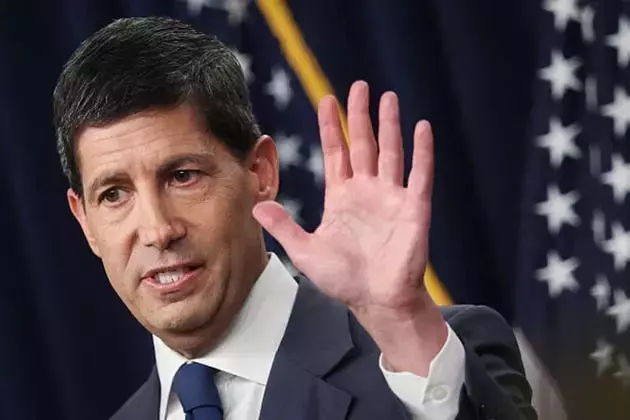
This report examines the anticipated discussions and potential market ramifications stemming from the upcoming Jackson Hole Symposium. A central prediction is that Kevin Warsh, a former Federal Reserve Governor, will reiterate his long-held view that increases in nominal interest rates are predominantly a reflection of rising real interest rates. His perspective is expected to emphasize the importance of inflation expectations, which currently appear to be well-anchored within the economy. While explicit forward guidance from Warsh is not expected, his commentary will likely underscore the Federal Reserve's underlying assessment of monetary conditions.
The Jackson Hole Symposium, an annual gathering hosted by the Federal Reserve Bank of Kansas City, serves as a crucial platform for central bankers, policymakers, economists, and business leaders to discuss critical economic issues. Esteemed figures like former Fed Governor Kevin Warsh often deliver keynote speeches that are closely scrutinized for insights into future monetary policy direction. Warsh's consistent focus on real interest rates as a primary driver of nominal rate movements has distinguished his analysis. His anticipated address at the 2026 symposium is expected to reinforce this dovish interpretation, suggesting that higher nominal rates are not necessarily indicative of an overly restrictive monetary policy, but rather a reflection of underlying economic strength and evolving real yields.
Despite the lack of explicit forward guidance, the implicit message from Warsh's speech is likely to revolve around the stability of inflation expectations. If these expectations remain firmly anchored, it provides the Federal Reserve with greater flexibility in its policy decisions, even as real rates climb. However, this scenario also carries significant implications for financial markets. The continued upward trajectory of long-term interest rates, driven by rising real rates, could exert downward pressure on asset valuations. Specifically, the equity market, particularly the S&P 500, could face a substantial sell-off due to P/E multiple contraction. This vulnerability is amplified by what many observers consider to be currently inflated valuations within the stock market, making it particularly susceptible to shifts in the interest rate environment.
In essence, the discussions at the Jackson Hole Symposium, particularly Warsh's contributions, will likely highlight the delicate balance the Federal Reserve must strike between managing inflation expectations and navigating the implications of rising real interest rates. The financial community will be keenly observing for any cues that could signal a re-evaluation of current market valuations in light of these evolving monetary dynamics.
