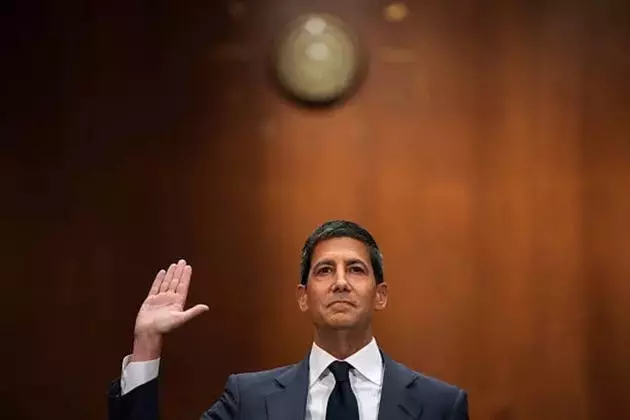
The impending change in leadership at the Federal Reserve, with Kevin Warsh potentially succeeding Jerome Powell as Chair, signifies a profound alteration in the direction of monetary policy. This shift is not merely a continuation of existing strategies but rather a fundamental move towards a more stringent, rules-based approach to combating inflation, centered on aggressive balance sheet reduction and reduced reliance on forward guidance. Although financial markets have seemingly incorporated a hawkish pause from the Fed into their valuations, equity markets, in particular, appear to be overly complacent, underestimating the significant risk of a liquidity shock should Warsh's policies be implemented. This situation creates an unbalanced risk-reward landscape, where an unexpectedly hawkish turn could precipitate a severe decline in equity values, especially affecting assets with long durations and high leverage.
Federal Reserve Meeting: Anticipating a Pivotal Shift
The Federal Open Market Committee (FOMC) meeting, scheduled for late April, is expected to maintain current interest rates. However, its significance to financial markets cannot be understated, primarily due to the anticipated transition of leadership at the Federal Reserve. This change is poised to usher in a new era of monetary policy, moving away from the more accommodative stances of the past.
Under the potential new leadership of Kevin Warsh, a notable shift is expected towards a more aggressive strategy for reducing the Federal Reserve's balance sheet. This approach diverges significantly from previous policies that often relied on expansive balance sheets to provide liquidity and support economic growth. Furthermore, Warsh is known for advocating less dependence on forward guidance, a communication tool previously used to signal future policy intentions and manage market expectations. Instead, his strategy is anticipated to be more rules-based, focusing on strict anti-inflation measures.
The financial markets have, to some extent, already factored in a more hawkish posture from the Fed, reflecting expectations of interest rate stability or even slight increases. However, a noticeable complacency persists within equity markets, which appear to be overlooking the potential for a substantial liquidity shock under Warsh's more restrictive policies. This oversight presents an asymmetric risk-reward scenario. In this context, a hawkish surprise from the FOMC, particularly if it aligns with Warsh's proposed strategies, could trigger a sharp and significant selloff in equities. This impact would be especially pronounced on long-duration assets and those with high leverage, as tighter liquidity conditions and a less predictable policy environment could severely undermine their valuations.
A Paradigm Shift in Monetary Policy: Navigating the Uncharted Waters
The anticipated leadership transition at the Federal Reserve prompts a crucial reflection on the future trajectory of monetary policy and its broad implications for global financial markets. This moment serves as a stark reminder of the delicate balance between managing inflation and fostering economic stability. The potential shift towards a more restrictive, rules-based approach under Kevin Warsh, prioritizing aggressive balance sheet reduction and reduced reliance on forward guidance, marks a significant departure from the expansive and flexible strategies that have characterized recent years.
From an observer's viewpoint, the current market's complacency regarding this impending change is a cause for concern. While a hawkish Fed stance may be partially priced in, the full ramifications of a potential liquidity shock, especially for long-duration and leveraged assets, appear to be underestimated. This scenario underscores the inherent risks in financial markets and the necessity for investors to critically evaluate their portfolios against a backdrop of evolving monetary policy. It highlights the importance of adaptability and strategic foresight in navigating periods of significant change, emphasizing that what worked in the past may not guarantee future success. Ultimately, this transition calls for a re-evaluation of investment strategies, encouraging a more cautious and diversified approach to mitigate potential volatility and protect capital in an environment of increasing uncertainty.
