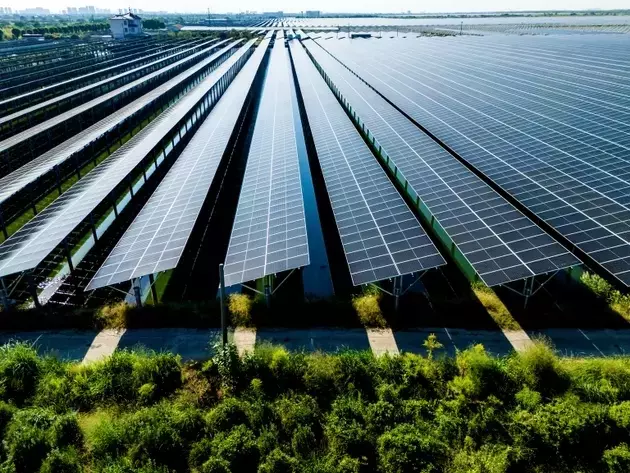
First Solar, a prominent player in the solar energy sector, is grappling with a series of daunting challenges. The company's persistent struggle with diminishing order backlogs, a fragile order book, and increasingly negative cash flows paint a concerning picture for its future. Although government grants have temporarily bolstered earnings, a deeper analysis reveals a far less optimistic financial landscape. As these subsidies inevitably phase out, the company's forward price-to-earnings ratio is projected to surge to 46.5x, significantly eroding the appeal of its seemingly attractive valuation multiples. This scenario underscores substantial downside risks stemming from a weak order pipeline and an inability to generate robust cash.
Detailed Report: First Solar's Operational Hurdles and Financial Risks
In December, a strategic assessment of First Solar (FSLR) recommended a "Sell" rating, a decision that, with the benefit of hindsight, has proven prudent. The company's stock experienced a considerable ascent prior to this analysis, only to subsequently enter a period of decline. This downward trend is largely attributable to several critical factors impacting its operational stability and financial health.
A primary concern is the continuous depletion of First Solar's backlog. The company's book-to-bill ratio, a key indicator of future revenue predictability, stands at a concerning 0.42. This ratio suggests that for every unit of product shipped, less than half a unit is being added to new orders, signaling a rapid erosion of its future revenue pipeline. Such a low ratio highlights a fundamental weakness in demand or an inability to secure new contracts at a pace necessary to sustain growth.
Adding to these woes is the significant increase in inventory levels, which further points to mounting operational risks. Ballooning inventories often indicate sluggish sales or production exceeding demand, potentially leading to substantial writedowns in the future. These writedowns could severely impact profitability and asset values, casting a shadow over the company's financial statements.
The company's reliance on government grants to bolster its current earnings is another critical aspect. While these subsidies temporarily inflate profitability, they obscure the true underlying financial performance. Once these grants are normalized or phased out, the company's forward valuation metrics, particularly its price-to-earnings ratio, are expected to soar. This adjusted valuation reveals that, without external support, First Solar's stock is considerably overvalued, posing a significant risk to investors who might be misled by current, artificially inflated figures.
In essence, despite any superficial attractiveness in its current market valuation, First Solar is navigating a precarious path marked by a fragile order book, deteriorating cash generation, and an unsustainable reliance on government incentives. These intertwined issues collectively amplify the company's downside risk, warranting continued caution from the investment community.
The current state of First Solar offers a compelling lesson in the importance of granular financial analysis beyond surface-level indicators. It underscores that government interventions, while beneficial in the short term, can mask underlying vulnerabilities. For investors, this situation highlights the need to scrutinize fundamental metrics like backlog, inventory, and sustainable cash flow generation, rather than being swayed by temporary boosts from subsidies. The long-term viability of a company hinges on its intrinsic operational strength and market demand, not transient external support. This scenario prompts a critical reflection on how accurately reported earnings reflect true economic value and the potential for significant market corrections when such discrepancies are revealed.
